


GSK shares have quietly built a solid track record over the past few years, which puts a sharper spotlight on whether the current price around £19 is still aligned with what its earnings can justify. With fresh headlines around legal settlements and pipeline data, the core question for you is how much of that story is already embedded in the valuation.
- Over the past 3 years the stock has delivered a 54.6% return, so a lot now rests on whether recent earnings power supports that kind of rerating.
- The recent patent cross-licence with Moderna on COVID and RSV vaccines removes a legal overhang, which can influence how investors think about future legal costs and the durability of GSK's profits from its vaccine portfolio.
- The analysts covering GSK have run their own numbers. See what analysts think GSK's shares could be worth.
The issue now is whether GSK's current share price can be squared with its earnings profile when judged against the Fair Ratio benchmark.
If you want more than one case study on how news and earnings line up with valuation, a focused stock screen of 15 high quality undervalued stocks can be a useful next starting point for research.
Is GSK Still Cheap on Earnings?
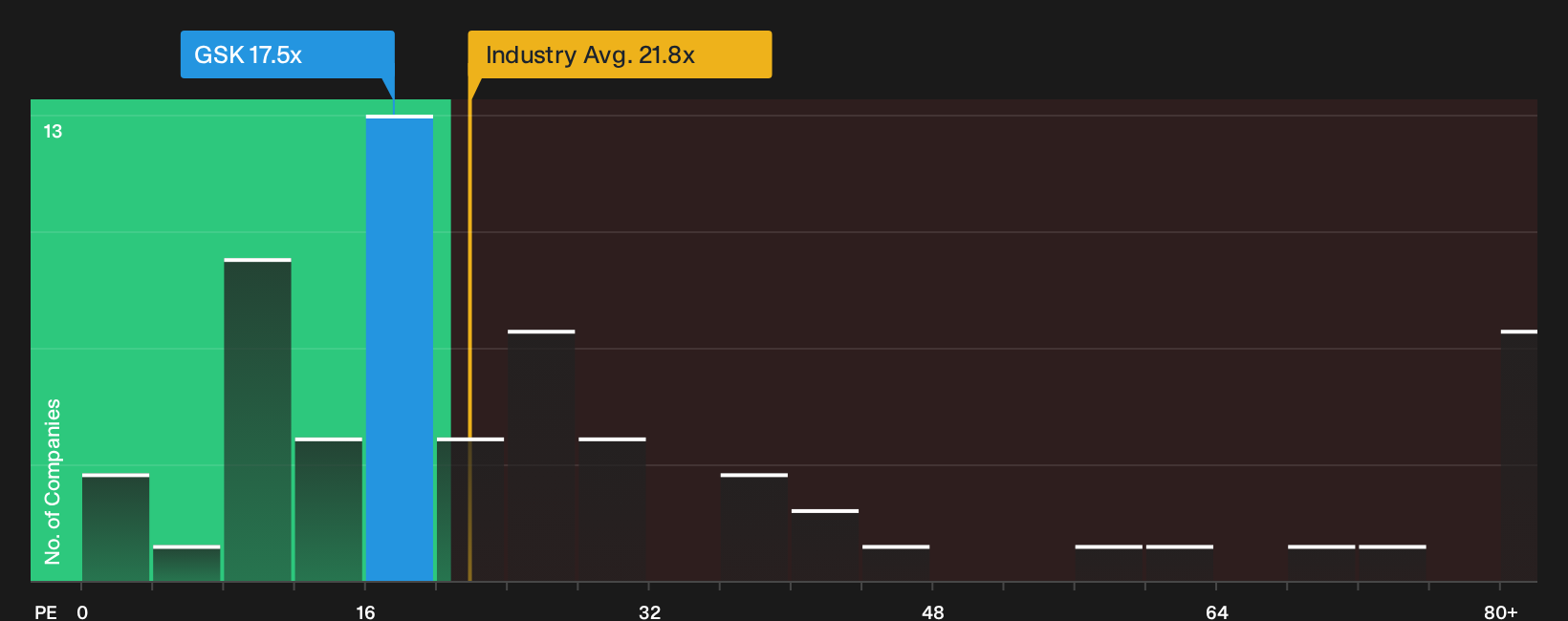
The P/E ratio suits GSK because earnings remain a key anchor for how investors evaluate a large, diversified pharma group. On that basis, GSK trades on roughly 17.5x earnings, which is below the wider pharmaceuticals industry at about 20.7x and far lower than the peer group average near 50.5x. That gap indicates the market is not assigning GSK the same earnings multiple as many large drug stocks, despite its vaccine and specialty medicines focus.
The Fair Ratio, which reflects what you might expect for GSK given its margins, risk profile and size, is above the current P/E. As a result, the shares appear undervalued on this framework. Because the recent patent settlement with Moderna has cleared a legal dispute over COVID and RSV shots, some investors may see fewer future legal uncertainties. However, the P/E still shows a discount to both peers and the modelled earnings benchmark. Explore the numbers behind GSK's P/E valuation.
The GSK Narrative: What Would Justify Today's Price?
Simply Wall St Narratives pick up where the valuation question for GSK leaves off, by spelling out which future paths for growth, margins and earnings would need to play out for the shares to look materially higher or lower than today's price on a fair value basis, and by setting those side by side on the Community page. Rather than relying on a single multiple or model output, each one lays out the assumptions that sit behind its estimate so you can test them against GSK's actual results as they are reported.
Bulls and bears are looking at the same GSK pipeline and cost plan yet reaching very different conclusions on what the current price already reflects.
Bull case: 13% undervalued
The analyst consensus Narrative on Simply Wall St sees more headroom if GSK executes on its late stage portfolio and cost program.
"The main thing that has to go right is that GSK converts its enlarged late stage pipeline, particularly in oncology and long acting HIV and liver disease programs, into commercially meaningful products..."
Discover why this Narrative puts GSK at 13% undervalued.
Bear case: 31% overvalued
The bearish analyst Narrative on Simply Wall St questions whether GSK’s newer therapies can fully counter the pressure in General Medicines and pipeline risks.
"Although GSK is pushing hard to lift its specialty medicines mix, the 9% decline in General Medicines sales in Q2 and the downgrade to full year guidance indicate structural pressure from aging brands and generic competition that could drag on revenue..."
Explore why this Narrative puts GSK at 31% overvalued.
One more GSK check that belongs next to the price tag
Valuation only tells part of the story, because Simply Wall St's broader review of GSK has surfaced specific risk checks that some investors may want to weigh before leaning on the numbers alone. Take a closer look at 3 warning signs before settling on a valuation.
Have feedback on this article? Concerned about the content? Get in touch with us directly. Alternatively, email editorial-team@simplywallst.com