


U.S. consumer prices rose 0.4% in October, above the 0.3% economists expected. As shoppers face higher prices, Costco (COST) is giving shareholders a big payday. On Nov. 10, the retailer announced a $30-per-share special cash dividend, totaling about $13.3 billion.
The payment arrives Dec. 4, 2026, for shareholders of record at the close of business on Nov. 24. That’s twice Costco’s previous $15-per-share special dividend, paid in January 2024. The retailer also renewed its share-buyback program, allowing up to $4 billion in repurchases through November 2030.
It’s good news for shareholders, but does the payout make Costco stock worth buying? Let’s take a closer look.
The Financial Strength Behind the Payout
Costco is a wholesaler that sells groceries, household goods, and other products at low prices to shoppers who pay for a membership. Its shares have risen 19% over the past 52 weeks and 27% year-to-date (YTD).
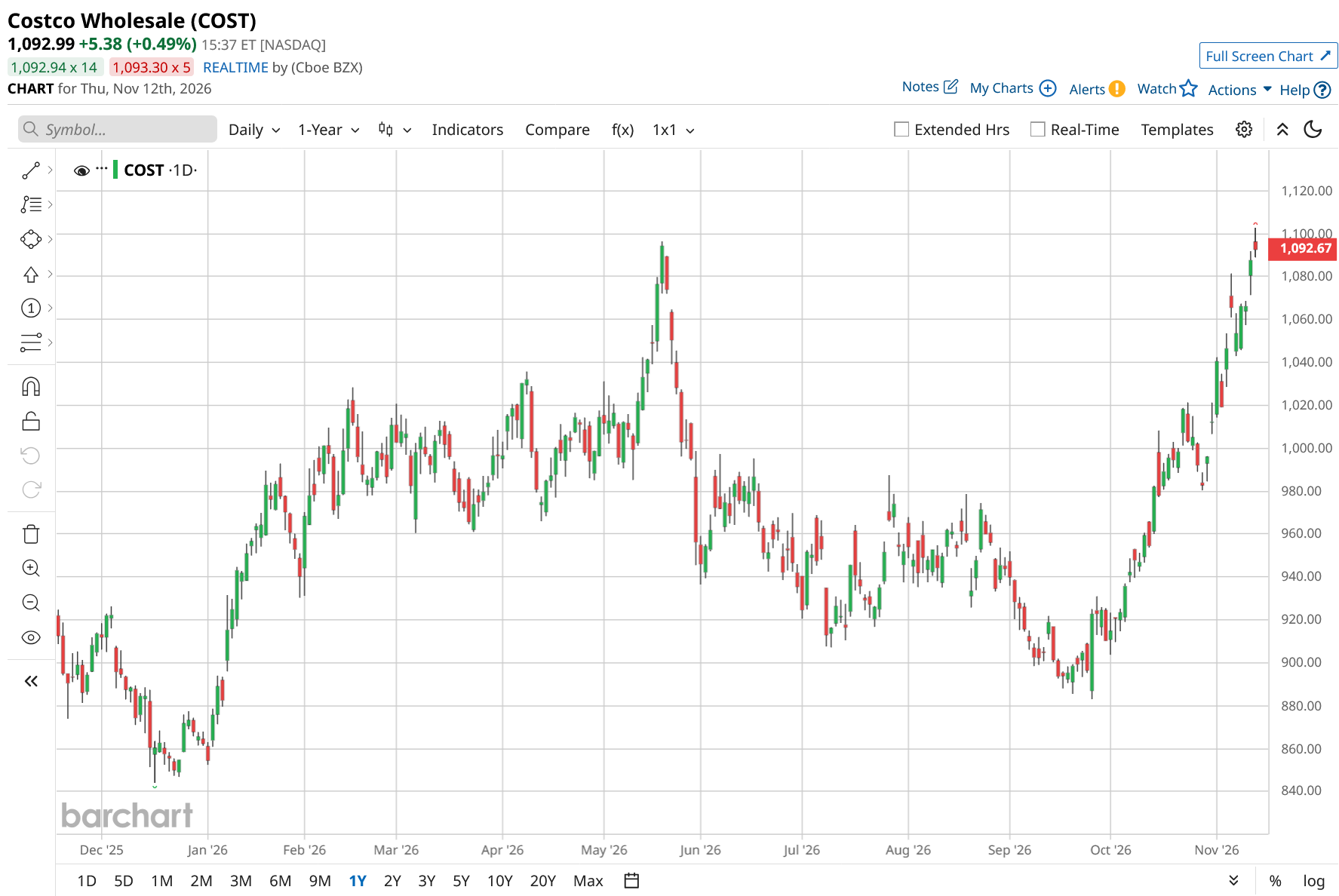
But COST stock isn’t cheap. It trades at 46.97x expected earnings, compared with the industry average of 21.31x, so investors are paying a steep premium.
Shareholders will receive a $30-per-share special dividend on Dec. 4 if they’re on record as of Nov. 24. The roughly $13.3 billion payout comes on top of Costco’s regular quarterly dividend of $1.47 per share. That regular payment works out to $5.88 annually, yielding about 0.54%.
The latest results show why the company is comfortable returning cash. Fiscal fourth-quarter revenue rose to $95.723 billion from $86.156 billion a year earlier. Net sales grew 11.2% to $93.873 billion from $84.432 billion, while membership fees brought in $1.850 billion, up from $1.724 billion. Operating income increased to $3.801 billion from $3.341 billion. Net income reached $2.998 billion, compared with $2.610 billion, taking diluted earnings per share to $6.75 from $5.87.
For the full year, net sales increased 10.1% to $297.247 billion. Membership fees added $5.907 billion, bringing total revenue to $303.154 billion. Operating income totaled $11.685 billion, while net income rose to $9.226 billion from $8.099 billion. Diluted earnings per share increased to $20.76 from $18.21.
What Keeps Costco’s Business Growing
Costco is expanding through partnerships. In September 2026, it signed a nationwide deal with DoorDash (DASH) to deliver groceries, household goods, and electronics from all U.S. warehouses to linked members. Days earlier, Uber (UBER) expanded its Uber Eats delivery service for Costco from 17 states to nationwide.
The service also operates in Japan, France, Spain, Canada, and Mexico. Management says these services bring in younger members and add sales without taking business away from warehouses. Digitally enabled sales are growing over 20%.
Costco is also working with nonprofit insurer SCAN Group on Medicare Advantage plans carrying the retailer’s name. The plans will target states with roughly 5 million Medicare enrollees, giving the company a foothold in a market that generates over $600 billion annually for insurers.
The retailer is expanding its gas business, too. In June 2026, Costco opened its first standalone gas station in Mission Viejo, California, with 40 pumps for members only. More locations are planned, including Honolulu around 2027. Gas already accounts for about 10% of net sales.
Costco finished fiscal 2026 with 939 warehouses, up from 914 a year earlier. CFO Gary Millerchip is targeting 30 new warehouses a year over the next five to 10 years, adding locations in existing U.S. markets and expanding in Asia and Europe. Planned fiscal 2026 spending on buildings, equipment, and other long-term investments totaled roughly $6.5 billion.
Wall Street Weighs Costco’s Next Move
Costco’s Dec. 4 payout comes six days before its Dec. 10 earnings report. Analysts expect November-quarter earnings of $4.87 per share, up 12.21% from $4.34 a year earlier. For fiscal 2027, they forecast $22.70 per share, an 11% increase from $20.45.
On Nov. 11, Mizuho analyst David Bellinger raised his price target to $1,100 from $1,065 and kept his “Outperform” rating. The $30-per-share special dividend topped his expected payout of $18 to $20. He called the company’s large cash balance and the question of where to spend it “a high-quality problem.”
But Bellinger hopes this will be Costco’s last special dividend. He would rather see future cash go toward better online shopping, faster delivery, and advertising on the retailer’s own platforms.
Bernstein analyst Zhihan Ma also raised her target on Nov. 11, moving it to $1,155 from $1,143 while keeping an “Outperform” rating.
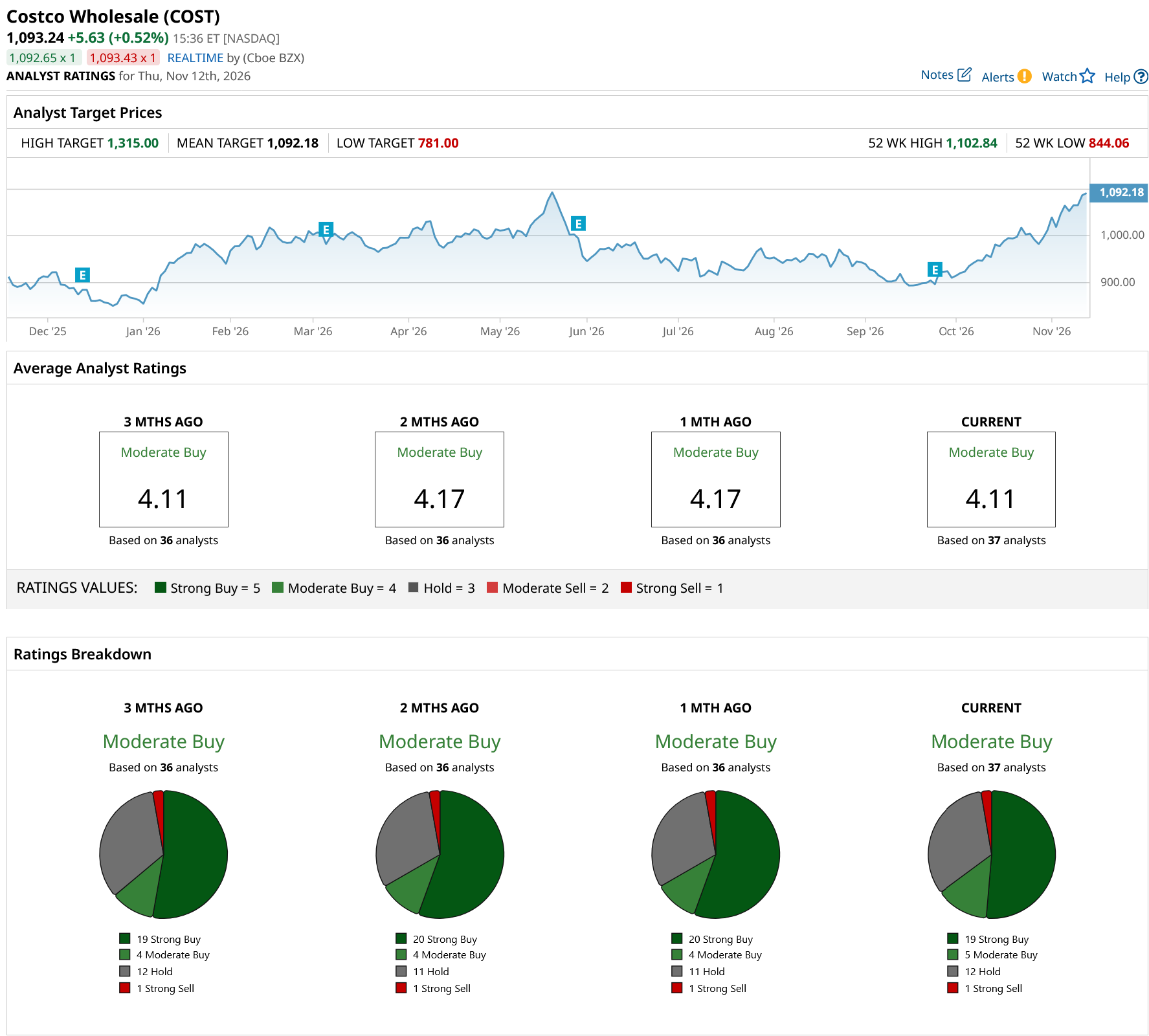
Among 37 surveyed analysts, COST stock has a consensus “Moderate Buy” rating. Still, their average price target of $1,090.76 suggests just 0.29% upside from recent price levels.
Conclusion
Costco’s special dividend is a welcome reward, but it doesn’t make the stock a bargain. Dec. 4 brings a $30-per-share payment for eligible shareholders, not a change in the company’s underlying earning power. Membership income, expansion, and delivery partnerships support the longer-term case, but the premium valuation and just 0.29% upside to Wall Street’s average target argue against chasing shares for the payout alone. My near-term expectation is mostly sideways trading rather than a sustained rally, unless December’s earnings meaningfully improve the outlook.
On the date of publication, Ebube Jones did not directly have a position in any of the securities mentioned in this article. All information and data in this article is solely for informational purposes. For more information please view the Barchart Disclosure Policy here.