


- Target (NYSE:TGT) has appointed consumer brands veteran Sally Grimes as a new independent director to its board.
- Grimes brings leadership experience from Diageo, Clif Bar, and Tyson Foods, adding consumer, food, and beverage expertise to Target's governance.
- The retailer highlighted her background in brand building and retail partnerships as support for its broader business transformation efforts.
- Sally Grimes joining the Target board is only part of the story of how governance changes may reshape the retailer's direction. Check out 2 warning signs that Target investors should know about.
For a wider view on how leadership and ownership can shape long-term returns, explore the broader trend in 28 top founder-led companies.
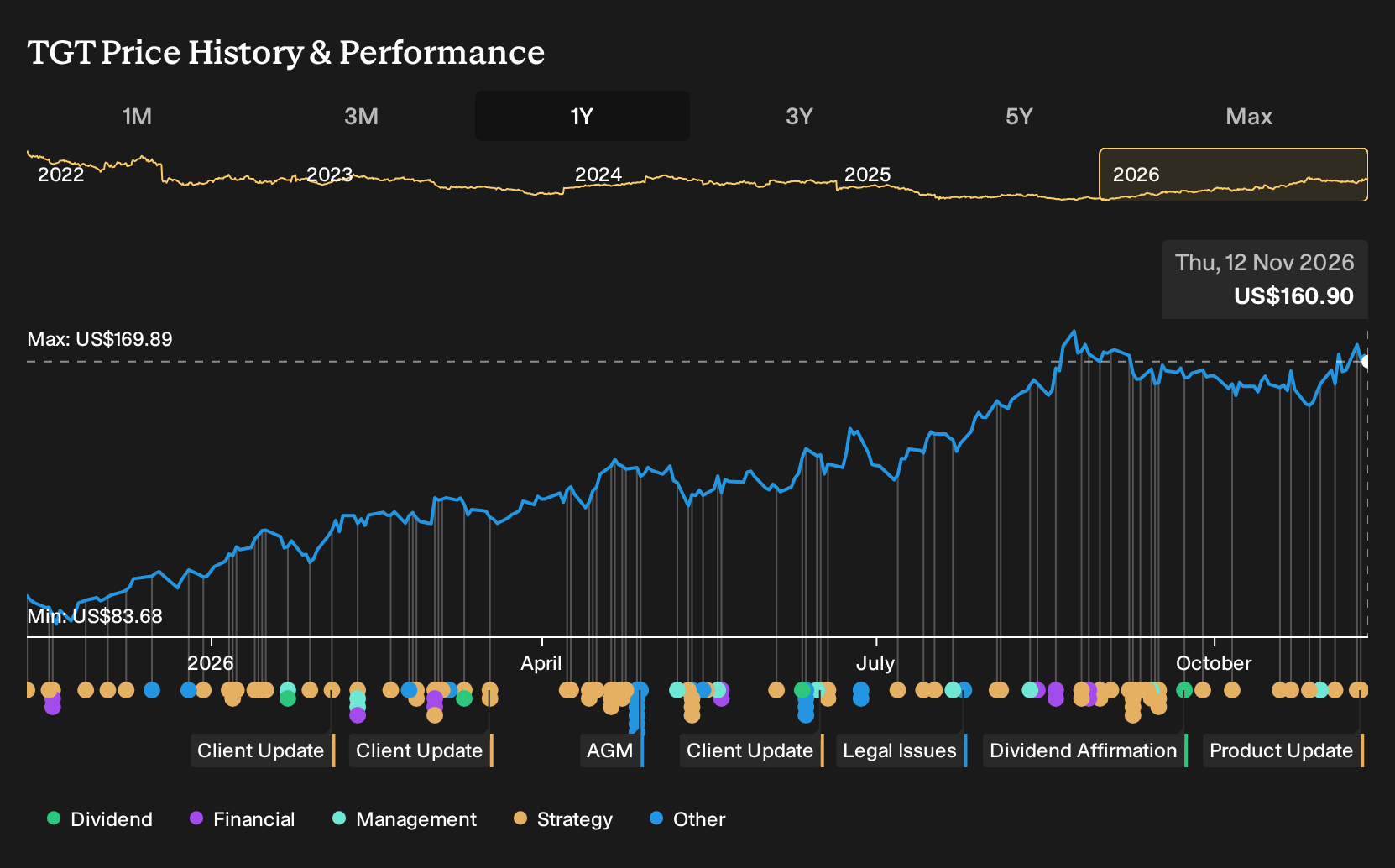
Target operates a broad network of general merchandise stores across the US, sitting among the larger players in consumer retailing with a market value of about $73.9b. That scale gives the board meaningful decisions to make about how it balances national brands, private labels, and in-store partnerships.
What Sally Grimes on the Target board really changes for investors
For Target investors, Sally Grimes joining the board reinforces a key part of the existing Narrative rather than rewriting it. The thesis already leans heavily on merchandising, brand building, and retail partnerships to keep traffic and margins resilient. Grimes’ track record across Diageo, Clif Bar, and Tyson Foods plugs directly into that catalyst around a merchandising led reset and alternative revenue streams. Her roles on the Audit & Risk and Infrastructure & Finance committees also speak to execution discipline. The open question is whether this extra consumer brand firepower can meaningfully address the risk that home and apparel stay weaker than management would like.
See how these catalysts shape Target's path to a $165 fair value.
The next useful checkpoint is how Target’s board and leadership talk about merchandising priorities, owned brands, and partnership strategy in the next few quarterly updates and investor presentations, including any commentary that ties board level governance changes to concrete decisions on category mix and capital allocation.
Add Target to your Watchlist and get alerts as these catalysts play out.
Have feedback on this article? Concerned about the content? Get in touch with us directly. Alternatively, email editorial-team@simplywallst.com