


The Fed is hinting at more rate hikes, markets are bracing for higher borrowing costs, and suddenly the calm, dividend-paying corner of the market looks a lot more interesting. Income-focused large caps with moderate yields and sturdier balance sheets can feel like a hiding place when policy stays tight and volatility picks up. This article walks through three stocks from our value and dividend screener that appear closely tied to this new rate reality.
The three examples below are just a sample, as the full screen pulled up 9 more large caps with income, value and balance sheet profiles that tell similarly compelling stories. If you want to move beyond a short list and actively sort through the full universe, head straight to the US Large-Cap Value and Dividend Stocks screener to identify, compare and analyze candidates that best fit your own conviction and risk tolerance.
PepsiCo (PEP)
Overview: PepsiCo is a global food and beverage company that sells branded snacks and drinks to retailers, foodservice outlets and consumers worldwide.
Operations: PepsiCo generates most of its revenue from PepsiCo Beverages North America at US$29.5b and PepsiCo Foods North America at US$27.5b, with meaningful contributions from EMEA at US$19.3b and Latin America Foods at US$11.6b.
Market Cap: US$196.2b
For an income screen built around durability in a higher-rate world, PepsiCo fits neatly, and AshleighG, a Simply Wall St Community investor who wrote the Narrative, argues that the real question now is how its next wave of products reshapes a very mature portfolio.
"The company is pushing into functional and health-focused drinks with the acquisition of Poppi (prebiotic soda), ownership of Bubly (sparkling water), and a partnership with Celsius (including Rockstar energy drinks)."
What really matters for dividend-focused investors is how one quiet shift in PepsiCo’s business mix ultimately feeds through to future cash generation.
If that shift in PepsiCo’s mix intrigues you, read the full narrative for PepsiCo to see how new categories could accelerate or quietly reshape its cash engine.

National Fuel Gas (NFG)
Overview: National Fuel Gas is a diversified U.S. energy business that produces, transports, stores and sells natural gas through largely regulated networks.
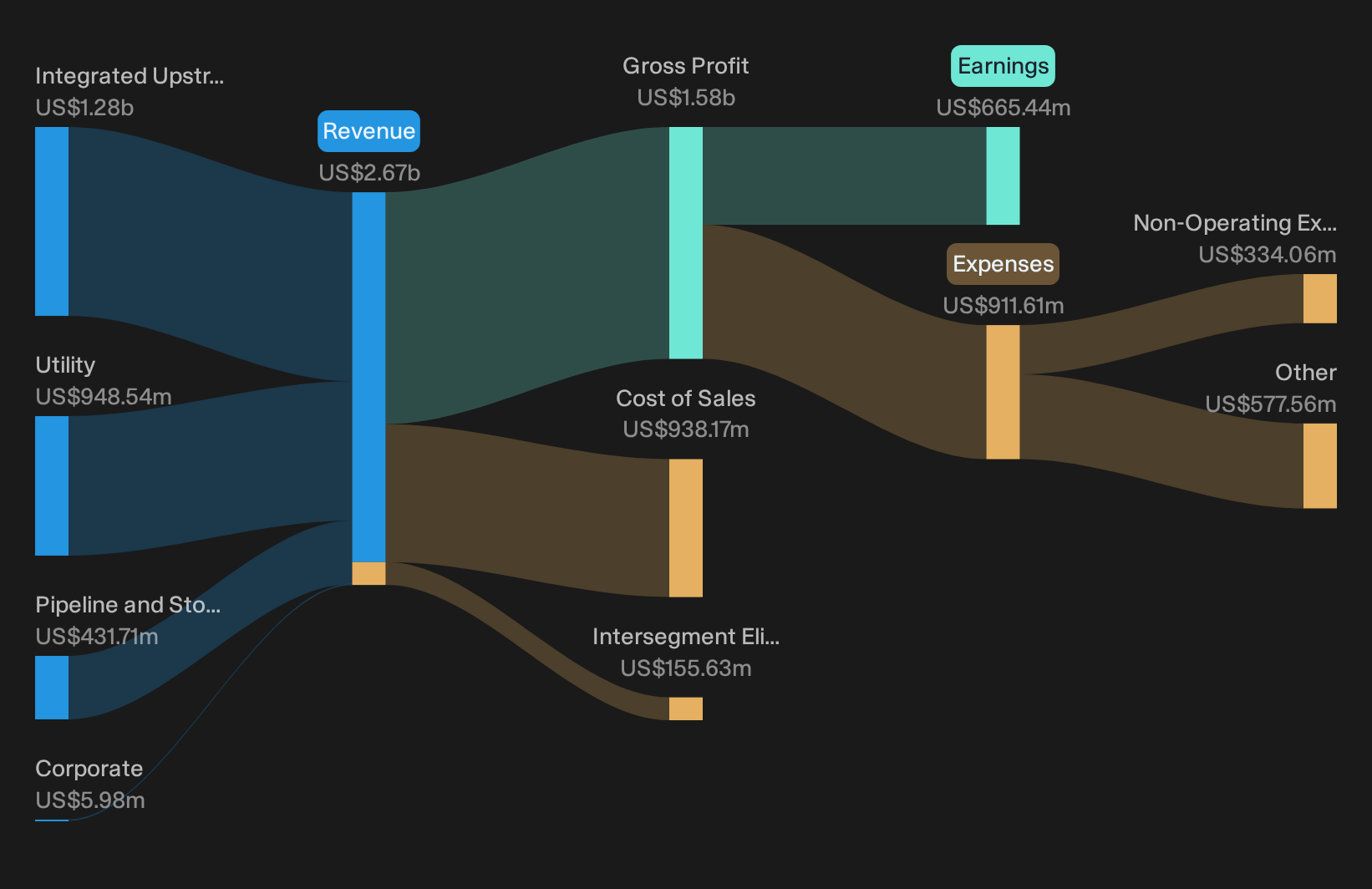
Operations: National Fuel Gas generates about US$1.28b from Integrated Upstream and Gathering, US$949 million from Utility operations, and US$432 million from Pipeline and Storage, all in the United States.
Market Cap: US$7.2b
Income-focused investors looking at the US Large-Cap Value and Dividend Stocks theme often stop at National Fuel Gas, because the analyst consensus Narrative on Simply Wall St frames it as a classic asset-backed utility and energy mix with a twist in how future projects and funding choices could shape returns.
"Accelerating natural gas demand for baseload power generation, including new data centers and higher electricity loads in regions served by National Fuel Gas, continues to support long term utilisation of its regulated pipeline and utility assets. The funding structure for the Ohio gas utility acquisition includes newly issued equity and more than US$2.7b of long term and acquisition related debt at interest rates above 5%."
The real swing factor for National Fuel Gas is what happens when that extra regulated scale meets one unresolved pressure on future earnings quality.
That unresolved pressure is exactly what the full narrative for National Fuel Gas unpacks, showing how funding choices, project timing and regulated cash flows could be accelerating or quietly masking future upside.
CareTrust REIT (CTRE)
Overview: CareTrust REIT owns, develops and leases skilled nursing and senior housing properties, collecting rent from healthcare operators across the US and UK.
Operations: CareTrust REIT generates all of its US$615 million revenue from investments in healthcare related real estate assets in the United States.
Market Cap: US$9.9b
CareTrust REIT adds a pure real estate income angle to this income and value screen, with long leases in healthcare properties. The analyst consensus Narrative on Simply Wall St frames it as a potential beneficiary of tighter credit creating more deal flow.
"The multi engine growth model across U.S. skilled nursing, U.K. care homes and SHOP is now backed by roughly US$1.5b of investments year to date in 2026 and about US$1.9b deployed in 2026 overall."
What happens when that growing pool of long term rent checks meets one unresolved pressure on how much external growth remains accretive?
That pressure point is exactly why the full narrative for CareTrust REIT digs into how CareTrust REIT’s external growth, funding mix and rent coverage could be accelerating or quietly masking long term upside.

Seeking Alternatives Before The Crowd?
Fresh themes keep breaking out while older stories lose momentum. Do not get caught chasing what is already flying. Use these under the radar for now ideas and act now.
- Target resilient cash generators and scan a curated 29 resilient stocks with low risk scores that help you stay invested when volatility picks up and patience matters most.
- Review a hand picked 41 profitable AI stocks that aren't just burning cash capturing AI plays where cash flow already supports the story, not the other way around.
- Sift through a focused 33 elite gold producer stocks that zeroes in on producers with scale, depth and operating leverage.
Have feedback on this article? Concerned about the content? Get in touch with us directly. Alternatively, email editorial-team@simplywallst.com