


- Stride, Inc. was recently added to the Zacks Rank #1 list after analysts raised current year earnings estimates by 4.9% over the past 60 days, reflecting stronger expectations for how its education services can translate into profits.
- The focus on Stride’s interest coverage, expected sales and EPS growth, and strong VGM Score highlights how its balance sheet strength and operating profile are central to the investment case rather than relying primarily on sentiment.
- We will now look at how Stride’s investment narrative could be affected by rising earnings estimates and stronger interest coverage.
Scan for more education and services players showing similar earnings momentum and balance sheet resilience by jumping into our curated list of list of solid balance sheet and fundamentals (23 results)
Stride Investment Narrative Recap
For Stride, the core belief is pretty simple. You need to think virtual and choice based K 12 education can keep gaining ground and that the firm can keep shifting more students into higher value Career Learning programs while managing regulatory and funding constraints. The analyst consensus Narrative on Simply Wall St leans on that mix shift plus efficiency from newer platforms and tutoring investments.
The fresh bump in earnings expectations and recognition of strong interest coverage speak more to execution on that existing plan than to a new short term trigger. They do not remove the biggest near term risks. Enrollment caps, contract decisions in key states and the drag from platform modernization costs still feel like the real swing factors.
The most relevant piece of recent commentary is the focus on Stride’s interest coverage and its VGM Score of A alongside its Zacks Rank #1. That package points to a business that currently covers interest costs from operating earnings with room to spare and carries a balance sheet that supports investment in curriculum, technology and support services.
For catalysts, that matters because the company’s plan relies on ongoing spend into live and AI tutoring, platform upgrades and Career Learning expansion while handling contract volatility in places like Texas and New Mexico. Stronger interest coverage can help Stride keep funding those priorities even if enrollment growth is constrained or gross margin pressure lingers, although execution around student quality, state policy and platform rollout still drives the operational outcome.
What The Current Stride Forecasts Actually Assume
Stride's current setup is built around relatively modest expansion rather than a big step change. Analysts are baking in revenue growth of 3.1% a year over the next three years, paired with profit margins that move from 13.2% today to 14.9% by 2029. That path implies more of the earnings story comes from squeezing more profit out of each dollar of sales and from having fewer shares in the market, rather than from rapid top line acceleration.
The earnings bridge under that framework is straightforward. Consensus points to earnings of US$334.3 million today and US$416.0 million by 2029. That is an increase of about US$81.7 million over the period, with the expected uplift leaning on margin expansion and ongoing share count reduction of 4.23% a year, instead of aggressive volume assumptions. For anyone tracking Stride as an education and services play, the key question is whether that mix of steady revenue growth and higher profitability feels reasonable given the known contract and regulatory constraints.
Stride's narrative projects US$2.8b revenue and US$416.0 million earnings by 2029. This requires 3.1% yearly revenue growth and an earnings increase of about US$81.7 million from current earnings of US$334.3 million.
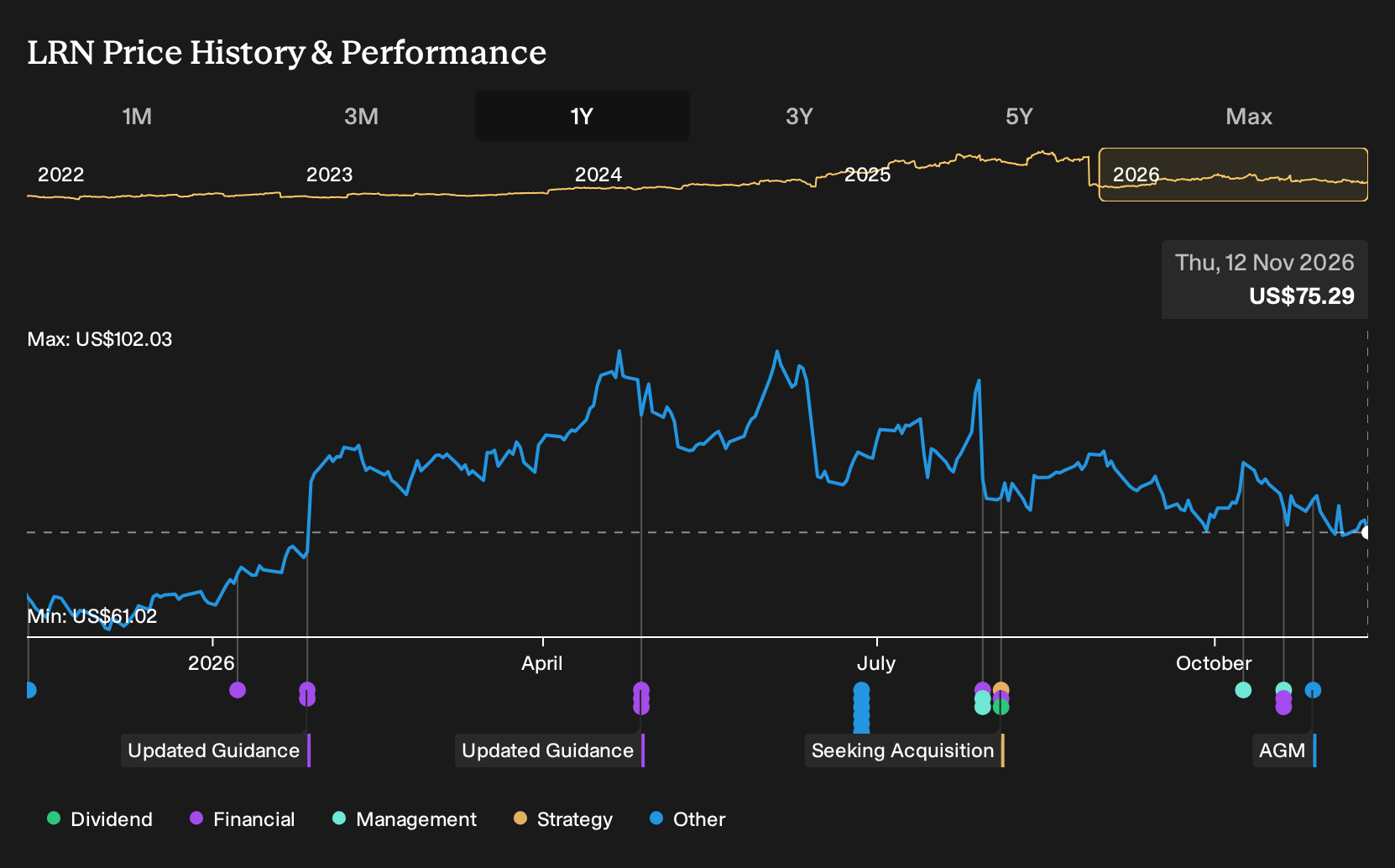
Uncover why Stride's fair value indicates a 36% potential upside to its current price, which could narrow quickly if sentiment catches up.
Exploring Other Perspectives
One alternate view around Stride focuses on technology friction as the real swing factor rather than interest coverage strength. The most cautious analysts were working off revenue expectations of about US$2.8b and earnings of roughly US$404.7 million by 2029, a step below consensus. That gap shows how far opinions can stretch. Explore both sets of assumptions and see which feels closer to your own read of the business, especially now that fresh earnings estimate upgrades have arrived and may prompt both camps to revisit their models.
Explore 5 other Stride fair value estimates, including one that suggests as much as 32% downside from the current price.
Form Your Own Verdict
Don't just follow the ticker. Dig into the data and build a conviction that's truly your own.
- A great starting point for your Stride research is our analysis highlighting 4 key rewards that could impact your investment decision.
- See our latest analysis for Stride. The report includes a comprehensive fundamental analysis summarized in a single visual, the Snowflake, making it easy to evaluate Stride's overall financial health at a glance.
Looking For More Ideas Beyond Stride?
Stride might be your starting point, but your portfolio usually benefits from having a mix of different earnings profiles, dividend streams and balance sheet strengths. Use the Simply Wall St screener to quickly filter for other companies that match the kind of risk and return trade off you want, rather than just following headlines or the latest upgrade.
- If you are hunting for companies that combine quality with potential mispricing, scan through our 32 high quality undervalued stocks that match strict cash flow and balance sheet criteria.
- If capital preservation matters just as much as upside, shortlist candidates from a 29 resilient stocks with low risk scores that screens for resilience first.
- If you want to surface under followed opportunities with solid fundamentals, start with a 20 high quality undiscovered gems that rarely appear on mainstream stock lists.
Have feedback on this article? Concerned about the content? Get in touch with us directly. Alternatively, email editorial-team@simplywallst.com