


- Walmart (NasdaqGS:WMT) agreed to a US$7.8 million settlement with Pennsylvania authorities over alleged child labor violations under the state Child Labor Act.
- The agreement with the Pennsylvania Department of Labor & Industry is described as the largest child labor settlement in the state's history.
- As part of the deal, Walmart committed to new compliance measures intended to prevent future breaches of Pennsylvania's child labor rules.
- This historic US$7.8 million child labor settlement in Pennsylvania is a development investors may want to weigh against our broader view. Our analysis turns up 2 other big wins for Walmart as well.
Walmart is far from the only large employer exposed to legal, regulatory and infrastructure demands that intersect with emerging AI systems, so it can be useful to compare it with peers through 53 AI infrastructure stocks.
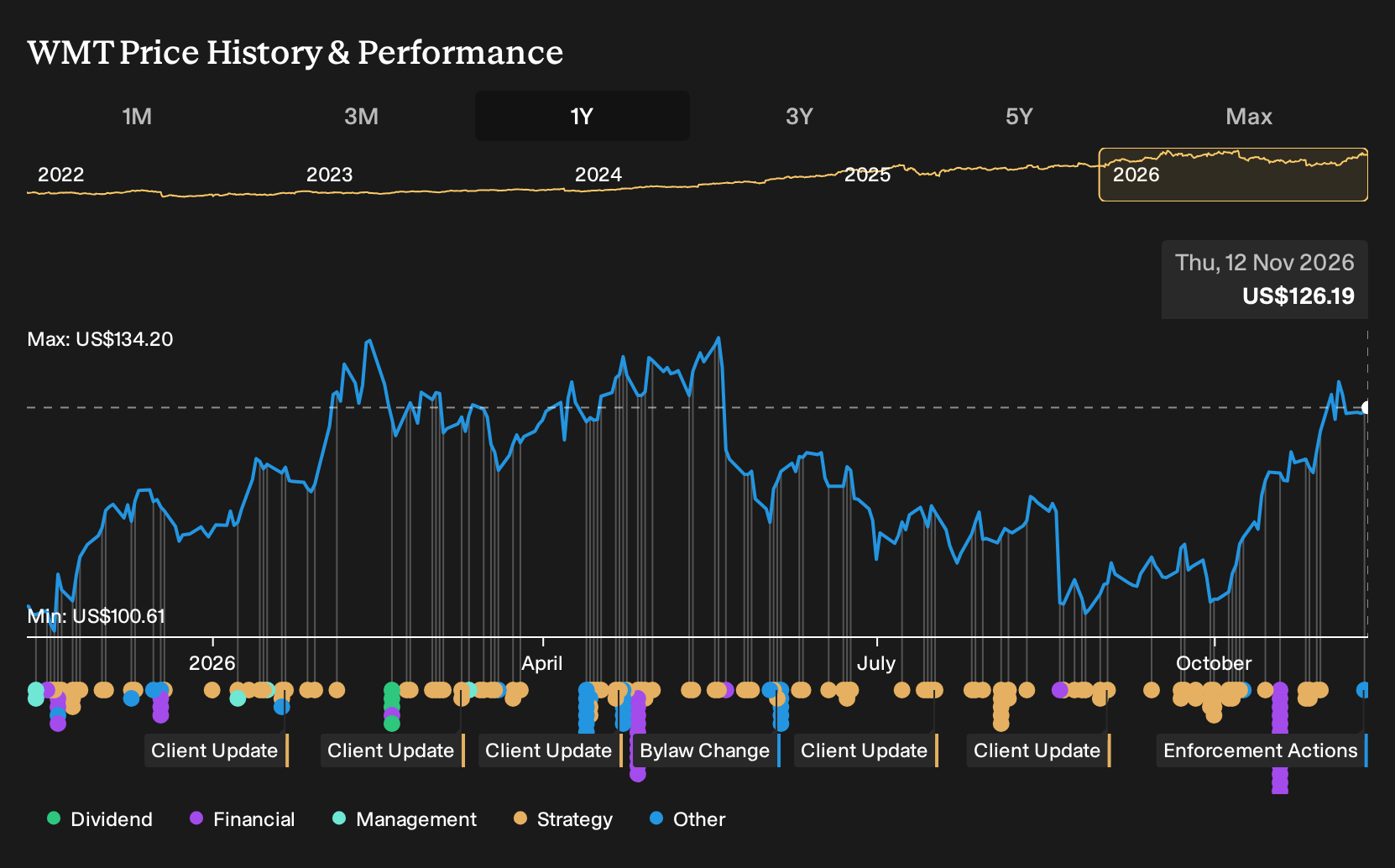
Walmart runs a vast mix of retail and wholesale stores, membership clubs and ecommerce platforms worldwide, so any compliance issue tied to its large US workforce can ripple across a complex operating footprint that spans both in store roles and rapidly growing digital operations.
See how Walmart's balance sheet measures up.
What Walmart’s child labor settlement really shifts for the Narrative
For Walmart investors, this settlement primarily sharpens an existing Narrative risk rather than rewriting the bullish case around higher margin businesses. Regulatory scrutiny was already identified in the story around AI tools and digital pricing. A record child labor penalty now extends that compliance question into day to day store operations. The new agreement includes forward looking checks and amplified penalties if future violations are found, so labor compliance sits closer to the same execution bucket as logistics and e commerce profitability in judging how consistently Walmart can run a more complex business model at scale.
See how these catalysts shape Walmart's path to a $129 fair value.
The first proof point to watch is simple. Look for whether follow up audits and state level checks over the next few years surface any repeat child labor violations at Walmart locations, which would test both the new safeguards and investors’ confidence that regulatory risk is contained rather than building.
One more thing about Walmart that could matter even more
Short term headlines rarely explain where a retailer of Walmart’s size is expected to be several years from now, and the longer range projections for this business point to a very different story. See where analysts expect Walmart to be in a few years.
Have feedback on this article? Concerned about the content? Get in touch with us directly. Alternatively, email editorial-team@simplywallst.com