


Inflation is now hitting the factory gate, with producer prices up 6.5% year-over-year and diesel and food costs climbing, while markets brace for another Fed rate hike and tighter credit. That mix worries many; however, it also shines a light on large, steadier dividend payers that some investors use as anchors when input costs and interest expenses are in focus. This article walks through three U.S. large-cap dividend stocks from our defensive screener that appear particularly exposed to these inflation and rate catalysts, explaining why the current backdrop could either reward their discipline or test their resilience.
The three stocks highlighted next are only a sample of what fits this defensive profile, with the full screen surfacing 26 more large-cap dividend payers that carry equally interesting stories for income-focused holders. To see the broader field and identify which ones truly fit your own risk and yield mix, head straight into the U.S. Large-Cap Defensive Dividend Stocks screener
Marzetti (MZTI)
Overview: Marzetti is a U.S. specialty food producer that sells branded salad dressings, frozen breads, rolls, dips and sauces into retail stores and restaurant chains.
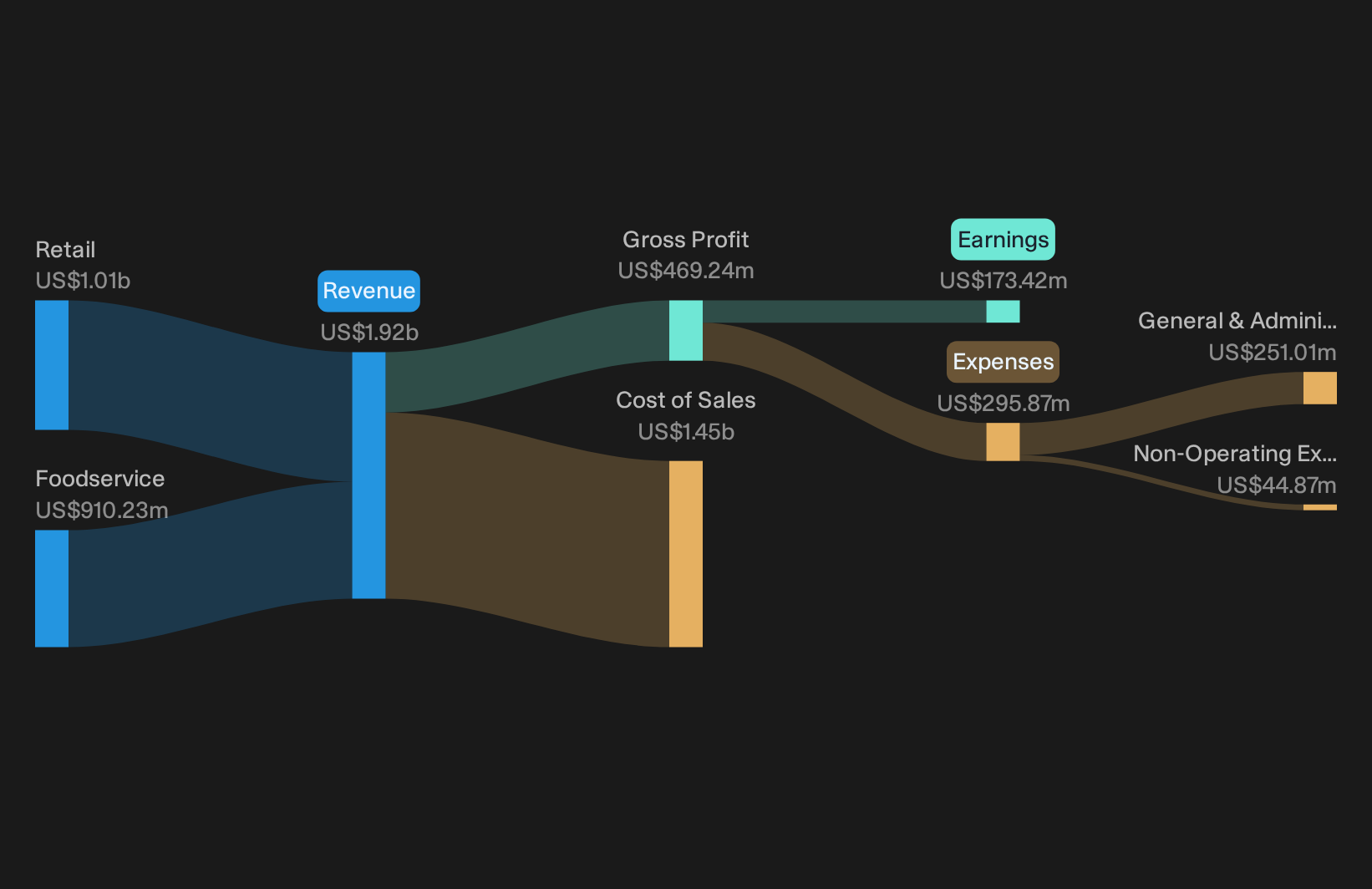
Operations: Marzetti generates about US$1.01b from Retail products and US$910 million from Foodservice, with all US$1.92b of revenue coming from the United States.
Market Cap: US$3.01b
For a defensive dividend screen built around dependable cash flows, Marzetti offers a classic consumer staples profile with an inflation-aware twist that the analyst consensus Narrative on Simply Wall St captures neatly.
"Growing demand for healthier, clean-label, and convenience-oriented foods aligns with Marzetti's ongoing product innovation (e.g., gluten-free, plant-based offerings), supporting access to secular growth pools and enabling higher margin opportunities in both retail and foodservice channels."
What happens to that margin story if a single unseen pressure on input costs or pricing power shifts more sharply than expected?
If that unseen pressure is what keeps you watching Marzetti, the full narrative for Marzetti shows how pricing power, category mix and capital discipline could be quietly decoupling.
OGE Energy (OGE)
Overview: OGE Energy is a regulated U.S. electric utility that generates and delivers power to nearly one million customers, offering dividend-focused, large-cap defensiveness within this screener’s income theme.
Operations: OGE Energy generates US$3.37b in revenue from its Electric Company segment, with all of that coming from customers in the United States.
Market Cap: US$10.56b
OGE Energy slots into this defensive dividend list because its regulated grid, long-lived assets and income profile line up with what the analyst consensus Narrative on Simply Wall St describes as a slow and steady way to face higher inflation and interest costs.
"Robust, multi-year electricity demand growth driven by OGE Energy’s approximately 24% weather-normalized retail load increase since 2021, combined with expected 4% to 6% additional load growth in 2026 on customer growth just under 1%, points to a larger usage base that can support higher long-term revenue and earnings."
What happens to that long-run earnings picture if a single unresolved piece of the capital and funding plan tilts away from expectations?
If that funding question is what you are weighing, full narrative for OGE Energy explains in detail how OGE Energy’s load growth story could accelerate or stall as capital costs shift.

Hormel Foods (HRL)
Overview: Hormel Foods develops and markets branded meat, nut and ready-meal products that many households and restaurants buy regularly, even when budgets tighten.
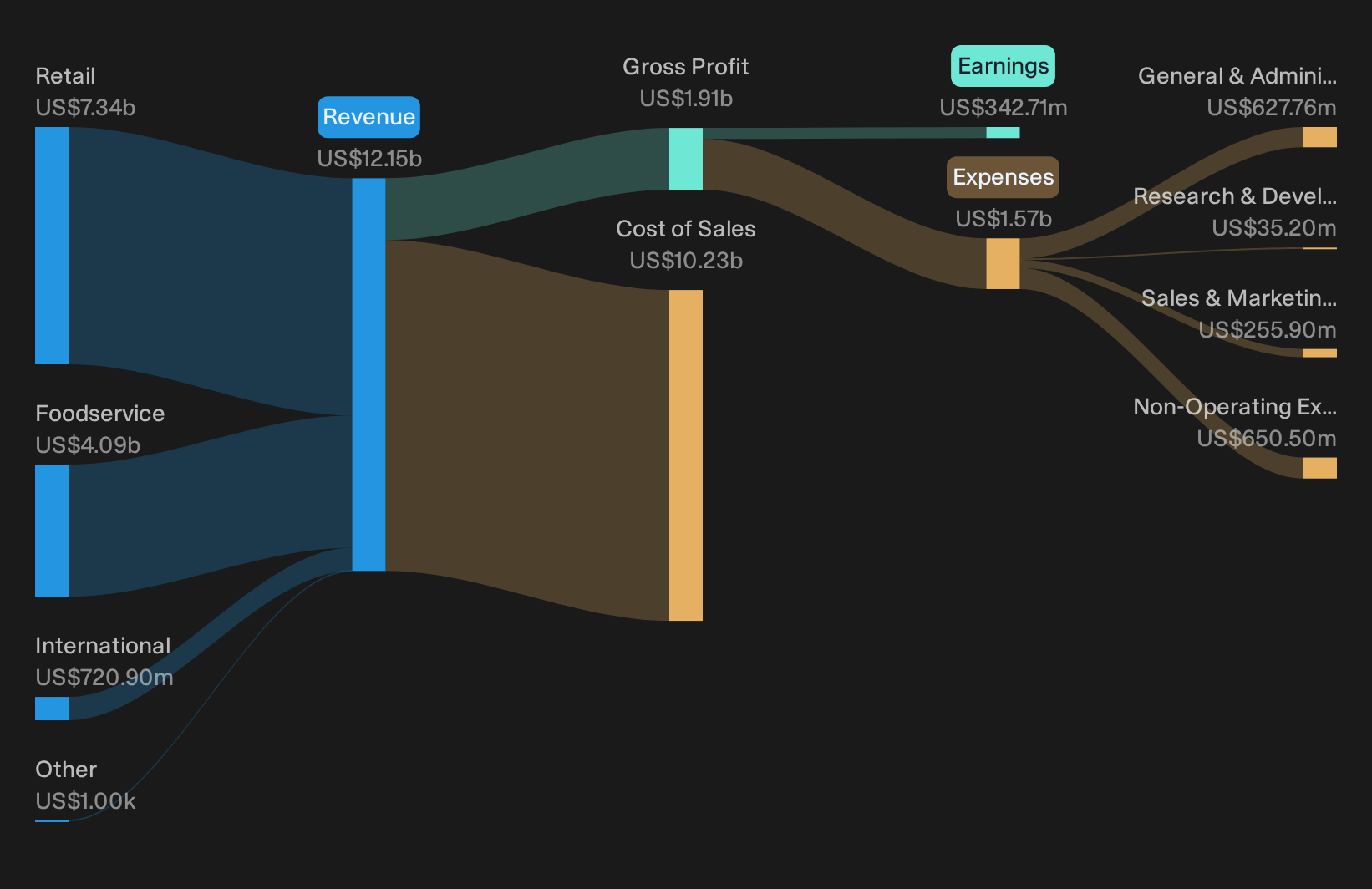
Operations: Hormel Foods generates about US$7.34b from Retail, US$4.09b from Foodservice and US$720.9 million from International operations.
Market Cap: US$12.08b
For an income-focused screen built around lower volatility and dependable dividends, Hormel Foods offers a textbook consumer staples profile. The analyst consensus Narrative on Simply Wall St highlights how management is leaning into higher value protein and foodservice to keep that defensive appeal relevant as producer inflation stays elevated.
"Hormel Foods is expanding its value added protein and foodservice reach through the planned Brakebush Brothers acquisition, which is expected to add about US$1.2b of net sales in calendar 2026 and lift higher margin chicken exposure toward 13% of the protein portfolio."
What happens to that income story if a single unseen pressure on input costs, pricing power or foodservice demand shifts more sharply than expected?
When that pressure matters, the full narrative for Hormel Foods outlines how Hormel Foods’ protein mix, pricing and capital choices could turn inflation stress into an accelerating income story.
Seeking Fresh Alternatives Before They Fly
Markets move fast and the best breakout stories rarely stay quiet for long. Scan fresh picks with real momentum while they are still under the radar for now and consider acting before attention broadens.
- Track cash rich businesses before momentum headlines hit and use the list of solid balance sheet and fundamentals (23 results) to spot candidates that could handle tougher credit and cost conditions.
- Hunt for potential income workhorses with yields that still look supportable and let the 6 dividend fortresses guide you toward higher paying options you might be overlooking.
- Position ahead of the next infrastructure cycle and use the 44 power grid technology and infrastructure stocks to zero in on grid and equipment plays while attention is still elsewhere.
Have feedback on this article? Concerned about the content? Get in touch with us directly. Alternatively, email editorial-team@simplywallst.com