


Even when a business is losing money, it's possible for shareholders to make money if they buy a good business at the right price. For example, although Amazon.com made losses for many years after listing, if you had bought and held the shares since 1999, you would have made a fortune. Nonetheless, only a fool would ignore the risk that a loss making company burns through its cash too quickly.
Given this risk, we thought we'd take a look at whether Japan Tissue Engineering (TSE:7774) shareholders should be worried about its cash burn. In this report, we will consider the company's annual negative free cash flow, henceforth referring to it as the 'cash burn'. First, we'll determine its cash runway by comparing its cash burn with its cash reserves.
Does Japan Tissue Engineering Have A Long Cash Runway?
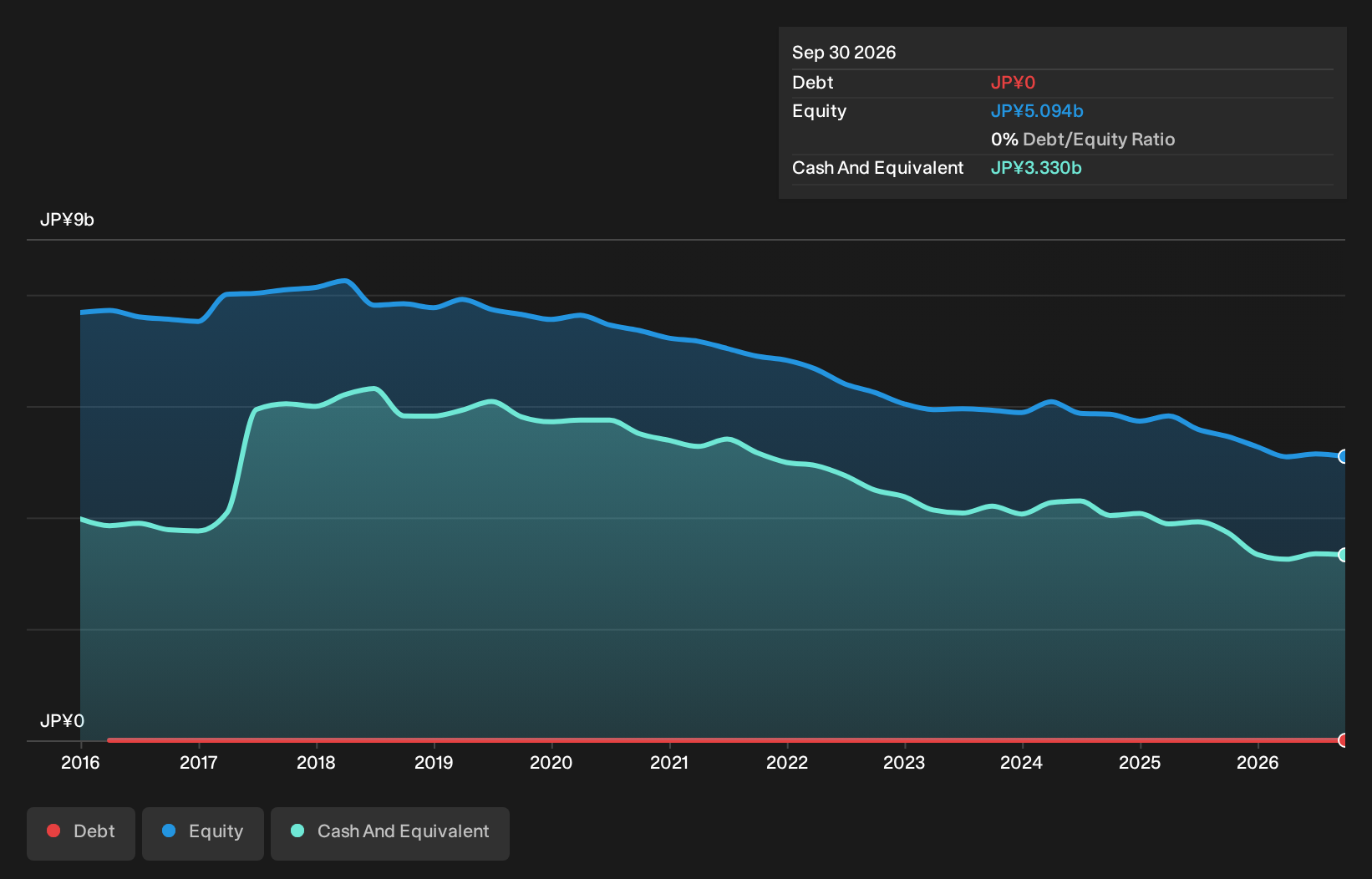
A company's cash runway is the amount of time it would take to burn through its cash reserves at its current cash burn rate. When Japan Tissue Engineering last reported its September 2026 balance sheet in October 2026, it had zero debt and cash worth JP¥3.3b. Importantly, its cash burn was JP¥332m over the trailing twelve months. That means it had a cash runway of very many years as of September 2026. Even though this is but one measure of the company's cash burn, the thought of such a long cash runway warms our bellies in a comforting way. You can see how its cash balance has changed over time in the image below.
Check out our latest analysis for Japan Tissue Engineering
How Well Is Japan Tissue Engineering Growing?
Japan Tissue Engineering actually ramped up its cash burn by a whopping 98% in the last year, which shows it is boosting investment in the business. While that certainly gives us pause for thought, we take a lot of comfort in the strong annual revenue growth of 72%. Considering the factors above, the company doesn’t fare badly when it comes to assessing how it is changing over time. Of course, we've only taken a quick look at the stock's growth metrics, here. This graph of historic revenue growth shows how Japan Tissue Engineering is building its business over time.
How Hard Would It Be For Japan Tissue Engineering To Raise More Cash For Growth?
We are certainly impressed with the progress Japan Tissue Engineering has made over the last year, but it is also worth considering how costly it would be if it wanted to raise more cash to fund faster growth. Issuing new shares, or taking on debt, are the most common ways for a listed company to raise more money for its business. Commonly, a business will sell new shares in itself to raise cash and drive growth. We can compare a company's cash burn to its market capitalisation to get a sense for how many new shares a company would have to issue to fund one year's operations.
Since it has a market capitalisation of JP¥27b, Japan Tissue Engineering's JP¥332m in cash burn equates to about 1.3% of its market value. That means it could easily issue a few shares to fund more growth, and might well be in a position to borrow cheaply.
Is Japan Tissue Engineering's Cash Burn A Worry?
It may already be apparent to you that we're relatively comfortable with the way Japan Tissue Engineering is burning through its cash. In particular, we think its revenue growth stands out as evidence that the company is well on top of its spending. While we must concede that its increasing cash burn is a bit worrying, the other factors mentioned in this article provide great comfort when it comes to the cash burn. Looking at all the measures in this article, together, we're not worried about its rate of cash burn; the company seems well on top of its medium-term spending needs. Readers need to have a sound understanding of business risks before investing in a stock, and we've spotted 1 warning sign for Japan Tissue Engineering that potential shareholders should take into account before putting money into a stock.
If you would prefer to check out another company with better fundamentals, then do not miss this free list of interesting companies, that have HIGH return on equity and low debt or this list of stocks which are all forecast to grow.
Have feedback on this article? Concerned about the content? Get in touch with us directly. Alternatively, email editorial-team (at) simplywallst.com.