


Some investors rely on dividends for growing their wealth, and if you're one of those dividend sleuths, you might be intrigued to know that Atea ASA (OB:ATEA) is about to go ex-dividend in just three days. The ex-dividend date generally occurs two days before the record date, which is the day on which shareholders need to be on the company's books in order to receive a dividend. It is important to be aware of the ex-dividend date because any trade on the stock needs to have been settled on or before the record date. This means that investors who purchase Atea's shares on or after the 18th of November will not receive the dividend, which will be paid on the 24th of November.
The company's next dividend payment will be kr03.75 per share. Last year, in total, the company distributed kr7.50 to shareholders. Last year's total dividend payments show that Atea has a trailing yield of 4.4% on the current share price of kr0169.80. If you buy this business for its dividend, you should have an idea of whether Atea's dividend is reliable and sustainable. As a result, readers should always check whether Atea has been able to grow its dividends, or if the dividend might be cut.
Dividends are typically paid out of company income, so if a company pays out more than it earned, its dividend is usually at a higher risk of being cut. Atea is paying out an acceptable 68% of its profit, a common payout level among most companies. Yet cash flows are even more important than profits for assessing a dividend, so we need to see if the company generated enough cash to pay its distribution. Atea paid out more free cash flow than it generated - 162%, to be precise - last year, which we think is concerningly high. It's hard to consistently pay out more cash than you generate without either borrowing or using company cash, so we'd wonder how the company justifies this payout level.
Atea paid out less in dividends than it reported in profits, but unfortunately it didn't generate enough cash to cover the dividend. Cash is king, as they say, and were Atea to repeatedly pay dividends that aren't well covered by cashflow, we would consider this a warning sign.
Check out our latest analysis for Atea
Click here to see the company's payout ratio, plus analyst estimates of its future dividends.
Have Earnings And Dividends Been Growing?
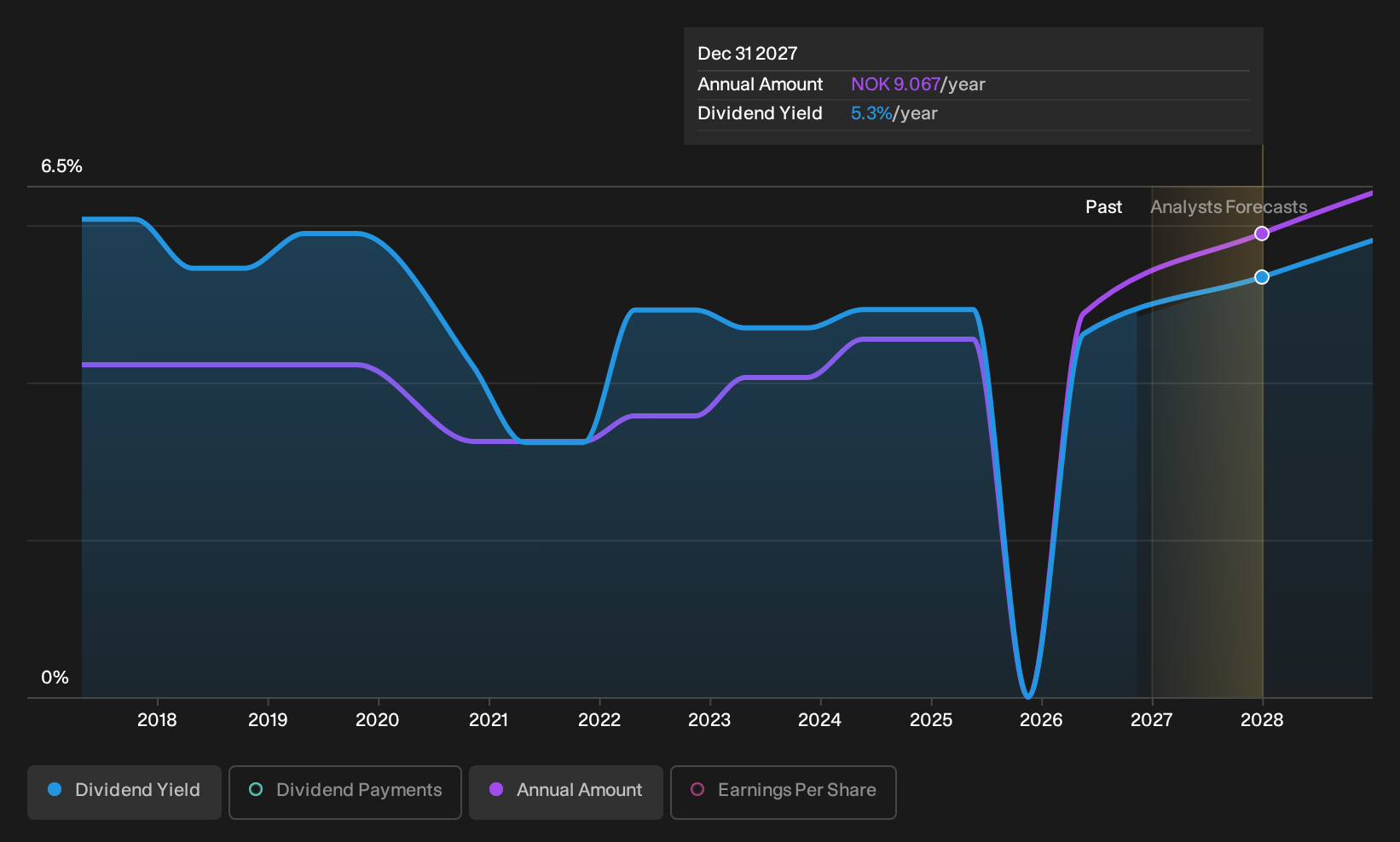
Companies with consistently growing earnings per share generally make the best dividend stocks, as they usually find it easier to grow dividends per share. If earnings decline and the company is forced to cut its dividend, investors could watch the value of their investment go up in smoke. For this reason, we're glad to see Atea's earnings per share have risen 15% per annum over the last five years. Earnings have been growing at a decent rate, but we're concerned dividend payments consumed most of the company's cash flow over the past year.
Many investors will assess a company's dividend performance by evaluating how much the dividend payments have changed over time. In the last 10 years, Atea has lifted its dividend by approximately 1.4% a year on average. Earnings per share have been growing much quicker than dividends, potentially because Atea is keeping back more of its profits to grow the business.
To Sum It Up
Is Atea an attractive dividend stock, or better left on the shelf? Earnings per share growth is a positive, and the company's payout ratio looks normal. However, we note Atea paid out a much higher percentage of its free cash flow, which makes us uncomfortable. Overall, it's hard to get excited about Atea from a dividend perspective.
So if you want to do more digging on Atea, you'll find it worthwhile knowing the risks that this stock faces. In terms of investment risks, we've identified 1 warning sign with Atea and understanding them should be part of your investment process.
Generally, we wouldn't recommend just buying the first dividend stock you see. Here's a curated list of interesting stocks that are strong dividend payers.
Have feedback on this article? Concerned about the content? Get in touch with us directly. Alternatively, email editorial-team (at) simplywallst.com.