


- JetBlue Airways (NasdaqGS:JBLU) was included in a nationwide ground stop after a communication issue hit all U.S. Air Route Traffic Control Centers.
- The disruption temporarily halted departures across multiple JetBlue hubs, affecting passenger itineraries and aircraft rotations on heavily trafficked routes.
- Initial updates from aviation authorities pointed to a systems communication problem within the national air traffic control network rather than airline-specific technology.
- The nationwide ground stop tied to the Air Route Traffic Control Center communication failure matters. However, investors need to look wider. We have also flagged 1 warning sign for JetBlue Airways.
Other carriers also face operational exposure to aviation infrastructure issues, so it can help to compare them through 43 power grid technology and infrastructure stocks.
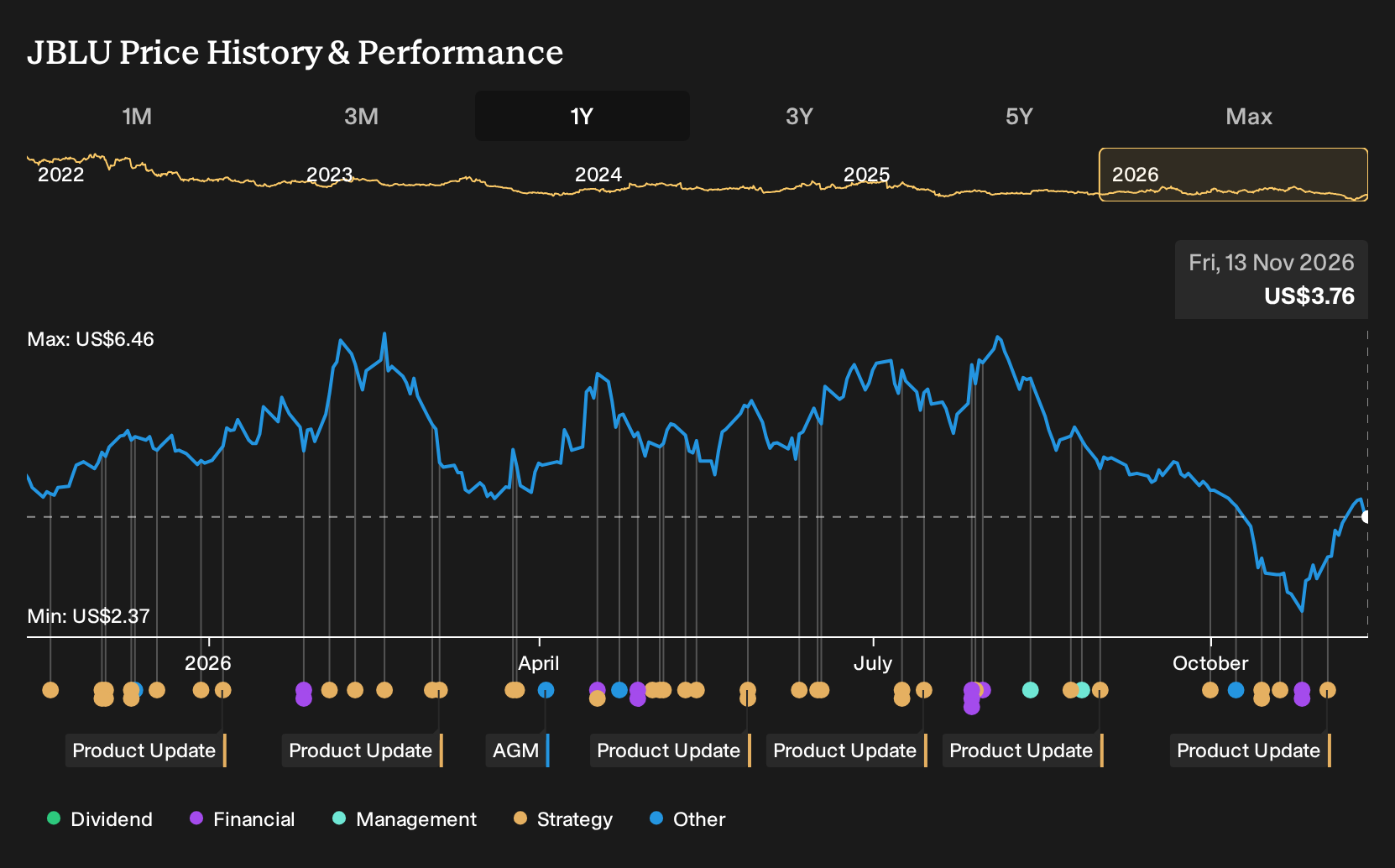
JetBlue Airways is a US airline focused on providing air transportation services across heavily trafficked domestic routes, so any broad air traffic control disruption directly touches its core operations. With a market cap of $1.4b, shocks in national aviation infrastructure can have an outsized impact on customer experience and scheduling efficiency for a business of this scale.
See which insiders are buying and selling JetBlue Airways following this latest news.
How does a nationwide ground stop actually hit JetBlue Airways?
When all U.S. Air Route Traffic Control Centers suffer a communication problem, carriers like JetBlue see departures paused at the same time. That can disrupt aircraft rotations, delay crews and push up short term costs as schedules reset and passengers are re accommodated across JetBlue’s busiest domestic routes.
Does this change the JetBlue Airways narrative or just the timing risk?
The narrative leans on JetForward execution, premium cabins and ancillary platforms such as Paisly to turn higher unit revenue into sustained profitability despite leverage. An event that shows how dependent JetBlue is on national aviation infrastructure highlights the operational risk side of that story, especially when analysts already flag net debt near US$8b and recent losses.
See how these catalysts shape JetBlue Airways' path to a $4.30 fair value.
What is the key data point to watch after this disruption?
The clearest tell will be how JetBlue updates its next capacity and cost guidance, especially any change to 2026 RASM and CASM ex fuel targets after factoring in the ground stop. A material revision to those metrics would signal whether this was a contained operational shock or something that tightens the execution challenge already outlined for JetForward.
What longer term question about JetBlue Airways never makes the headlines?
Short term disruptions grab attention, but the real story sits in where analysts expect JetBlue’s earnings power and balance sheet to be a few years from now, and how that lines up with today’s price. See where analysts expect JetBlue Airways to be in a few years.
Have feedback on this article? Concerned about the content? Get in touch with us directly. Alternatively, email editorial-team@simplywallst.com