


The Zhitong Finance App learned that Wall Street financial giant Morgan Stanley (hereinafter referred to as “Damo”) and Goldman Sachs's newly released 2027 global stock market investment strategy outlook can be described as jointly highlighting this critical investment logic — that is, the sharp fluctuation in the technology stock trading market surrounding AI is advancing the 2027 global capital allocation problem from “how much more AI capital expenditure can grow” to “which markets have more lasting profits, and which companies with long-term stable fundamentals can accelerate the transformation of orders into stronger cash flows.”
After a sharp decline in early November, US technology stocks experienced a round of phased rebound led by semiconductors and gradually supported by corporate operating data. On November 6, the Nasdaq 100 and the Philadelphia Semiconductor Index rebounded 1.35% and 4.21% respectively; on November 9, both rose further by 3.40% and 6.85%. In particular, the semiconductor sector, which is closely linked to the AI computing power theme, and popular technology stocks closely linked to AI clearly showed stronger resilience.
Shortly thereafter, after experiencing a brief retracement on November 10, CoreWeave's performance and upward revenue guidance mitigated market concerns about computing power demand and financing capacity, and accelerated the rebound again: the NASDAQ 100 rose 2.28%, and the Philadelphia Semiconductor Index rose 5.66% on November 11. ; Memory chips became the leading upward trend on the same day. Micron and SanDisk surged 11.89% and 13.69% respectively. The capital repurchased computing power leases, chips, and data center connections, reflecting that the market began to re-evaluate AI infrastructure assets that had previously been centrally sold based on orders, revenue, and financing arrangements.
However, this round of rebound was later disrupted by Nvidia leadership changes and interest rate pressure: on November 12, the two major indices fell 0.30% and 0.54%, respectively, and fell further by 1.22% and 3.43% on November 13. Despite a cumulative increase of about 3.53% and 8.1% during the week, the market has shown an evolutionary path of “a strong rebound after a sharp decline, operating data boosted expectations, and then put back under pressure”.
On November 13, the Nasdaq 100 and the Philadelphia Semiconductor Index, which are in a strong rebound process, fell 1.22% and 3.43% respectively, but the week still showed upward resilience under the rush of capital, rising by about 3.53% and 8.1% respectively, reflecting the alternation of strong rebounds and re-sell-offs. Nvidia declined by about 13% during the same week; the company announced the resignation of Huang Renxun on November 12. The leadership transition caused the market to re-evaluate the continuity of its technology routes, customer relationships, and ecological financing arrangements.
Major selling pressure on AI and technology stocks triggered by the Nvidia CEO crisis then spread to the Asian stock market. The semiconductor sector, especially those leading AI computing power supply chain linked to Nvidia's AI computing power clusters, became the focus of the sell-off. On November 16, the Taiwan Weighted Index, South Korea's KOSPI Index, and Nikkei 225 Index closed down 6.03%, 3.59%, and 2.42% respectively. TSMC closed down 5.74%, indicating that the contraction in risk appetite in technology stocks has spread across markets.
At the same time, the 10-year US Treasury yield is still near a historical high of about 5.14%, continuing to put discount pressure on forward profit valuations and significantly raising the capital cost threshold for AI infrastructure projects that rely on external financing. Judging from the pricing logic, investors are simultaneously re-evaluating the continuity of core corporate governance and strategy execution, financing conditions, and project delivery pace; furthermore, this round of decline reflects a repricing of future cash flow payment time and risk premiums. The decline in stock prices alone cannot be used to determine that AI orders have completely shrunk.
It is against the backdrop of such AI computing power themes and sharp shocks in technology stocks closely linked to AI, Goldman Sachs and Morgan Stanley both believe that the decline in valuation is creating optimistic investment opportunities in the 2027 Global Stock Market Investment Strategy Outlook Report — the former emphasizes the price/performance ratio of growth stocks after a deceleration in profits, while the latter is more actively betting on the continuation of the capital expenditure cycle and spreading revenue sources to AI adopters and the wider industry.
The AI infrastructure supercycle is not over, but Asian asset allocation is beginning to change the way of play! Daima chose Japan and surpassed South Korea, and cash flow became the anchor of allocation
Morgan Stanley's core judgment on the Asian stock market is that the global AI capital expenditure supercycle surrounding the unprecedented AI infrastructure frenzy still has room to continue, but the portfolio needs to pay more attention to the delivery quality of growth. The bank believes that the overall financing base for AI capital expenditure is still stable, and changes in US policy may delay some 2028 investment until 2029, while long-term investment trends are still supported.
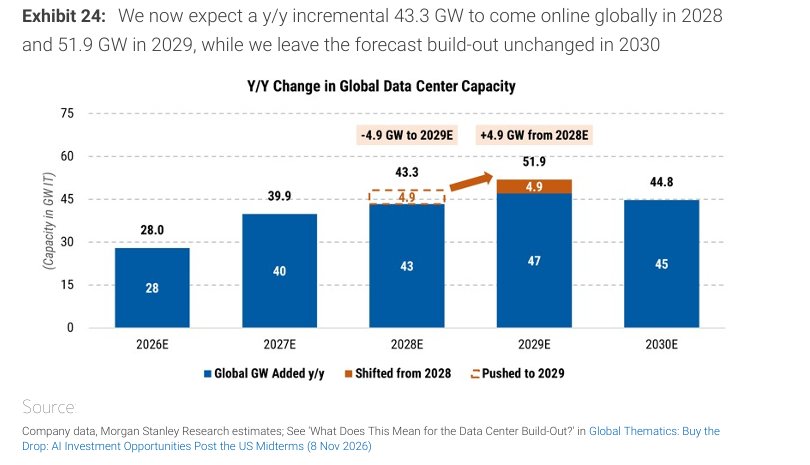
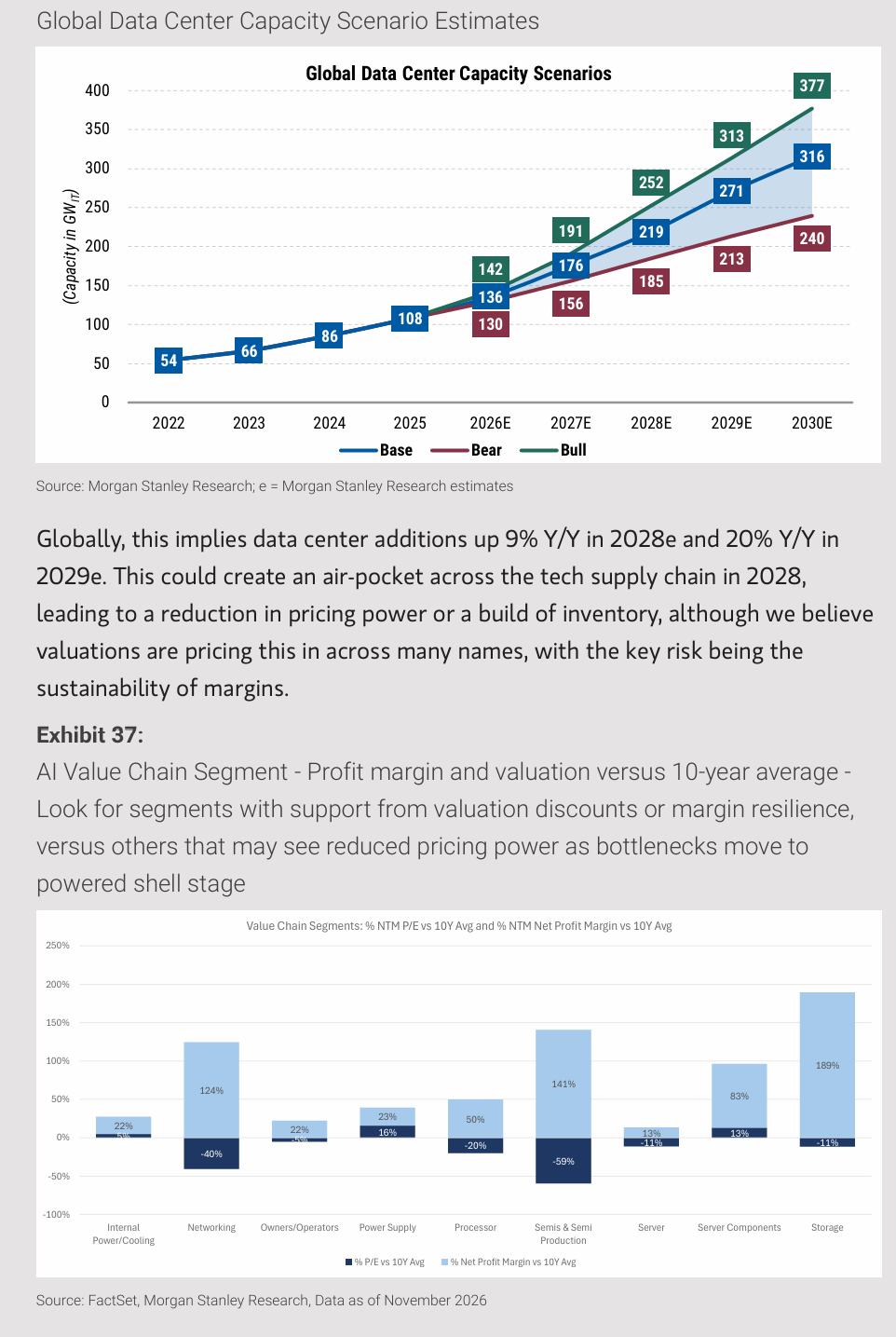
As a result, Damo continues to overmatch industry, semiconductors, technology hardware, energy, and materials. At the same time, it is focusing more on valuation support and profit margin resilience within semiconductors and hardware, and is focusing on banks benefiting from capital expenditure financing, reform, and re-inflation through standards such as Yihe Holdings and Wanzhou International. The focus of configuration adjustments is to preserve revenue sources for the AI construction cycle, so that the portfolio has more profit drivers and reduces dependence on a single pace of production expansion.
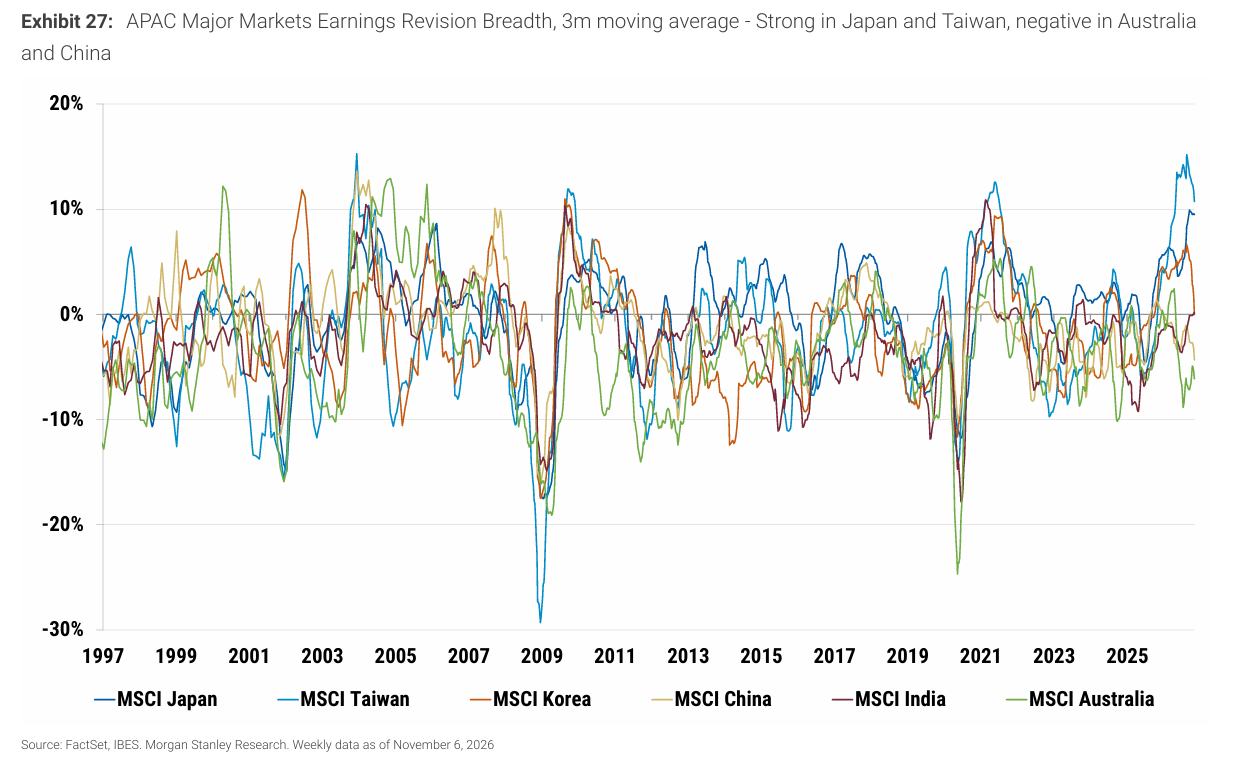
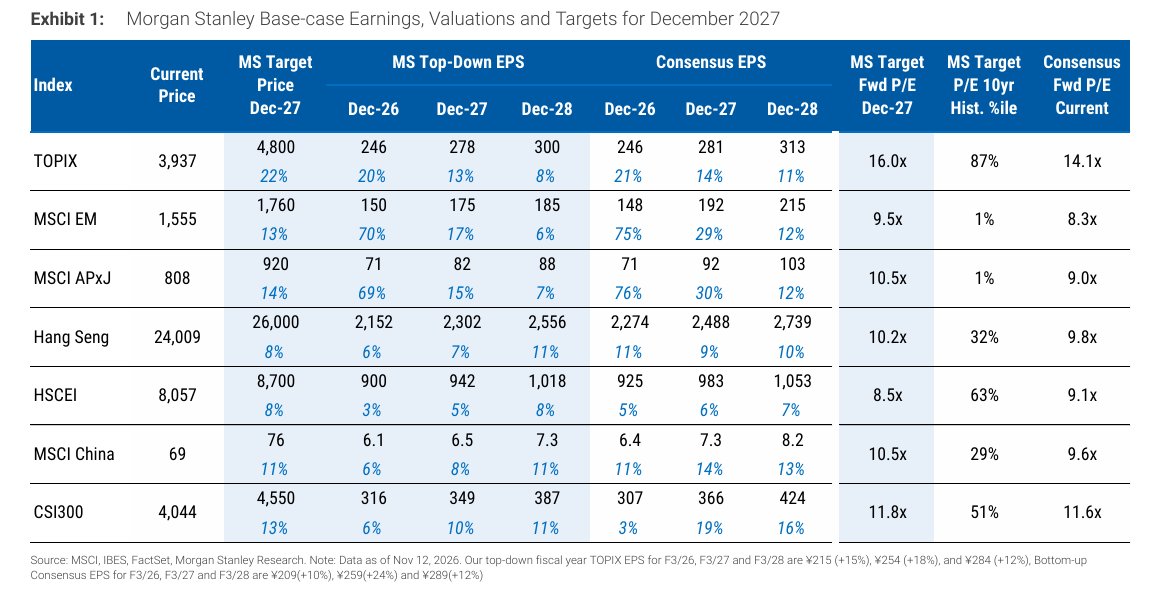
“Prefer Japan, overmatch Korea” -- this is the main configuration line of the Daimo strategist team's 2027 Asian stock market investment outlook, corresponding to the two configuration logics of wider profit sources and more flexible AI profits, respectively. Japan's advantage comes from re-inflation, improved return on net assets, corporate governance reforms, and reparticipation of domestic and foreign capital, and profit growth is expected to spread further from export manufacturing to more domestic demand industries. Damascus's East Stock Index targets include both profit growth and valuation recovery: earnings per share are expected to increase by 13% and 8% in 2027 and 2028, respectively, and the target forward-looking price-earnings ratio will rise 16 times from 14.1 times at the time of reporting.
The Korean stock market, which has two of the world's largest memory chip giants, SK Hynix and Samsung Electronics, and the two chip giants, which hold about 50% of the Korean stock market benchmark index KOSPI, provide discounted storage and AI industry chain exposure. In the report's key list, Samsung Electronics and SK Hynix's projected price-earnings ratios for 2027 are about 2.4 times and 2.3 times, respectively. However, Damo also pointed out that according to market consensus expectations, South Korea and Taiwan contributed about 80% of the profit increase in emerging markets in 2027, indicating that the sustainability of profits behind undervaluation is still the key to allocation; the Chinese stock market focuses on selecting industries related to industrial upgrading and high-end technology companies with strong fundamentals.
According to the Tama strategist team, “free cash flow has become an important allocation anchor” in the 2027 Asian stock market investment strategy outlook, which means that investors need to simultaneously measure how much cash a company can leave behind and how much valuation it has paid for this cash. The report uses free cash flow yield and the ratio of free cash flow to corporate value to construct comprehensive indicators, linking cash generation capacity to the overall valuation of stocks and enterprises.
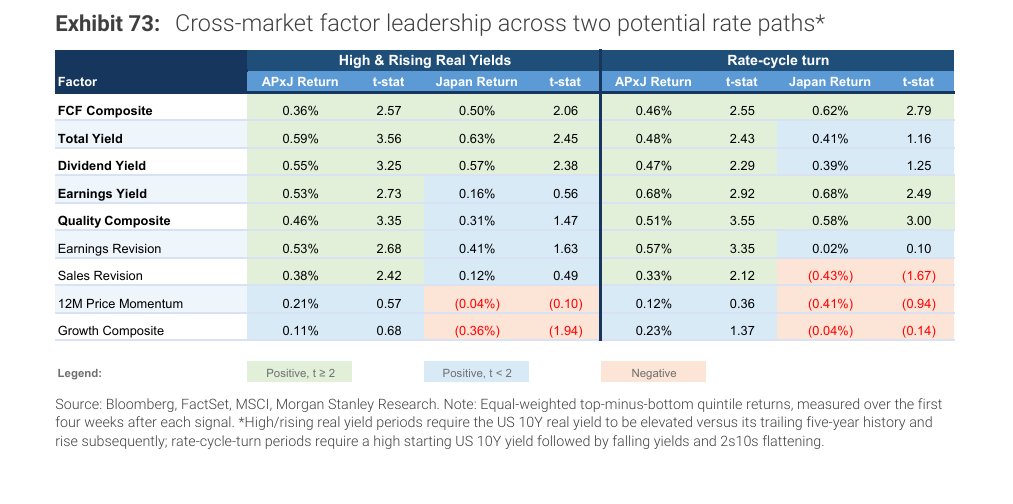
The Damo research team said that in an environment where real interest rates remain high or continue to rise, free cash flow, return on total shareholder returns, and dividend rates are more supported; if long-term interest rates decline and the attractiveness of profit returns and quality factors increase, free cash flow remains relatively steady. Damo said that the key main logic of the 2027 investment strategy outlook extended from this is that AI orders and the scale of production expansion continue to determine growth space, and cash that can be used for debt repayment, reinvestment, and shareholder returns after deducting capital expenses can also test whether growth actually increases shareholder value.
Overall, the 2027 Asian and Emerging Markets Stock Market Strategy Outlook released by Morgan Stanley on November 15 shows that it continues to exceed Japan, South Korea, Singapore and Thailand, equalize China's A-share market and Hong Kong stock market, India, Taiwan, and Latin America, and under-balance Australia, Indonesia, and the European, Middle Eastern and African emerging markets as a whole; continuing to favor industries benefiting from capital expenditure while gradually recovering consumption and financial exposure.
Based on the November 12 market used in the Damo research report, the East China Stock Exchange Index target is 4,800 points at the end of 2027, which means about 22% of potential growth over the next 12 months; the MSCI emerging market target is 1,760 points, which correspond to 920 points in Asia excluding Japan, corresponding to about 13% and 14%; the Hong Kong stock market Hang Seng State-owned Enterprises Index target is about 8%; the MSCI China Index targets about 76 points, and the Shanghai and Shenzhen 300 Index targets 4,550 points, respectively. These are index price spaces, excluding dividends and investors' own exchange rate effects. The core logic is that Japan supports a recovery in valuations with broader profit growth, South Korea provides AI profit flexibility after discounts, and the Chinese stock market is more suitable for selecting industry upgrade targets, especially semiconductor leaders who focus on the theme of “domestic substitution.”
Why does the Japanese market continue to take the lead: in addition to AI orders, inflation and capital returns work together
Japan's unique advantage is that profit growth has multiple complementary sources. Damo expects earnings per share to increase by 13% and 8% in 2027 and 2028, respectively, and derives a target of 4,800 points with an index profit of about 300 yen in 2028 and a 16 times forward price-earnings ratio; the current valuation is about 14.1 times, which is close to the average of the past ten years. Reinflation improves corporate pricing capabilities, governance reforms, cancellation of cross-shareholding, and shareholder returns enhance capital efficiency, and further support residents' investment participation and overseas capital reallocation.
According to the industry breakdown in the Damo Research Report, banks, semiconductors, equipment, and capital goods contributed about 2.2, 2.2, and 2.0 percentage points respectively to profit growth in 2027, while automobiles also contributed about 1.9 percentage points. As a result, Japan can not only participate in AI construction, but also obtain increased profits from financing needs, industrial investment, and improvements in business operations.
South Korea's appeal is more focused on valuations, and restrictions on the Taiwanese stock market also mainly come from valuation. The Dama Research Report predicts that South Korea and Taiwan will contribute more than 80% of the profit growth of emerging markets in 2027; if profits in the two regions stop growing, the overall growth rate of emerging markets may fall to less than 5%. Therefore, buying different Asian markets does not automatically eliminate the risk of AI industry chain concentration. Damo continues to overmatch South Korea and Taiwan, while setting the 2027 profit growth forecast for emerging markets at 17%, which is lower than the market's consistent growth forecast of about 29%, which is enough to show that its bullishness does not require all optimistic profit forecasts to be fulfilled.
In terms of China's A-share and Hong Kong stock markets, Damo's allocation focuses on the A-share industry, technology, and emerging industries; India needs a more continuous decline in oil prices and a more clear end to interest rate hikes. Dama expects the US dollar index to rise to 105 in 2027, and the US dollar is in the 155-165 range against the yen. A weak yen is beneficial to Japan's overseas profit conversion, but it will increase external financing pressure on some emerging economies.
In Japan's selected list, rating companies that can reflect the investment direction of “construction, automation, electronic components and energy equipment” include: Kashima Construction's target price of 9,200 yen, up 84.6% from the reported reference price; Jienshi 105,000 yen, up 40.8%; Murata Manufacturing's 11,000 yen, up 112.5%; and Mitsubishi Heavy Industries 5,900 yen, up 102.0%. These companies each provide exposure to engineering, industrial automation, electronic components, and heavy equipment, and do not all rely on the same GPU procurement budget to grow.
In terms of consumption and finance, Sony Group and Sumitomo Mitsui Financial Group have both received additional ratings. The target prices are 5,500 yen and 4,600 yen, respectively. Compared with the reported reference price, there is room for increase of about 26.3% and 40.5%. The target market value is about 205.3 billion and 218.8 billion US dollars when converted according to the same caliber. On the Asian AI supply chain list, Samsung Electronics, SK Hynix, TSMC, Delta Electric, Weiying, and Northern Huachuang all increased their holdings. The target price increases indicated in the report were 48.6%, 27.6%, 32.0%, 85.5%, 60.2%, and 21.7% in that order.
Meanwhile, new allocations such as Yihe Holdings, Wanzhou International, and ICICI Bank indicate that Damo is reducing the portfolio's dependence on a small number of technology and industrial companies. The Japanese market priority list itself also includes flat and low share shares, but it is important to note that Daimo's selected list is not directly equivalent to buying suggestions.
As the AI supercycle continues, where will global funding flow? From chip bottlenecks to electrification capacity and cash flow
The overall capital expenditure cycle of the Asian market that Damo is optimistic about is wider than the AI data center itself. The report predicts that after excluding real estate investment in China, fixed investment in Asia will increase from about US$11.4 trillion in 2025 to US$16.3 trillion in 2030, with a compound annual growth of about 7.5%. Industrial safety, energy security, technology upgrades, and active industrial policies jointly drive investment; even when relevant industrial and energy investments are included, AI and semiconductors only account for about 20% of the new investment at this stage.
Asia is also undertaking capital equipment production and capital investment expansion, so the fields of factory automation, engineering construction, energy, materials, and defense can also share the growth. Damo continues to overmatch industry, semiconductors, technology hardware, energy, and materials, but within semiconductors, more emphasis is placed on valuation support and profit margin resilience.
What determines the distribution of profits in the next stage of the supply chain is whether the computer room, electricity, and chips can be delivered at the same pace. The capital expenditure forecast for major cloud and computing power service providers covered by the report is about 1.64 trillion US dollars in 2027 and 1.76 trillion US dollars in 2028. The amount continues to grow, but the growth rate is clearly slowing down. Damo has postponed the approximately 5 gigawatt US data center project from 2028 to 2029. It believes that overall projects under construction will continue to advance in 2027. At the same time, it is estimated that the US will still have a power gap of about 44 gigawatts in 2028.
Damo said that the deeper meaning of the project is that after the GPU, HBM, and server supply improvements, restrictions may be transferred to land, electricity, and plant, that is, land-power-supply-computer room conditions (LPS). Installed capacity and solutions to reduce connection times may maintain bargaining power, while some hardware vendors may face delays in procurement, inventory accumulation, and declining profit margins. According to the Dama research team, construction delays can lengthen the overall investment cycle, and may also cause order gaps in parts of the industrial chain. Both results can occur simultaneously.
In terms of financing, Damo distinguishes between “some new cloud companies under pressure” and “the failure of overall AI capital expenditure financing.” The report points out that interest spreads on high-yield bonds have widened, but BBB-grade investment-grade credit spreads are still around 100 basis points, which is significantly lower than the level of more than 200 basis points in 2022. Leading cloud vendors still have room for balance sheets and lease financing.
However, Damo estimates that more than 80% of AI financing needs from the future to 2030 will need to rely on external funding, which means that matching customer credit and financing terms with project repayment is becoming more and more important. The return on capital of generative AI investment quoted in the report is about 25% to 50%, which is a model path under different business models and assumptions; what really supports the valuation is the utilization rate, rent, operating costs, and cash recovery after the project is put into operation. Higher real interest rates lower the present value of forward profits, while shrinking credit channels may directly change construction capacity. The two are not equally transmitted to stocks.
This also explains why Damo has set free cash flow as the core of the 2027 allocation. The combination factor also examines the yield of free cash flow compared to market value of equity and corporate value. The performance is relatively steady in both environments where real interest rates continue to rise and long-term interest rates shift to decline; the former environment places more emphasis on dividends and shareholder returns, while the latter environment increases profit returns and corporate quality. The 37 companies selected in the report also met the “Damo Increase Rating” and the “top 20% cash flow factor in their market”, representing Sony, Mitsubishi Heavy Industries, Kioxia, Renesas, Samsung, Weichai, and Zijin Mining. The screening reflects a combination of operating cash generation ability and valuation, and does not provide a uniform reason to buy all AI concept stocks.
High profits coexist with undervaluation, and may still be accompanied by high volatility. According to the Damo research report, the Asia Pacific forward profit and net profit margin were about 60% and 42% higher than the long-term trend, respectively, but the adjusted price-earnings ratio in the Asia Pacific cycle was about 19 times, significantly lower than about 50 times during the Internet bubble; Damo judged that capital expenditure was sufficient to support profits that continued to be higher than the trend, but it did not rule out the normalization of profit margins. The retail financing balance in the Korean market has dropped 27% from the mid-year peak, and is still about 53% higher than the previous historical average; Taiwan's financing balance is still about 2.5 times the historical average, and forced deleveraging may amplify the retreat. Corresponsibly, the bull and bear scenarios of the Eastern Stock Exchange Index were 6,000 points and 3,000 points, respectively, corresponding to an increase of 52% and a drop of 24%; the emerging markets were 2,340 points and 940 points, corresponding to an increase of about 50% and a decrease of 40%. This difference in scenario further supports Japan's preference for participating in growth while reducing reliance on a single AI profit cycle.
Goldman Sachs and Damo's 2027 Asian stock market investment strategy common answer: growth can slow down, investment value can still rise
The AI infrastructure supercycle continues, but the focus of Asian stock allocation has begun to shift from chasing the scale of production expansion to simultaneously measuring profit sustainability, capital return, and valuation. This can be described as Goldman Sachs and Damo's shared views on the 2027 strategic outlook for the Asian stock market.
In its 2027 outlook for Asia and emerging markets, Morgan Stanley continues to be optimistic about industries benefiting from capital expenditure, while gradually freeing up capital from some industrial and technology holdings to make up for consumer and financial exposure. Japan continues to be the first choice, relying on re-inflation, corporate governance reforms, and improved return on net assets to spread profit growth to more industries. Japan has the rewards of capital goods, banking, technology, and governance reforms, which is the core reason why Daimo placed it first in Asia's allocation.
South Korea, on the other hand, undertakes the main line of capital expenditure using profit flexibility and discount valuations in the storage and AI supply chain. The Chinese market focuses on selecting industrial upgrades and selecting “domestic alternatives” related companies with technological competitiveness. What runs through these allocation choices is free cash flow, which is a more stable basis for valuation and stock selection: orders determine the room for growth, and the ability to generate cash after capital investment and its corresponding valuation determine how much return growth can leave to shareholders. Therefore, the Damo research team's 2027 Asian market allocation idea is to preserve AI construction cycle exposure while broadening profit sources and increasing requirements for cash flow quality.
Goldman Sachs places more emphasis on decelerating profit growth, and Damo places more emphasis on continuing the investment cycle. There is a clear intersection between the two judgments of “finding value after a pullback.” Goldman Sachs expects the S&P 500 profit growth rate to fall from 36% in 2026 to 11% in 2027, the Eastern Stock Exchange Index to fall from 24% to 9%, and Asia from close to 80% to less than 30%; the slowdown in capital expenditure growth and increased depreciation will weaken the previously unusually strong profit driving force.
However, the Goldman Sachs Research Report shows that the overall forward price-earnings ratio of cloud computing giants has dropped to 19.7 times, lower than 21 times that of the essential consumer goods sector. Diversified income, balance sheets, and financing capabilities make them relatively defensive. As a result, Goldman Sachs maintained the S&P 500 target of 8,700 points over the next 12 months, leaving about 14% of the reported benchmark, and continued to exceed the US and Japan. Goldman Sachs's 2027 Asian market investment outlook shows that investment opportunities are being divided into three categories — namely infrastructure suppliers that can deliver on schedule and maintain profits, cloud platforms with financing and scheduling capabilities, and cutting-edge AI technology adopters that can turn AI investment into strong operating income, and select popular semiconductor and memory chip opportunities associated with AI infrastructure.