


Picture opening your laptop on a Friday morning and finding that you can't access your work email or calendar. This is precisely what happened to millions of corporate employees when a major Microsoft (MSFT) outage shut down Outlook, SharePoint, and Copilot.
Microsoft shares traded largely flat on Friday and are down 6% from all-time highs. So does the outage change the case for owning the big tech stock?
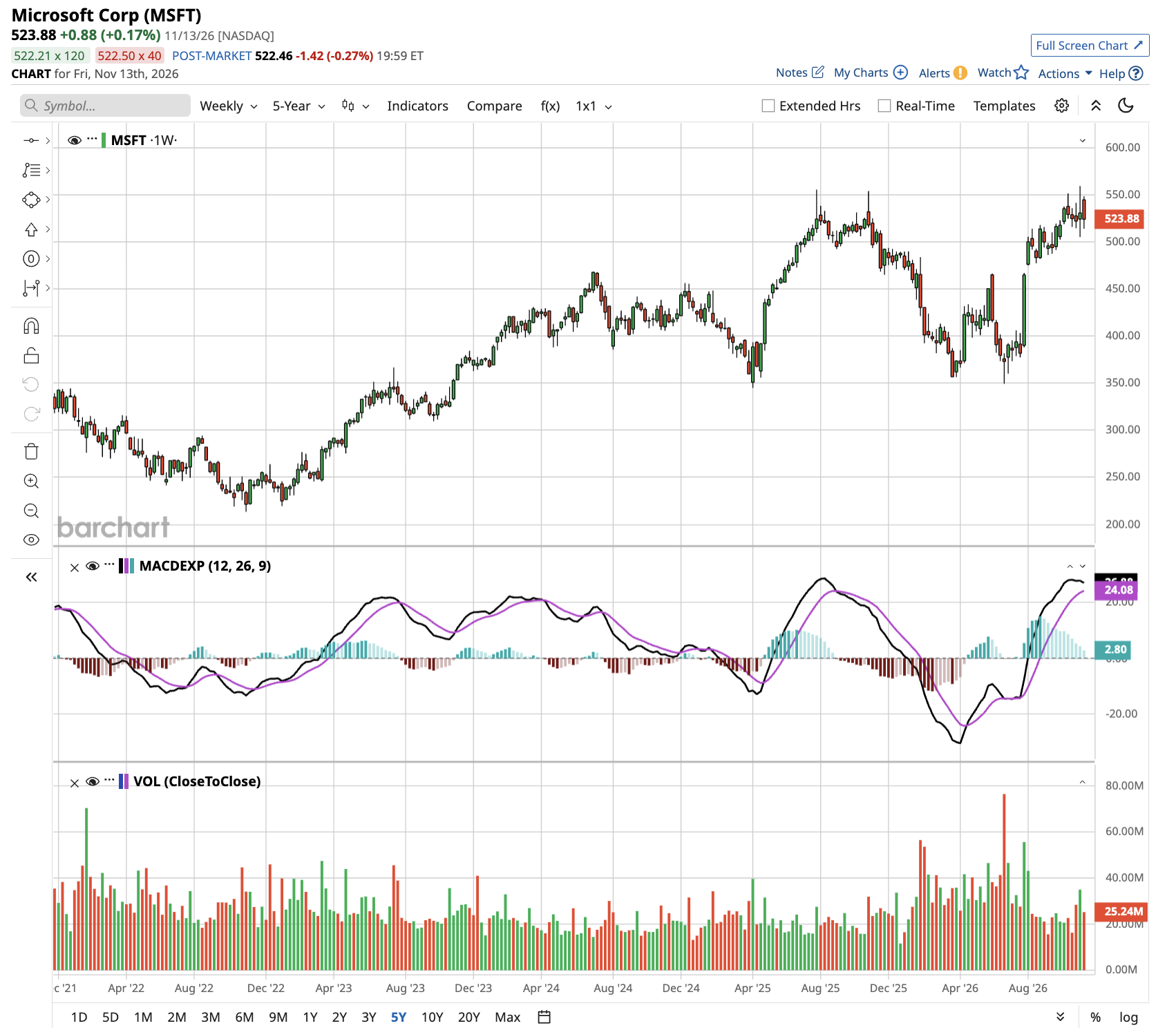
Outage Shut Down Email for Nearly a Day
According to a CNBC report:
- The trouble began shortly before 1 p.m. ET on Thursday, when connectivity problems started spreading across Microsoft’s network.
- Engineers rushed to get services back online while they hunted for the cause. Microsoft later blamed an issue during an earlier network capacity upgrade. Early updates said servers became unexpectedly unavailable, which strained the rest of the system. Some servers also failed automated health checks.
- By Friday morning, Outlook, SharePoint, and Copilot were largely down in the U.S. Workers in Asia and Europe had already lost their business days, according to CNBC.
- The turning point came at 4 p.m. ET Thursday when Microsoft said it had validated a new way to check server health and began applying it more broadly.
- Microsoft stretched its email retry window to 48 hours to protect delayed messages. On Saturday, it said service was restored for the remaining customers and regions.
- Australian minister Tony Burke compared the event to the 2024 CrowdStrike (CRWD) failure, where a bad update caused one of the world's biggest IT outages, Reuters reported.
- Consultancy Control Risks called it a “resilience and dependency issue that has been decades in the making.” Managing partner James Owen urged firms to prepare with manual backups, offline protocols, diverse suppliers, and crisis drills.
Why Didn't Microsoft's Stock Move Much?
Despite such a massive outage, Microsoft is among the largest companies globally with a diversified business. In fiscal Q1 of 2027 (ended in September), it reported revenue of $92.3 billion, an increase of 19% year-over-year (YoY), while adjusted earnings per share rose 18% to $4.89. Microsoft cloud revenue rose 30% to $63.9 billion, while Azure sales grew by 48%.
The company reported an operating cash flow of $58 billion, an increase of 29% YoY. It spent close to $40 billion in capital expenditures, which meant its free cash flow stood at $18.6 billion. The tech behemoth returned $10.2 billion to shareholders in Q1.
Commercial remaining performance obligations track signed contracts that have yet to translate into sales. It ended Q1 with an RPO of $677 billion, up 73% YoY. Microsoft said roughly 30% of its RPO should turn into revenue over the next 12 months.
Thus, most investors were not necessarily bothered by a single day's outage, no matter how massive it might have been.
Copilot is Why This Outage Matters
That's not to say it wasn't embarrassing. CEO Satya Nadella calls Copilot “the new OS for work,” which is why a Copilot blackout stings.
Adoption for the AI tools is gaining massive traction, and Nadella said daily users rose nearly 50% from the prior quarter and over five times from a year ago.
Volkswagen (VWAGY) plans to deploy Copilot to more than 330,000 employees. Foundry, Microsoft's platform for building and deploying AI agents, now has over 120,000 customers.
Microsoft's executive vice president and CFO, Amy Hood, told analysts that customer demand continues to exceed available supply. For the December quarter, she guided Azure growth to 49% to 50%, excluding currency swings. She guided total revenue to $96 billion to $97.1 billion.
What's Next for Microsoft?
Microsoft is investing heavily in capex, which is projected to surpass $50 billion in Q2 and $170 billion for the calendar year 2026.
Windows OEM revenue is what Microsoft earns from Windows sold through PC makers (the “OEMs”). It fell 27% because last year’s sales were inflated by demand tied to the end of Windows 10 support. PC makers and resellers are also working through excess stock, and PC demand is weaker.
Devices and Consumer is the Microsoft segment that includes Windows, Xbox, Bing, and LinkedIn advertising. Its revenue slipped 3% to $15.5 billion, while search and advertising grew 12%.
Hood said inventory levels remain elevated, and guided Windows OEM and devices revenue to fall in the mid-30s next quarter. Hood cited weaker sales of Microsoft 365 E3 and standalone products as paid commercial seats grew just 5%.
Commercial bookings fell 12% against a big Azure deal a year ago, and Hood warned bookings could stay volatile.
How to Play MSFT Stock Now
Analysts tracking MSFT stock forecast revenue to increase from $331.8 billion in fiscal 2026 to $795 billion in fiscal 2031. Over this period, adjusted earnings per share are projected to expand from $17.28 to $43.73.
If MSFT is priced at 25x forward earnings, below the 10-year average of 28x, it could double within the next four years.
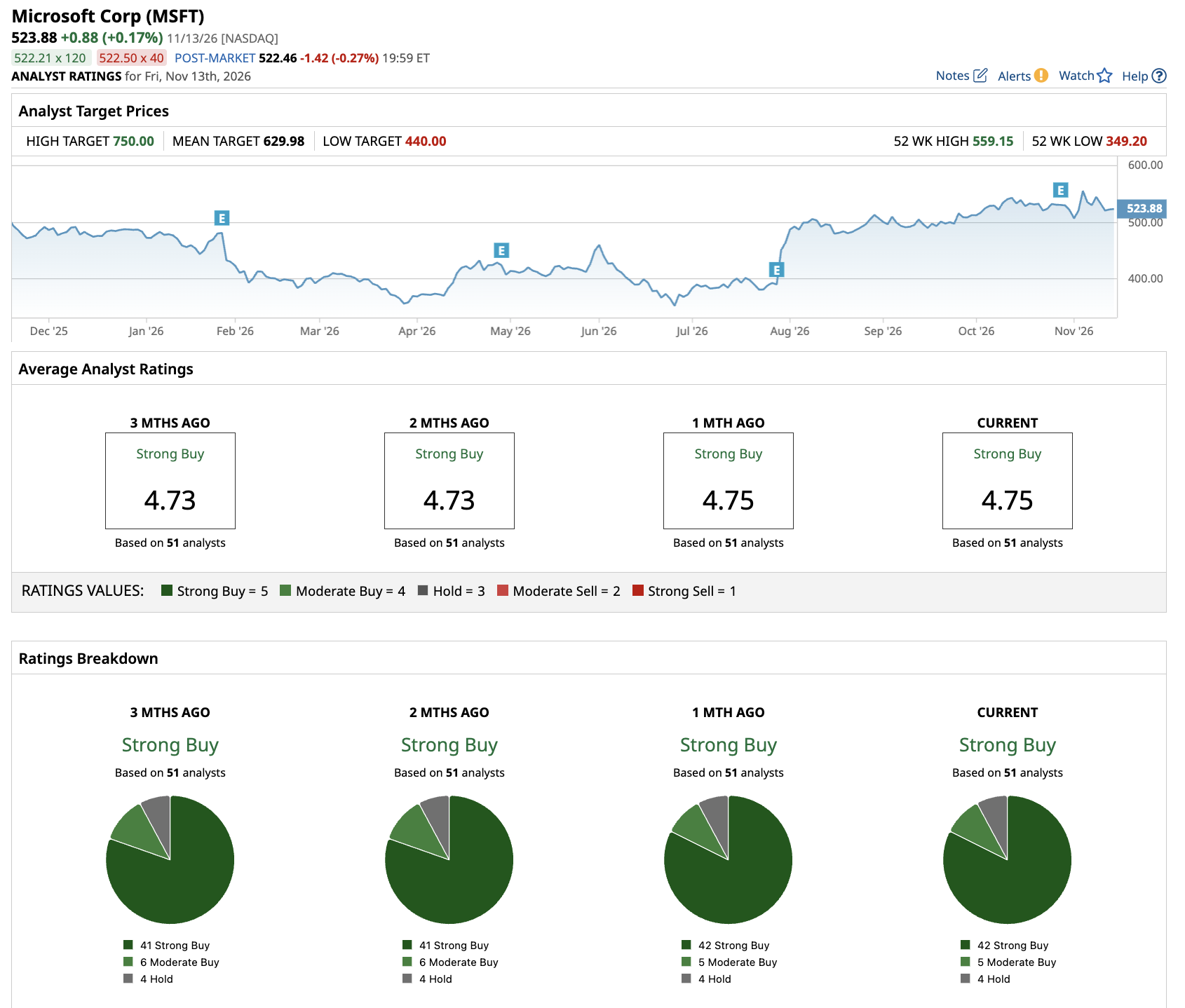
Out of the 51 analysts covering MSFT stock, 42 recommend “Strong Buy,” five recommend “Moderate Buy,” and four recommend “Hold.” The average price target is $629.98, above the current price of about $524.
On the date of publication, Aditya Raghunath did not directly have a position in any of the securities mentioned in this article. All information and data in this article is solely for informational purposes. For more information please view the Barchart Disclosure Policy here.