


Leading designer of graphics chips Nvidia (NASDAQ:NVDA) reported calendar Q3 2026 [fiscal Q3 2027] results exceeding the market’s revenue expectations, as revenue rose 103% year on year to $115.8 billion. In addition, next quarter’s revenue guidance ($130 billion at the midpoint) was a positive surprise, coming in 4.2% above analysts’ consensus estimates. Its non-GAAP profit of $2.68 per share was 8.4% above analysts’ consensus estimates.
For more on Nvidia, read our free full research report.
Nvidia Q3 CY2026 highlights:
- Revenue $115.8 billion vs S&P analysts’ consensus estimates of $109.5 billion (103% year-on-year growth, 5.8% beat)
- Adjusted EPS $2.68 vs S&P analysts’ consensus estimates of $2.47 (8.4% beat)
- Adjusted operating income $77.88 billion vs analysts’ consensus estimates of $71.63 billion (67.2% margin, 8.7% beat)
- Revenue guidance $130 billion at the midpoint for Q4 CY2026, above analysts’ consensus estimates of $124.8 billion
- Operating margin 66.9%, up from 63.2% in the same quarter last year
- Free cash flow margin 37.8%, down from 38.8% in the same quarter last year
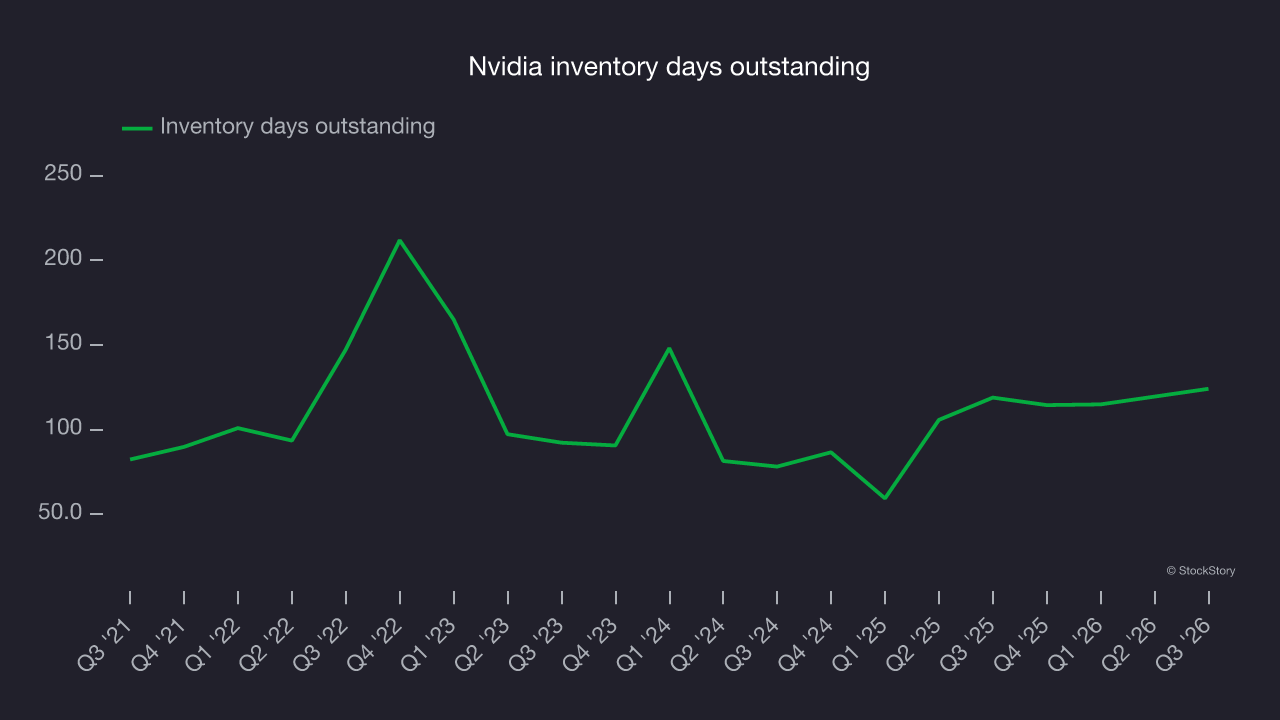
- Inventory days outstanding 124, up from 119 in the previous quarter
- Market capitalization $3.77 trillion
“Our momentum is real. NVIDIA is an exceptional technology leader, powered by the relentless innovation of our people,” said Colette Kress, interim CEO and executive vice president and chief financial officer of NVIDIA. “Vera Rubin is off to an explosive start, our roadmap is on track and our ambition has never been greater.”
Revenue growth
A company’s long-term performance is an indicator of its overall quality. Any business can deliver a good quarter or two, but many enduring ones grow for years. Nvidia’s revenue grew at a strong 71.7% compounded annual growth rate over the last five years. Its growth surpassed the average semiconductor company and shows its offerings resonate with customers. Semiconductors are a cyclical industry, and long-term investors should be prepared for periods of high growth followed by periods of revenue contractions (which can sometimes offer opportune times to buy).
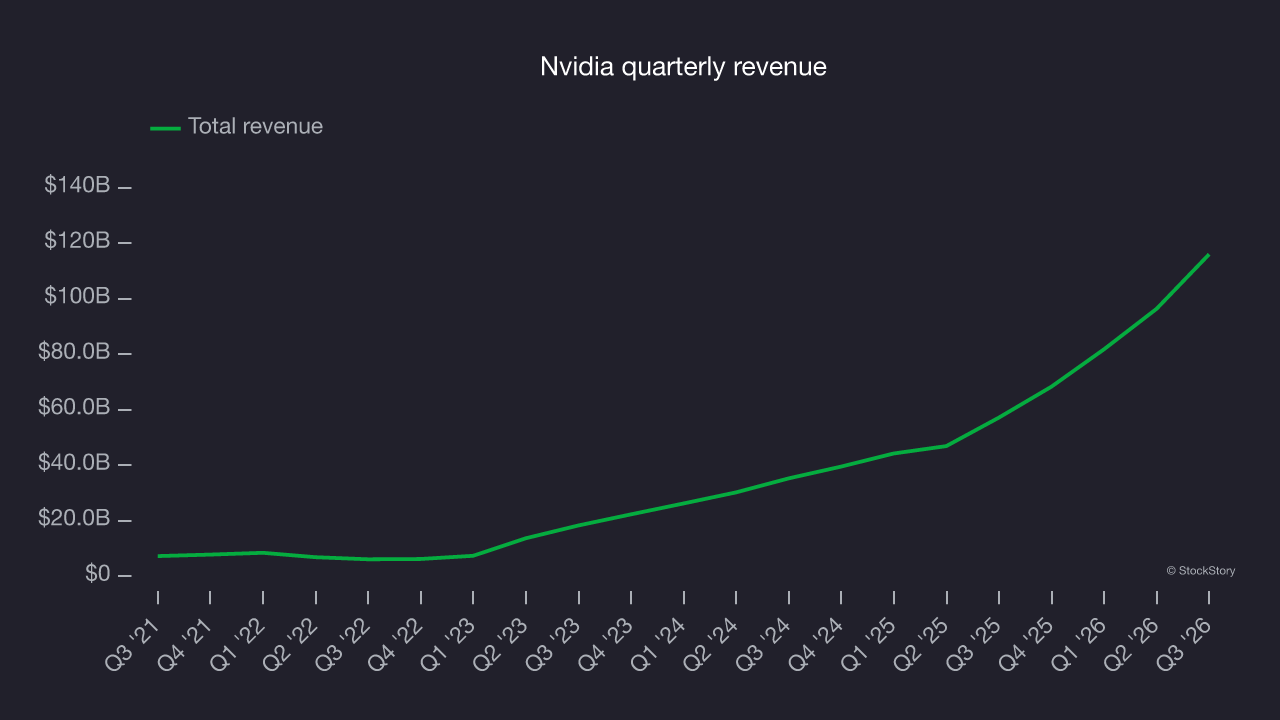
Long-term growth matters most, but within semiconductors, a half-decade historical view may miss new demand cycles or industry trends like artificial intelligence. Nvidia’s annualized revenue growth of 78.7% over the last two years is above its five-year trend, suggesting its demand was strong and recently accelerated. 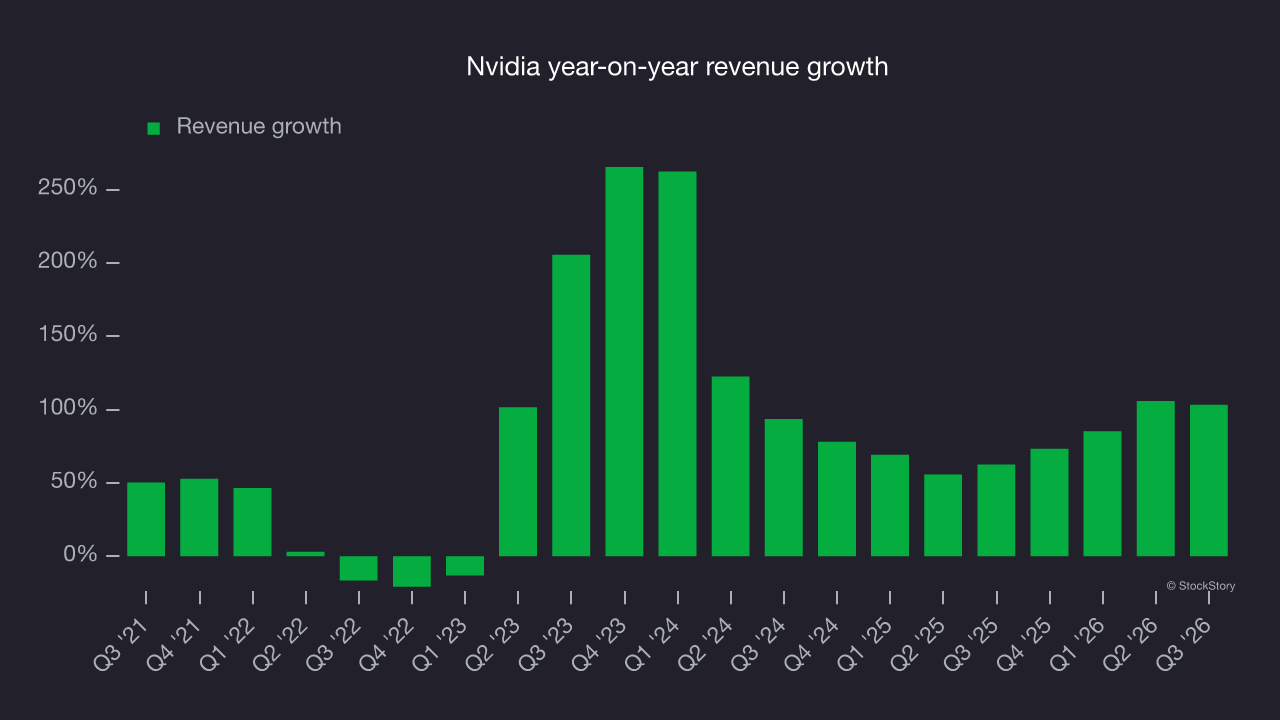
This quarter, Nvidia reported year-on-year revenue growth of 103%, and its $115.8 billion of revenue beat Wall Street’s consensus estimates by 5.8%. Beyond the beat, this marks 14 straight quarters of growth, showing that the current upcycle has been sustained longer than the typical 8–10 quarters. Company management is currently guiding for a 90.8% year-on-year increase in revenue next quarter.
Looking further ahead, sell-side analysts expect revenue to grow 70.8% over the next 12 months, according to S&P, a deceleration versus the last two years. Its growth trajectory remains attractive given its scale and indicates the market is forecasting success for its products and services.
Product demand & outstanding inventory
Days inventory outstanding, or DIO, is an important metric for chipmakers, as it reflects a business’s capital intensity and the cyclical nature of semiconductor supply and demand. In a tight supply environment, inventories tend to be stable, allowing chipmakers to exert pricing power. Steadily increasing DIO can be a warning sign that demand is weak, and if inventories continue to rise, the company may have to downsize production.
This quarter, Nvidia’s DIO came in at 124, which is 12 days above its five-year average, suggesting that the company’s inventory has grown to higher levels than in the past.
Key takeaways from Nvidia’s Q3 results
Nvidia’s EPS beat analysts’ consensus estimates, and operating income topped Wall Street’s consensus by a wide margin, giving the quarter some clear strengths. Higher inventory was a drawback, but this was a solid quarter overall. Shares rose 2.5% to $159.86 immediately after the results.
Nvidia reported solid earnings, but one quarter doesn’t necessarily make the stock a buy. Let’s see if this is a good investment. When making that decision, it’s important to consider its valuation, business quality and latest quarterly results. We cover that in our full research report, which you can read here (it’s free).