


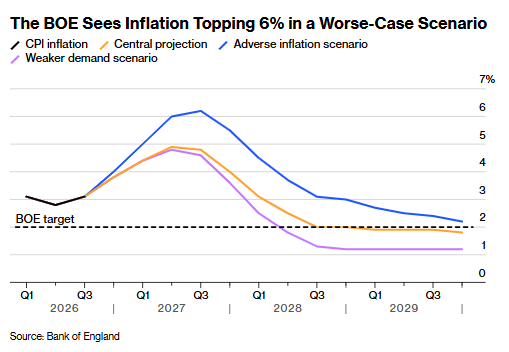
The Zhitong Finance App learned that, driven by a sharp rise in energy bills and vehicle fuel prices, inflation in the UK accelerated to the highest level in a year. The UK Office for National Statistics released data on Wednesday. Consumer prices rose 3.6% year on year, up from 3.5% in September, rising for the fourth month in a row. This reading is in line with economists' expectations. However, the Bank of England previously expected inflation to rise to 3.7%, and the actual reading this time is slightly lower than that estimate. This result may give central bank officials some peace of mind, that is, the current round of global energy price shocks has not spread to other categories in the consumer basket.
After the inflation data was released, the pound's decline widened slightly, and the exchange rate against the US dollar fell 0.2% to 1.3174 during the day. Traders lowered their bets on further interest rate hikes by the Bank of England. Interest rate swap market pricing shows that there will still be room for 90 basis points to raise interest rates by the end of 2027.
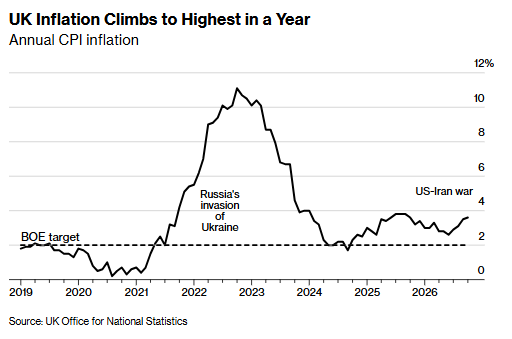
The Bank of England focuses on monitoring domestic inflation — inflation in the service sector — remained flat at 3.7%; core inflation excluding energy, food, tobacco and alcohol also remained unchanged at 2.8%.
David Rees, chief economist at Schroder, said, “Today's overall inflation readings are slightly lower than expected. The possibility of raising interest rates in December has declined, but it is difficult to change the general trend.”
Earlier this month, the Bank of England raised interest rates for the first time after a lapse of three years to counteract upward inflationary pressure brought about by the situation in Iran. Policy makers have signalled that if there is no clear sign of easing, interest rates may be raised again as early as December.
This rise in inflation is due in part to a 4% increase in the UK household energy price cap, compounded by a sharp rise in vehicle fuel prices; the cooling of inflation in the restaurant and hotel sector only partially hedged the pressure of such price increases.
Yael Selfin, KPMG's chief economist in the UK, said, “This round of inflationary shock is mainly driven by energy, and it does not mean that the UK economy is under full and widespread upward pressure on prices.”
Food inflation fell to 0.8% year on year, compared to 1.2% last month, mainly due to lower fish and chocolate prices; in the past 12 months, the increase in restaurant and hotel prices also slowed from 3.8% to 3.4%.
Despite this, the situation in Iran continues to put pressure on British families. Data from earlier this week showed that real wages in the UK declined for the first time since 2023 due to wage growth not keeping up with rising energy prices.
British Prime Minister Andy Burnham has introduced a new bill allowance in the October Budget to distribute £100 in grants to millions of families. However, households will also face a sharp increase in the energy price ceiling in January next year, which will erode the effects of this subsidy to a certain extent.