


With the Bank of Japan leaning harder into rate hikes and warning it will not rush to tame long-term yields, Japanese financials are quietly moving to center stage for global investors hunting for income and balance sheet resilience. That shift in policy focus, from hitting 2% inflation to avoiding an overshoot, can reshape winners and laggards. This article examines three Japanese banks and insurers from our screener that appear positively exposed to this new interest rate environment.
The three stocks that follow are simply a sample set, and the full screen on Simply Wall St surfaced 13 more Japanese financial companies with equally compelling income and balance sheet stories that are not covered in this article. To see the wider opportunity, head straight into the Japanese Financials (Banks and Insurance) screener to identify, filter and analyze the candidates that best match your own conviction and risk profile.
Gunma Bank (TSE:8334)
Gunma Bank is a long established regional lender in Japan, closely linked to the rising rate theme because its earnings are heavily driven by the spread between what it earns on loans and pays on deposits. It operates almost entirely in Japan, which delivers about ¥209.5b of revenue, and the group is valued at roughly ¥919.3b.
For investors focused on Japanese Financials that may benefit as the Bank of Japan tightens policy, Gunma Bank offers a broad lending and deposit base that is already feeding through into higher net interest income and a higher dividend payout. However, future returns still hinge on how one unseen pressure on its loan book develops.
That hidden pressure on the loan book is exactly what the 5 key rewards and 2 important warning signs could clarify for you, before rate moves reshape the risk reward balance.

Chugin Financial GroupInc (TSE:5832)
Chugin Financial GroupInc is a pure-play Japanese bank geared to the higher rate theme, earning most of its ¥235.2b revenue from core banking, with leasing at ¥19.2b and securities at ¥6.3b, and a market value of about ¥607.1b.
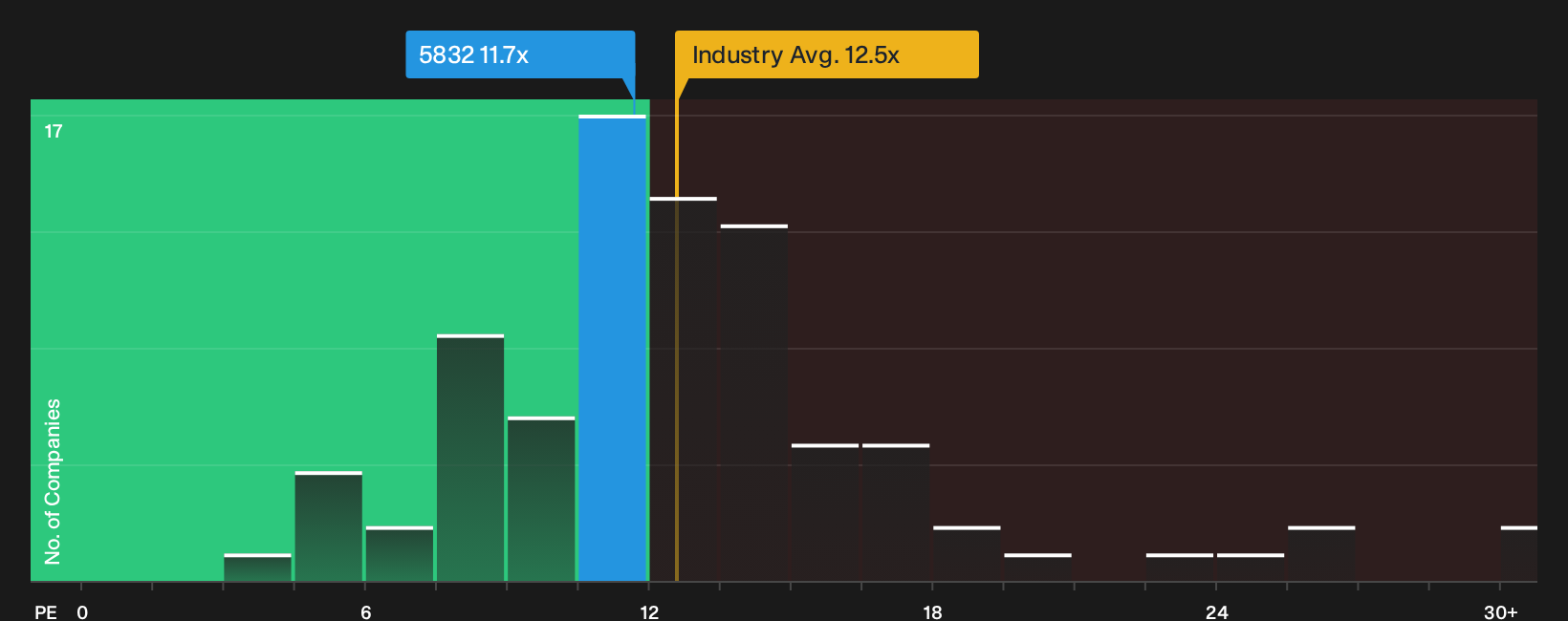
Chugin Financial GroupInc taps the rate-hike story directly, with earnings driven by traditional lending and securities that are influenced by higher interest and reinvestment rates. The stock trades on an 11.7x P/E, which is below the Japan market and bank peers, and carries a 3.63% dividend yield. A key consideration for investors is how far that earnings sensitivity to rates can extend before it begins to affect margins.
That rate sensitivity is exactly why the 5 key rewards and 1 important warning sign could help you see whether Chugin Financial GroupInc’s valuation is masking more upside or brewing pressure.
77 Bank (TSE:8341)
77 Bank is a long running Sendai based commercial lender focused on Japanese households and businesses, aligned with the screener’s rising rate theme through its dependence on loan and deposit spreads. The group has a market value of about ¥751.3b.
77 Bank ties directly into the Japanese Financials theme because it is a domestically focused lender whose earnings are closely linked to the gap between what it charges on loans and pays on deposits. With a market cap around ¥751.3b, value style pricing and a 3.09% dividend yield, the stock gives income oriented investors direct exposure to the Bank of Japan’s push toward higher policy rates, depending on how one unseen pressure in its credit costs plays out.
As that credit cost risk builds in the background, the 6 key rewards and 1 important warning sign could show whether 77 Bank’s income story is quietly stretching or starting to strain.

Seeking Fresh Alternatives With Real Edge
Fresh opportunities tend to move first. Breakout stories gain momentum, laggards keep dropping, and quiet winners fly under the radar for now. Do your homework while it matters and consider acting while the window is open.
- Spot resilient income ideas that aim to keep paying when others pause by scanning the 30 dividend fortresses before that yield premium gets caught by the crowd.
- Follow the build out of next generation computing by tracking the curated 24 quantum computing stocks that could benefit as demand for processing power gathers momentum.
- Prepare for a potential infrastructure cycle by checking the hand picked 43 power grid technology and infrastructure stocks while these grid and hardware stories are still flying under most investors' radar.
Have feedback on this article? Concerned about the content? Get in touch with us directly. Alternatively, email editorial-team@simplywallst.com