


The Zhitong Finance App noticed that Bitcoin has erased all of its gains since the late summer rebound. The decline in risk appetite, combined with the largest hacking attack on Binance Exchange in history, prompted investors to leave the market, making this largest token traded in an increasingly illiquid market, making it more vulnerable to drastic price fluctuations.
Liquidity has deteriorated dramatically since the hacker attack, meaning large transactions could push prices deeper in either direction.
According to digital asset technology company Talos, the total value of buy and sell orders within 1% of Bitcoin's median price — an indicator of the liquidity available near the current price — is down nearly 38% from the high before Binance hit this year. In other words, a big seller may now have to accept a lower price to make a deal, while a big buyer may have to pay a higher price.
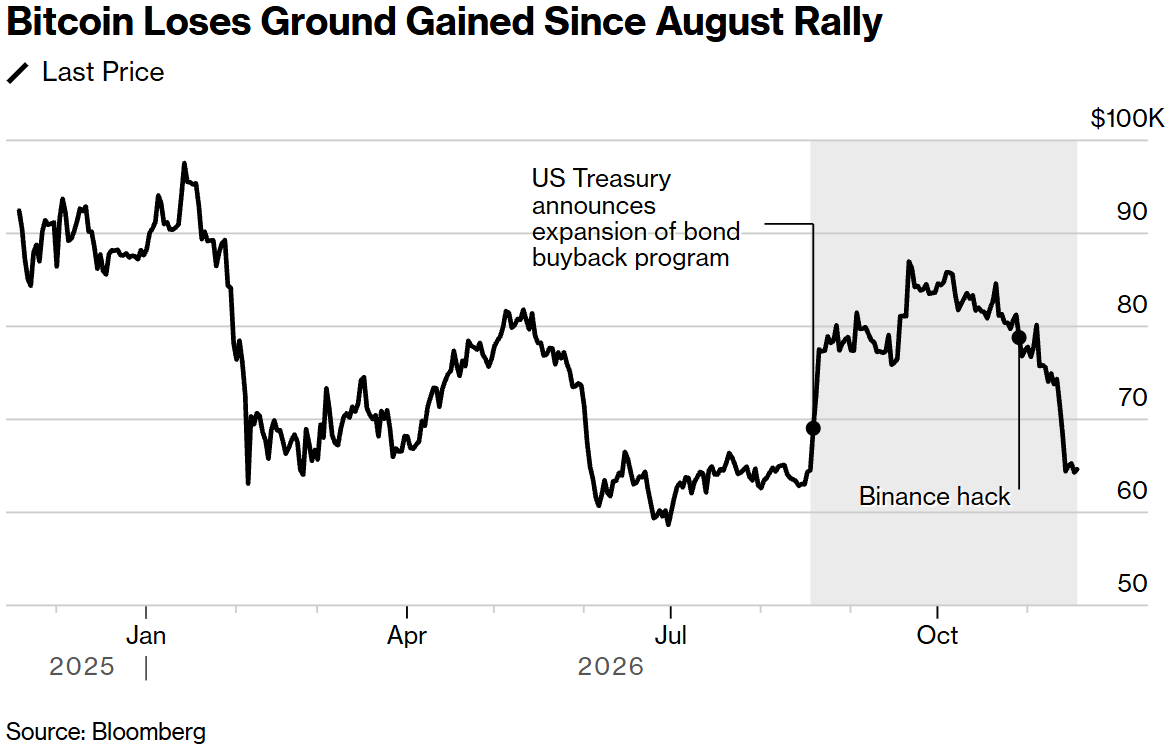
Bitcoin has taken back the gains it has seen since the August rally
Bitcoin traded above $64,000 on Wednesday, down about 49% from its all-time high. The sell-off since last week erased the rebound that began in August — when US Treasury Secretary Scott Bessent said the US would increase repurchases of long-term government bonds.
That wave of rebound gave cryptocurrencies a rare resurgence. Since the market crashed in October 2025, it has been difficult for digital tokens to regain momentum, and Bitcoin's summer rise briefly rekindled the idea that it may benefit from “currency depreciation” transactions along with assets such as gold.
According to data provider Glassnode, recent buyers — that is, holders who bought tokens in the past six months — suffered significant losses in early 2026, fell back on their feet during the September and October rebound, and are now leaving the market again.
Since then, the macro background has deteriorated dramatically. AI-driven stock market sell-offs, combined with the more hawkish US Federal Reserve, push investors away from risky assets. Subsequently, Binance was hacked, bringing another impact unique to cryptocurrencies on a market that had already lost momentum.
Rajiv Sony, head of international portfolio management at Wave Digital Assets, said, “Overall, cryptocurrencies have been subject to a wider portfolio of risk assets throughout the year,” he said. The correlation between Bitcoin and S&P 500 and NASDAQ has increased in recent weeks, indicating that investors are once again mainly viewing it as a risky asset rather than a safe haven to hedge against currency depreciation.
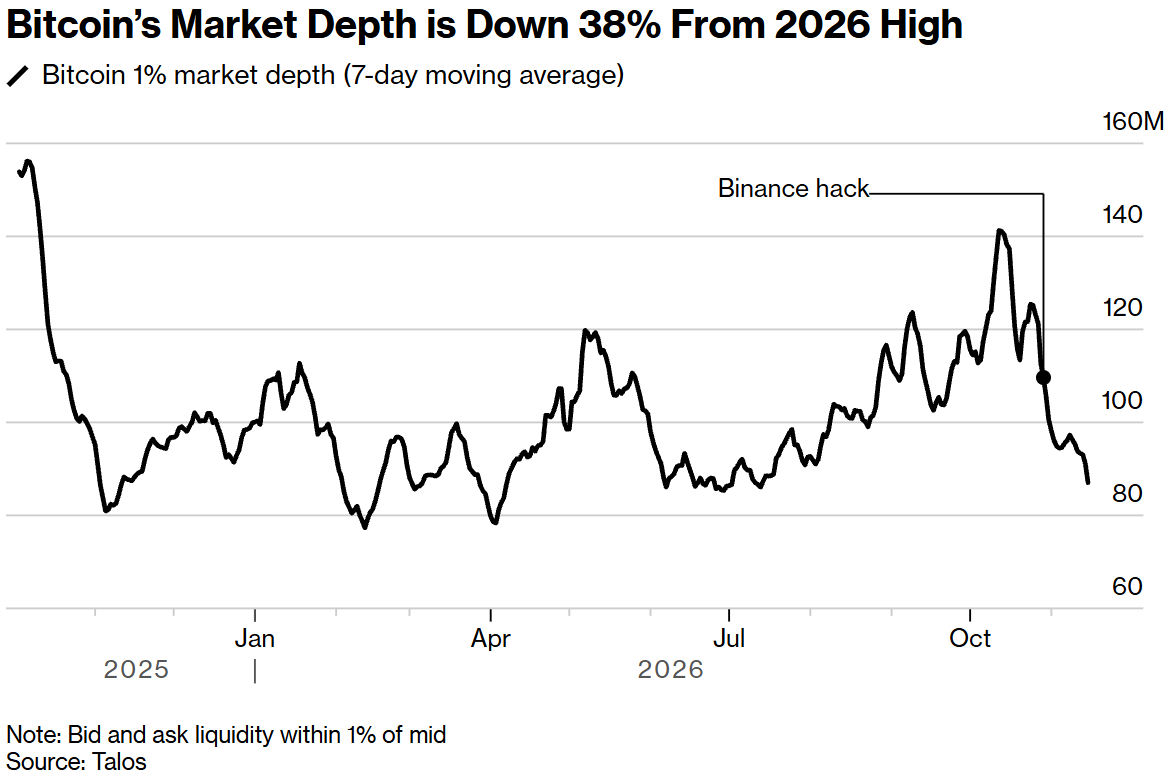
Bitcoin's market depth is 38% lower than its 2026 high
Leverage is also being pulled out of one of the deepest and most actively traded markets for cryptocurrencies. According to Coinglass data, the amount of open positions in Bitcoin perpetual contracts (contracts with no expiration date) has dropped to about US$41.6 billion, the lowest level since November 2024. The reason is that repeated liquidations of long positions have drained market leverage. Since the attack on Binance, about $7.6 billion of bullish bets on various tokens have been liquidated.
Sony said, “The leverage for quick money has undoubtedly been exhausted within the system.” But that doesn't necessarily take away the selling pressure. He pointed out that while investing in AI and high-performance computing infrastructure, miners are selling bitcoins to raise cash; while digital asset finance companies are facing higher financing costs due to falling token prices.
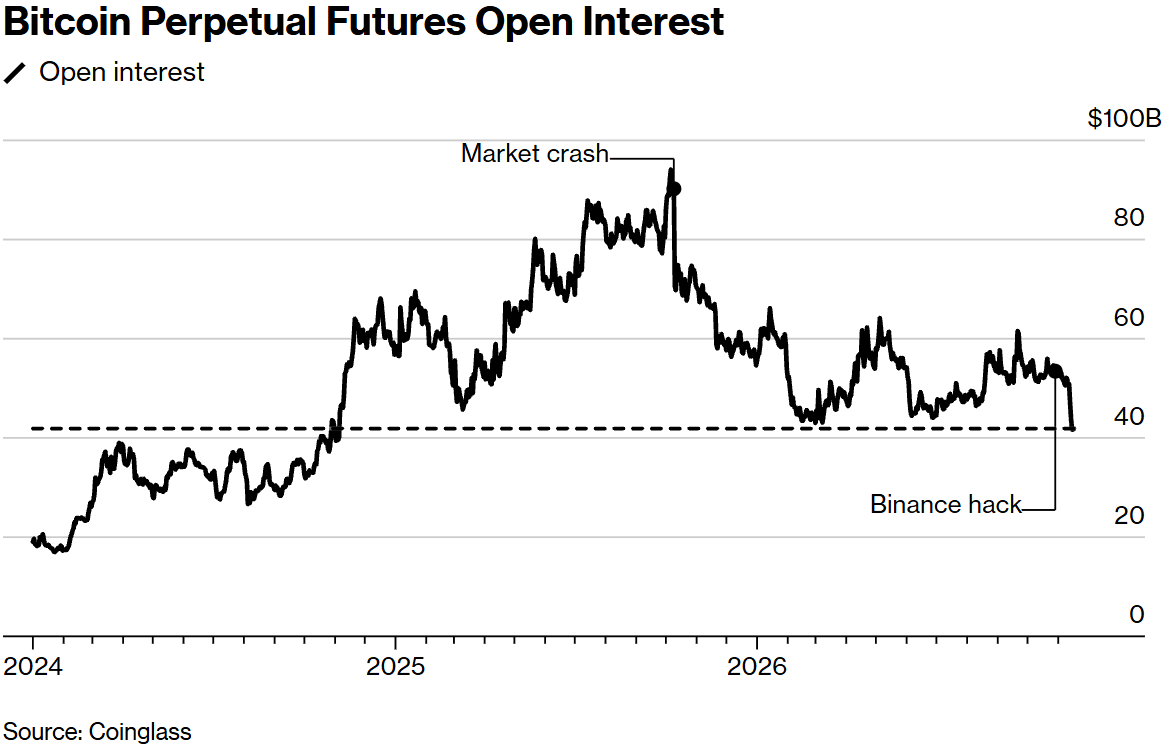
Bitcoin Perpetual Futures Open Positions
Miners Mara and Riot have reported selling around 60,000 bitcoins this month to fund their transformation to AI and data center infrastructure.
The lack of demand for tokens is also reflected in exchange-traded fund (ETF) capital flows. Since November, investors have withdrawn about $2.6 billion from the US-listed spot Bitcoin ETF, removing a stable purchase that previously helped support the price of the token.
Wintermute OTC trader Jasper de Maier said the late-summer rebound was increasingly like a “fake launch.” “It's clear now that we haven't come out of the bear market yet, and the rebound since the July low was a fake breakthrough”.
“This is an 'interest rate market'. Among them, Bitcoin is an 'unsustainable capital leg'. ETF purchases have disappeared, and the technical side has broken down,” De Mayer said. He added that every channel, from ETFs and digital asset transactions to retail and institutional funding, “points to a flat or downward trend.”
Sony said that in order to achieve a sustainable rebound, Bitcoin needs to begin decoupling from stocks and other risky assets, while inflation and energy pressure need to be mitigated enough to allow the central bank to suspend austerity or cut interest rates. A more clear shift towards monetary easing would provide a stronger catalyst.
Until then, the market was suffering from less leverage, less liquidity, and fewer sources of new demand. De Mayer said a light holiday deal could amplify fluctuations in either direction. However, after experiencing the boost brought by Bezent, the stock market sell-off, and the impact of Binance, Bitcoin is entering the sprint phase towards the end of the year with a thinner cushion.