


The end of the earnings season is always a good time to take a step back and see who shined (and who didn’t). Let’s take a look at how sit-down dining stocks fared in Q3, starting with BJ's NASDAQ:BJRI.
Sit-down restaurants offer a complete dining experience with table service. These establishments span various cuisines and are renowned for their warm hospitality and welcoming ambiance, making them perfect for family gatherings, special occasions, or simply unwinding. Their extensive menus range from appetizers to indulgent desserts and wines and cocktails. This space is extremely fragmented and competition includes everything from publicly-traded companies owning multiple chains to single-location mom-and-pop restaurants.
The 9 sit-down dining stocks we track reported a satisfactory Q3. As a group, revenues beat analysts’ consensus estimates by 1%.
While some sit-down dining stocks have fared somewhat better than others, they have collectively declined. On average, share prices are down 2.7% since the latest earnings results.
Best Q3: BJ's NASDAQ:BJRI
Founded in 1978 in California, BJ’s Restaurants (NASDAQ:BJRI) is a chain of restaurants whose menu features classic American dishes, often with a twist.
BJ's reported revenues of $358.6 million, up 8.6% year on year. This print exceeded analysts’ expectations by 3.4%. Overall, it was an impressive quarter for the company with a beat of analysts’ EPS estimates and a solid beat of analysts’ EBITDA estimates.
“As we continue to make meaningful progress in our journey to unlock the full potential of this great brand, we delivered another strong quarter,” commented Lyle Tick, Chief Executive Officer and President. “The third quarter marked our ninth consecutive quarter of sales and traffic growth, with both comparable restaurant sales and traffic up approximately 8%, and our eighth quarter of profit growth, increasing restaurant level operating profit margin by 220 basis points year over year. Looking ahead, we remain confident in our strategic growth drivers and will continue to invest in our team members, advance menu innovation that re-enforces compelling value and drives seasonal excitement, enhance the guest experience and ensure our 219 restaurants are places where our teams are proud to work and our guests are excited to return to,” concluded Tick.
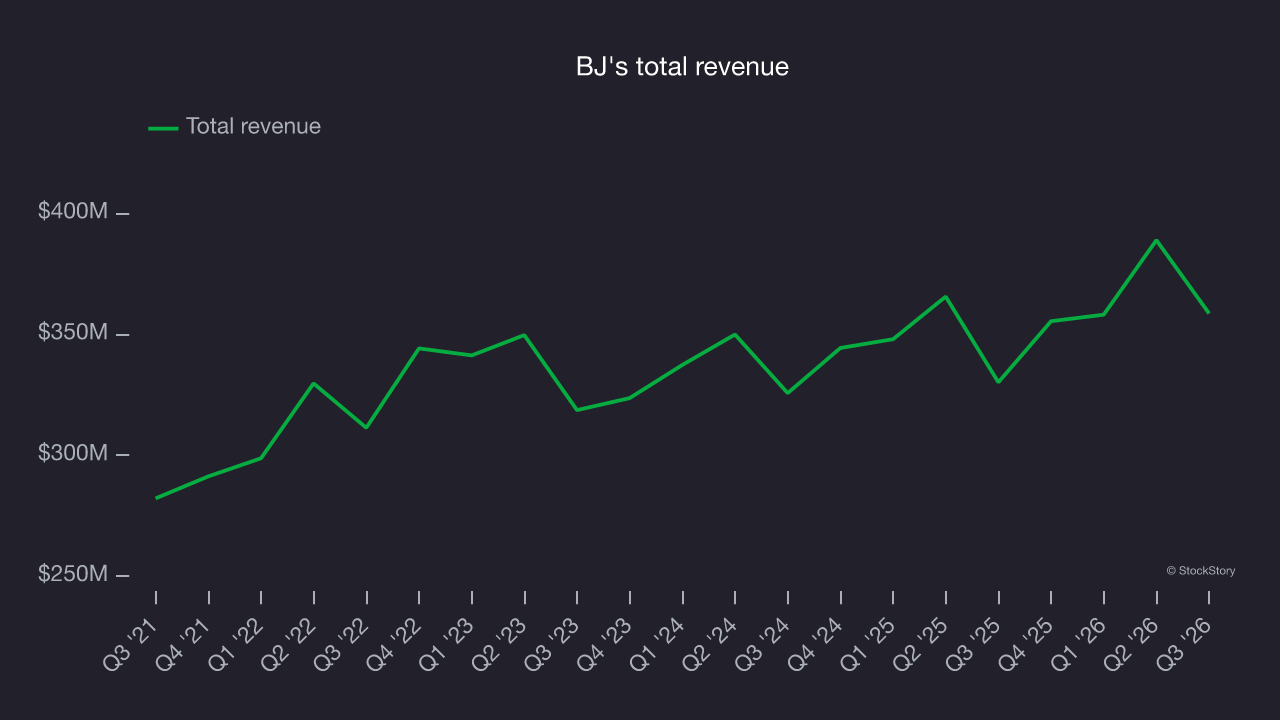
Investor expectations, however, were likely higher than Wall Street’s published projections, leaving some wishing for even better results (analysts’ consensus estimates are those published by big banks and advisory firms, not the investors who make buy and sell decisions). The stock is down 3.6% since reporting and currently trades at $56.36.
Is now the time to buy BJ's? Access our full analysis of the earnings results here, it’s free.
The Cheesecake Factory (NASDAQ:CAKE)
Celebrated for its delicious (and free) brown bread, gigantic portions, and delectable desserts, Cheesecake Factory (NASDAQ:CAKE) is an iconic American restaurant chain that also owns and operates a portfolio of separate restaurant brands.
The Cheesecake Factory reported revenues of $1.03 billion, up 13.9% year on year, outperforming analysts’ expectations by 2.7%. The business had a very strong quarter with a solid beat of analysts’ same-store sales estimates and a beat of analysts’ EPS estimates.
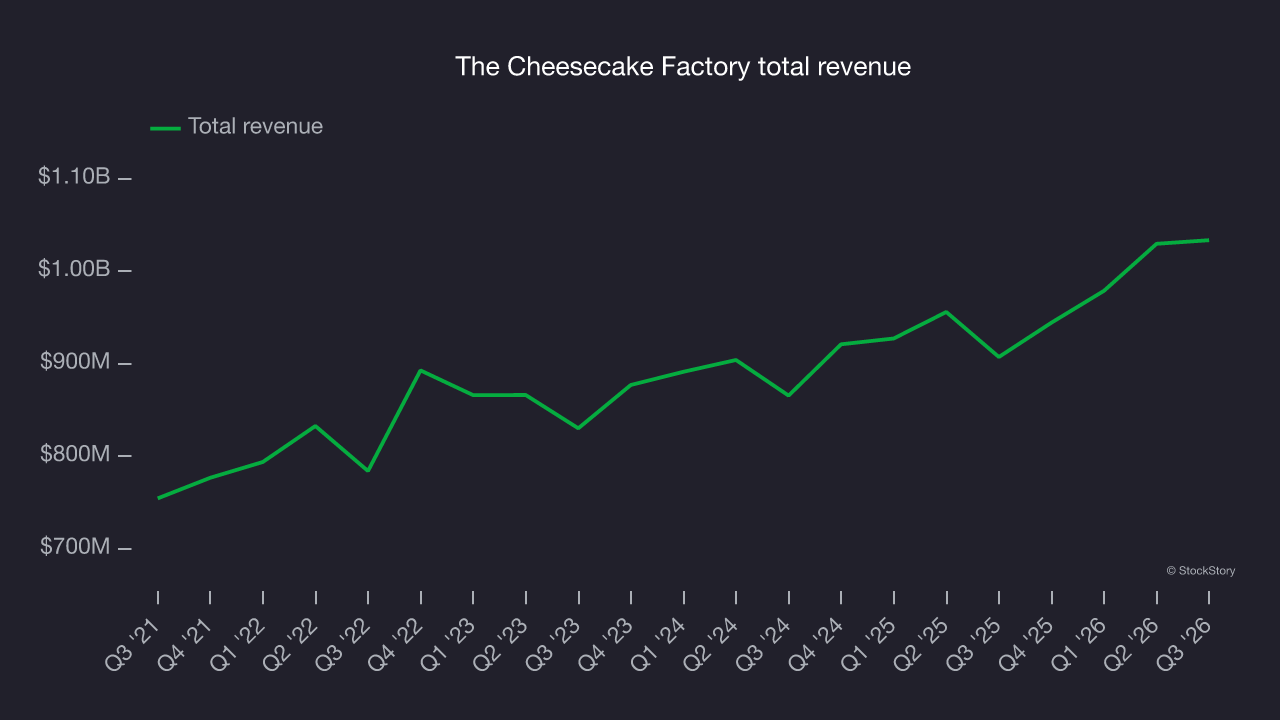
The market seems content with the results as the stock is up 2% since reporting. It currently trades at $110.61.
Is now the time to buy The Cheesecake Factory? Access our full analysis of the earnings results here, it’s free.
Weakest Q3: Kura Sushi (NASDAQ:KRUS)
Known for its conveyor belt that transports dishes to diners, Kura Sushi (NASDAQ:KRUS) is a chain of sushi restaurants serving traditional Japanese fare with a touch of modernity and technology.
Kura Sushi reported revenues of $88.88 million, up 11.9% year on year, falling short of analysts’ expectations by 2.1%. It was an underwhelming quarter as it posted full-year revenue guidance missing analysts’ expectations significantly and a significant miss of analysts’ EBITDA estimates.
Kura Sushi delivered the weakest performance against analyst estimates and weakest full-year guidance update among its peers. As expected, the stock is down 32.6% since the results and currently trades at $25.00.
Read our full analysis of Kura Sushi’s results here.
Bloomin' Brands (NASDAQ:BLMN)
Owner of the iconic Australian-themed Outback Steakhouse, Bloomin’ Brands (NASDAQ:BLMN) is a leading American restaurant company that owns and operates a portfolio of popular restaurant brands.
Bloomin' Brands reported revenues of $931.2 million, flat year on year. This result surpassed analysts’ expectations by 0.7%. Taking a step back, it was a mixed quarter as it also recorded full-year EPS guidance beating analysts’ expectations but EPS guidance for next quarter missing analysts’ expectations significantly.
Bloomin' Brands had the slowest revenue growth in the group. The stock is down 1.1% since reporting and currently trades at $10.36.
Read our full, actionable report on Bloomin' Brands here, it’s free.
Brinker International (NYSE:EAT)
Founded by Norman Brinker in Dallas, Brinker International (NYSE:EAT) is a casual restaurant chain that operates the Chili’s, Maggiano’s Little Italy, and It’s Just Wings banners.
Brinker International reported revenues of $1.48 billion, up 9.4% year on year. This print beat analysts’ expectations by 1.2%. Overall, it was a favorable quarter as it also recorded a solid beat of analysts’ same-store sales estimates and a solid beat of analysts’ EBITDA estimates.
Brinker International delivered the highest full-year guidance raise among its peers. The stock is flat since reporting and currently trades at $196.89.
Read our full, actionable report on Brinker International here, it’s free.
Market update
Over the past year, investors have been forced to repeatedly answer the same question: What is the market’s biggest risk? The answer has changed several times, and each shift has reshaped market leadership.
Late in 2025 and early 2026, artificial intelligence became the market’s primary uncertainty. Investors questioned whether AI would erode software pricing power and weaken competitive moats as AI made it easier to replicate once-differentiated products.
By the spring, technology took a back seat to geopolitics. The U.S. conflict with Iran briefly became the market’s dominant narrative, raising concerns about oil prices, inflation, and global growth. But as energy markets remained orderly and fears of a prolonged supply disruption faded, investors quickly turned their focus back to fundamentals.
Want to invest in winners with rock-solid fundamentals? Check out our Hidden Gem Stocks and add them to your watchlist. These companies are poised for growth regardless of the political or macroeconomic climate.