


Looking back on beverages, alcohol, and tobacco stocks’ Q3 earnings, we examine this quarter’s best and worst performers, including Monster NASDAQ:MNST and its peers.
These companies' performance is influenced by brand strength, marketing strategies, and shifts in consumer preferences. Changing consumption patterns are particularly relevant and can be seen in the rise of cannabis, craft beer, and vaping or the steady decline of soda and cigarettes. Companies that spend on innovation to meet consumers where they are with regards to trends can reap huge demand benefits while those who ignore trends can see stagnant volumes. Finally, with the advent of the social media, the cost of starting a brand from scratch is much lower, meaning that new entrants can chip away at the market shares of established players.
The 12 beverages, alcohol, and tobacco stocks we track reported a solid Q3. As a group, revenues beat analysts’ consensus estimates by 2.9% while next quarter’s revenue guidance was 0.5% above.
In light of this news, share prices of the companies have held steady as they are up 2% on average since the latest earnings results.
Monster NASDAQ:MNST
Founded in 2002 as a natural soda and juice company, Monster Beverage (NASDAQ:MNST) is a pioneer of the energy drink category, and its Monster Energy brand targets a young, active demographic.
Monster reported revenues of $2.56 billion, up 16.7% year on year. This print exceeded analysts’ expectations by 3.2%. Despite the top-line beat, it was still a mixed quarter for the company.
“Our new product launches this quarter, including additions to the Monster Energy®, Java Monster®, Mother® and FLRTTM product lines, reflect our ongoing commitment to innovation alongside the continued growth of our core offerings,” Mr. Schlosberg added.
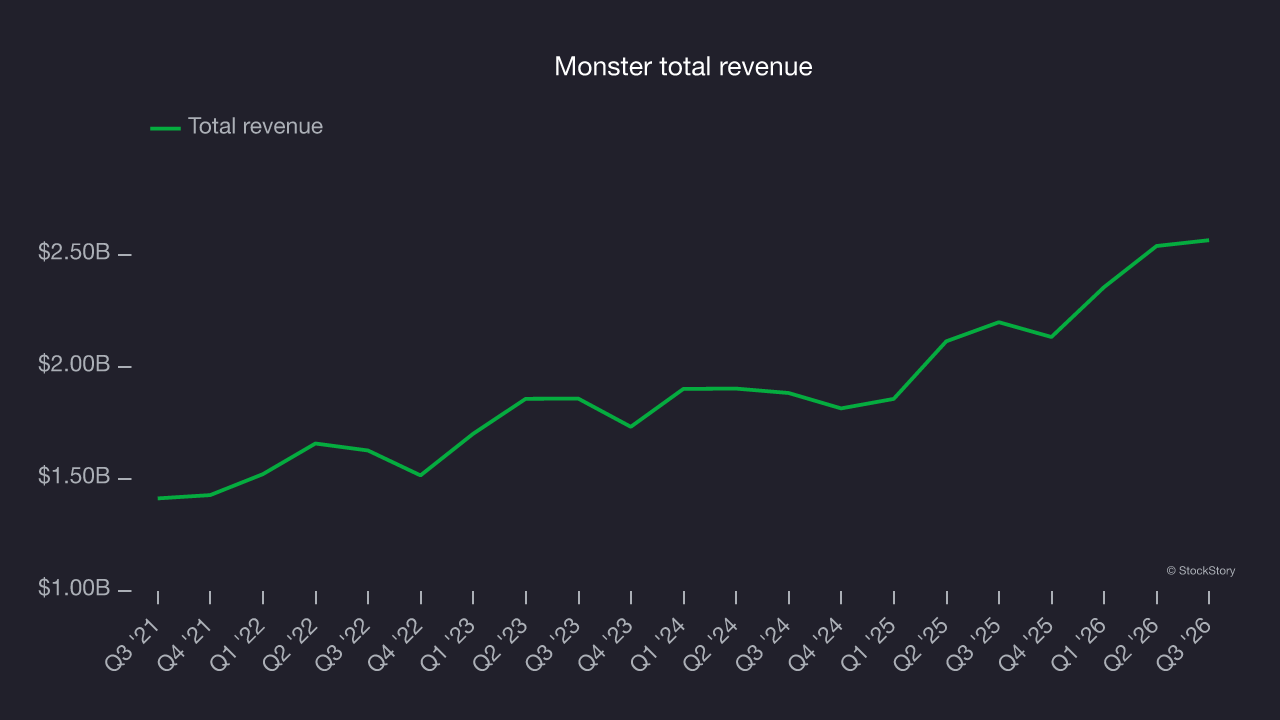
The market seems disappointed with the results as the stock is down 6.5% since reporting and currently trades at $44.71.
Is now the time to buy Monster? Access our full analysis of the earnings results here, it’s free.
Best Q3: Zevia (NYSE:ZVIA)
With a primary focus on soda but also a presence in energy drinks and teas, Zevia (NYSE:ZVIA) is a better-for-you beverage company.
Zevia reported revenues of $48.34 million, up 18.4% year on year, outperforming analysts’ expectations by 7.5%. The business had a very strong quarter with a beat of analysts’ EPS estimates and a solid beat of analysts’ EBITDA estimates.
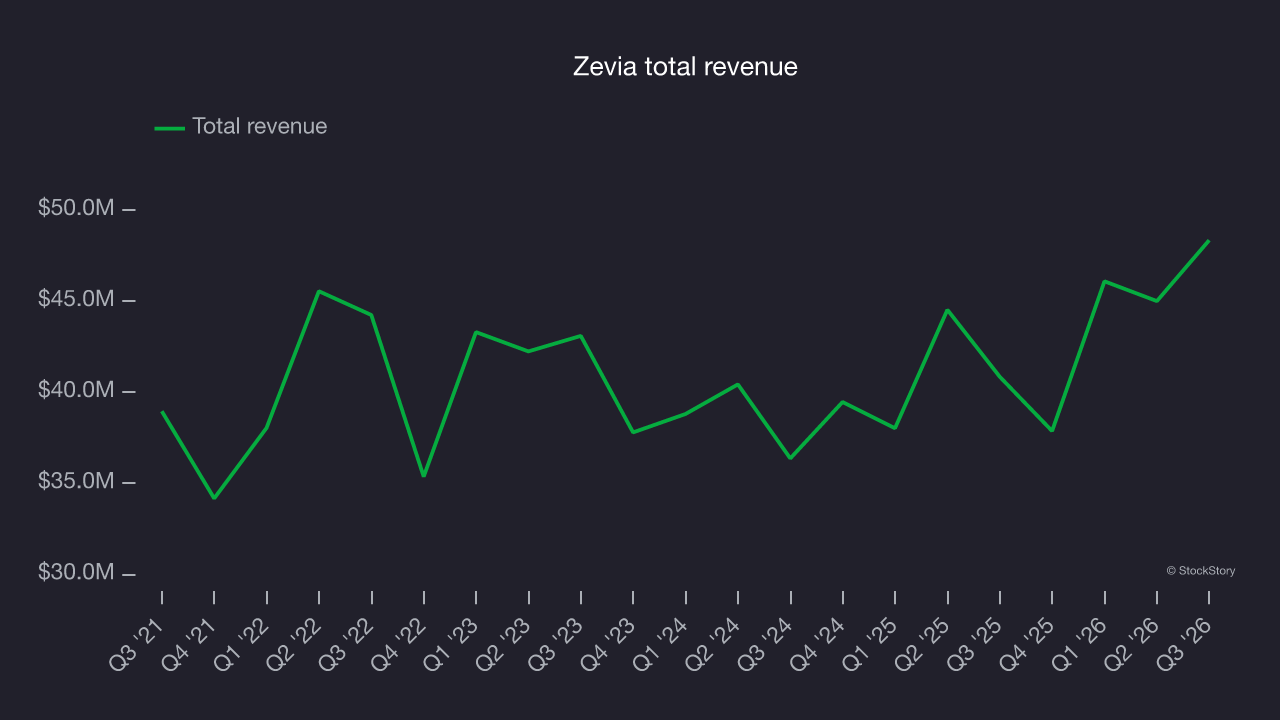
Zevia pulled off the biggest analyst estimate beat and highest full-year guidance raise of the whole group. Although it had a fine quarter compared to its peers, the market seems unhappy with the results as the stock is down 17.5% since reporting. It currently trades at $0.99.
Is now the time to buy Zevia? Access our full analysis of the earnings results here, it’s free.
Weakest Q3: Molson Coors (NYSE:TAP)
Sporting an impressive roster of iconic beer brands, Molson Coors (NYSE:TAP) is a global brewing giant with a rich history dating back more than two centuries.
Molson Coors reported revenues of $2.93 billion, down 1.6% year on year, falling short of analysts’ expectations by 0.5%. It was a softer quarter as it posted a miss of analysts’ gross margin estimates and a slight miss of analysts’ EBITDA estimates.
Molson Coors delivered the weakest performance against analyst estimates in the group. As expected, the stock is down 4.5% since the results and currently trades at $41.21.
Read our full analysis of Molson Coors’s results here.
Constellation Brands (NYSE:STZ)
With a presence in more than 100 countries, Constellation Brands (NYSE:STZ) is a globally renowned producer and marketer of beer, wine, and spirits.
Constellation Brands reported revenues of $2.63 billion, up 6.1% year on year. This print topped analysts’ expectations by 3.9%. Zooming out, it was a mixed quarter as it also recorded a beat of analysts’ EPS estimates but full-year revenue guidance slightly missing analysts’ expectations.
Constellation Brands had the weakest full-year guidance update among its peers. The stock is up 24.1% since reporting and currently trades at $143.57.
Read our full, actionable report on Constellation Brands here, it’s free.
PepsiCo (NASDAQ:PEP)
With a history that goes back more than a century, PepsiCo (NASDAQ:PEP) is a household name in food and beverages today and best known for its flagship soda.
PepsiCo reported revenues of $25.27 billion, up 5.6% year on year. This result beat analysts’ expectations by 1.3%. It was a satisfactory quarter as it also logged a decent beat of analysts’ gross margin estimates.
The stock is up 14.2% since reporting and currently trades at $141.34.
Read our full, actionable report on PepsiCo here, it’s free.
Market update
Over the past year, investors have been forced to repeatedly answer the same question: What is the market’s biggest risk? The answer has changed several times, and each shift has reshaped market leadership.
Late in 2025 and early 2026, artificial intelligence became the market’s primary uncertainty. Investors questioned whether AI would erode software pricing power and weaken competitive moats as AI made it easier to replicate once-differentiated products.
By the spring, technology took a back seat to geopolitics. The U.S. conflict with Iran briefly became the market’s dominant narrative, raising concerns about oil prices, inflation, and global growth. But as energy markets remained orderly and fears of a prolonged supply disruption faded, investors quickly turned their focus back to fundamentals.
Want to invest in winners with rock-solid fundamentals? Check out our Top 5 Quality Compounder Stocks and add them to your watchlist. These companies are poised for growth regardless of the political or macroeconomic climate.