


The end of the earnings season is always a good time to take a step back and see who shined (and who didn’t). Let’s take a look at how u.s. shale e&p stocks fared in Q3, starting with Viper Energy NASDAQ:VNOM.
US shale oil producers extract crude from tight rock formations using horizontal drilling and hydraulic fracturing (fracking) techniques, primarily in basins like the Permian, Bakken, and Eagle Ford. Tailwinds include short-cycle investment flexibility allowing rapid production adjustments, technological improvements enhancing well productivity, and proximity to refining and export infrastructure. Capital discipline has improved financial returns. Headwinds include commodity price sensitivity affecting drilling economics, accelerating well decline rates requiring continuous capital investment, and increasing regulatory and ESG scrutiny. Water usage, induced seismicity concerns, and evolving environmental regulations present ongoing operational challenges.
The 11 u.s. shale e&p stocks we track reported a favorable Q3. As a group, revenues beat analysts’ consensus estimates by 5.3%.
While some u.s. shale e&p stocks have fared somewhat better than others, they have collectively declined. On average, share prices are down 4.6% since the latest earnings results.
Viper Energy NASDAQ:VNOM
Operating a business model that requires no drilling rigs or production equipment of its own, Viper Energy (NASDAQ:VNOM) owns mineral and royalty interests in oil and gas properties, collecting revenue when operators extract resources from land.
Viper Energy reported revenues of $661 million, up 58.1% year on year. This print exceeded analysts’ expectations by 4%. Overall, it was a very strong quarter for the company with a beat of analysts’ EPS estimates and a decent beat of analysts’ EBITDA estimates.
“Viper’s momentum carried through the third quarter, with average daily oil production growing more than six percent quarter over quarter on the strength of recent acquisitions and continued development activity from both Diamondback and our third-party operators. Reflecting this continued momentum, we are again increasing our full year 2026 production guidance to 67,500 barrels of oil per day at the midpoint. The quarter also marked the first under our new return of capital framework, through which we declared our increased base dividend of $0.50 per Class A share while continuing to opportunistically repurchase shares,” said Kaes Van’t Hof, Chief Executive Officer of Viper.
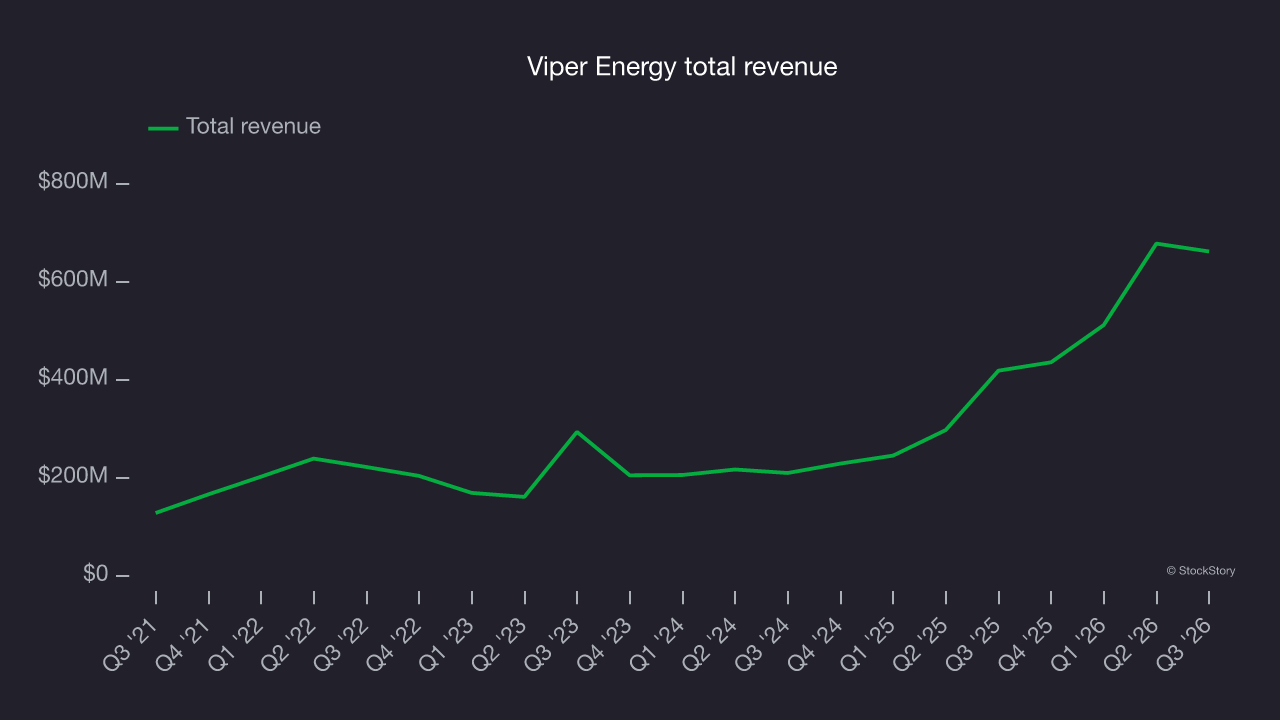
Investor expectations, however, were likely higher than Wall Street’s published projections, leaving some wishing for even better results (analysts’ consensus estimates are those published by big banks and advisory firms, not the investors who make buy and sell decisions). The stock is down 12.4% since reporting and currently trades at $40.06.
Best Q3: Crescent Energy (NYSE:CRGY)
Controlling over 1.4 million net acres across proven U.S. basins, Crescent Energy (NYSE:CRGY) extracts oil and natural gas from underground reservoirs in Texas and the Rocky Mountains.
Crescent Energy reported revenues of $1.35 billion, up 55.9% year on year, outperforming analysts’ expectations by 3.4%. The business had an impressive quarter with a beat of analysts’ EPS estimates.
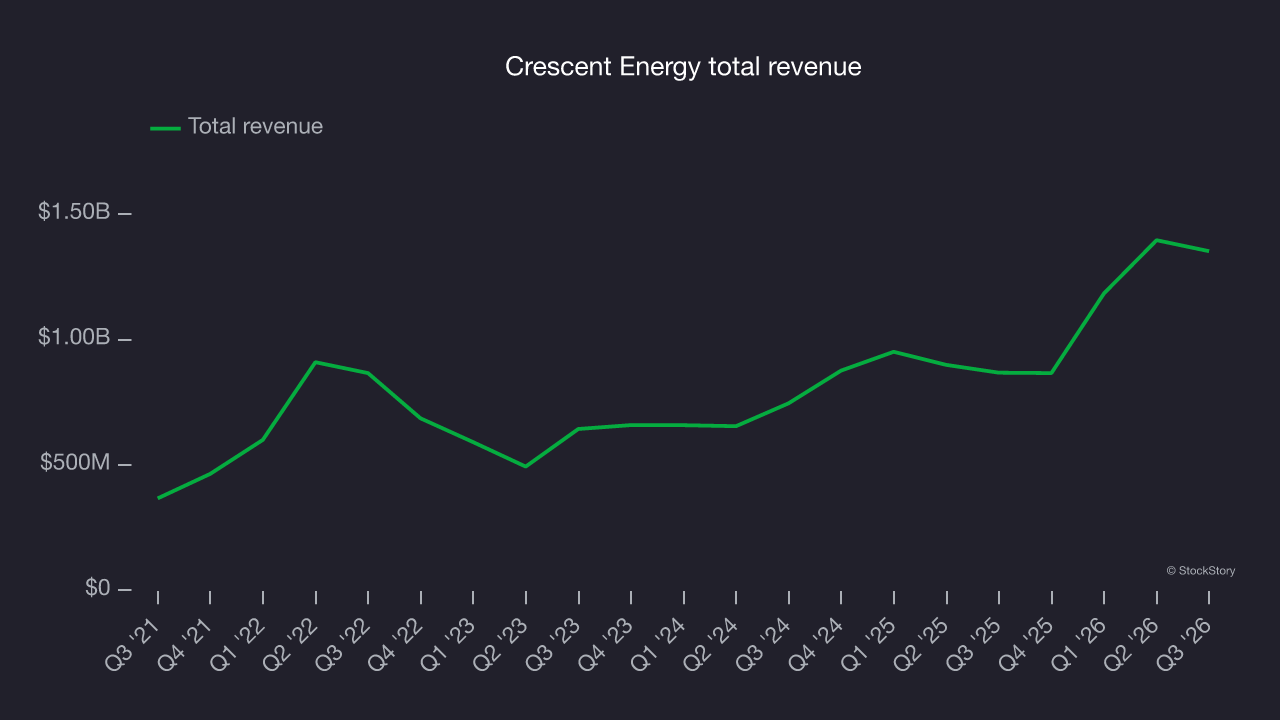
Although it had a fine quarter compared to its peers, the market seems unhappy with the results as the stock is down 19.2% since reporting. It currently trades at $10.89.
Is now the time to buy Crescent Energy? Access our full analysis of the earnings results here, it’s free.
Slowest Q3: Northern Oil and Gas (NYSE:NOG)
Taking the path less traveled in the oil industry by choosing not to operate its own wells, Northern Oil and Gas (NYSE:NOG) acquires minority stakes in oil and gas wells operated by other companies across major U.S. shale basins.
Northern Oil and Gas reported revenues of $654 million, up 20.8% year on year, exceeding analysts’ expectations by 8.9%. Still, it was a mixed quarter as it posted a significant miss of analysts’ EBITDA estimates.
Northern Oil and Gas delivered the slowest revenue growth of the whole group. Interestingly, the stock is up 4.8% since the results and currently trades at $23.21.
Read our full analysis of Northern Oil and Gas’s results here.
Riley Exploration Permian (NYSE:REPX)
Operating in counties where legacy oil fields have been producing since the early 1900s, Riley Exploration Permian (NYSE:REPX) drills for and produces oil and natural gas from horizontal wells in the Permian Basin of West Texas and New Mexico.
Riley Exploration Permian reported revenues of $201.2 million, up 88.3% year on year. This print surpassed analysts’ expectations by 8.8%. Overall, it was a very strong quarter as it also produced a beat of analysts’ EPS estimates.
Riley Exploration Permian delivered the fastest revenue growth among its peers. The stock is down 1.7% since reporting and currently trades at $42.16.
Read our full, actionable report on Riley Exploration Permian here, it’s free.
Diamondback Energy (NASDAQ:FANG)
Sporting one of Wall Street's most memorable ticker symbols, Diamondback Energy (NASDAQ:FANG) drills for and produces oil and natural gas from underground rock formations in the Permian Basin of West Texas and New Mexico.
Diamondback Energy reported revenues of $5.33 billion, up 35.9% year on year. This result topped analysts’ expectations by 9.6%. Overall, it was a favorable quarter as it also recorded a solid beat of analysts’ EBITDA estimates and a beat of analysts’ EPS estimates.
Diamondback Energy pulled off the biggest analyst estimate beat in the group. The stock is down 11.6% since reporting and currently trades at $176.50.
Read our full, actionable report on Diamondback Energy here, it’s free.
Market update
Over the past year, investors have been forced to repeatedly answer the same question: What is the market’s biggest risk? The answer has changed several times, and each shift has reshaped market leadership.
Late in 2025 and early 2026, artificial intelligence became the market’s primary uncertainty. Investors questioned whether AI would erode software pricing power and weaken competitive moats as AI made it easier to replicate once-differentiated products.
By the spring, technology took a back seat to geopolitics. The U.S. conflict with Iran briefly became the market’s dominant narrative, raising concerns about oil prices, inflation, and global growth. But as energy markets remained orderly and fears of a prolonged supply disruption faded, investors quickly turned their focus back to fundamentals.
Want to invest in winners with rock-solid fundamentals? Check out our Top 5 Growth Stocks and add them to your watchlist. These companies are poised for growth regardless of the political or macroeconomic climate.