


European gas markets are back in the spotlight as a rare mix of early polar vortex disruption, El Niño and thin storage cushions raises fresh questions about how secure winter energy really looks. Sudden swings in demand, tighter LNG supply and jumpy prices can reshape cash flows across the sector fast, which creates both openings and risks. This article looks at 3 European natural gas and LNG infrastructure stocks exposed to these weather and supply shocks and explains how the current setup could matter for long term investors.
The three stocks below are just a starting sample from this European gas and LNG theme, and the full screen surfaced 13 more sizeable companies with equally compelling narratives that are not covered here. To identify and analyze the highest conviction ideas straight away, head to the European Natural Gas & LNG Infrastructure Stocks screener.
Yü Group (AIM:YU.)
Overview: Yü Group supplies electricity, gas and water to UK businesses, coupling energy retail with metering assets and related engineering services.
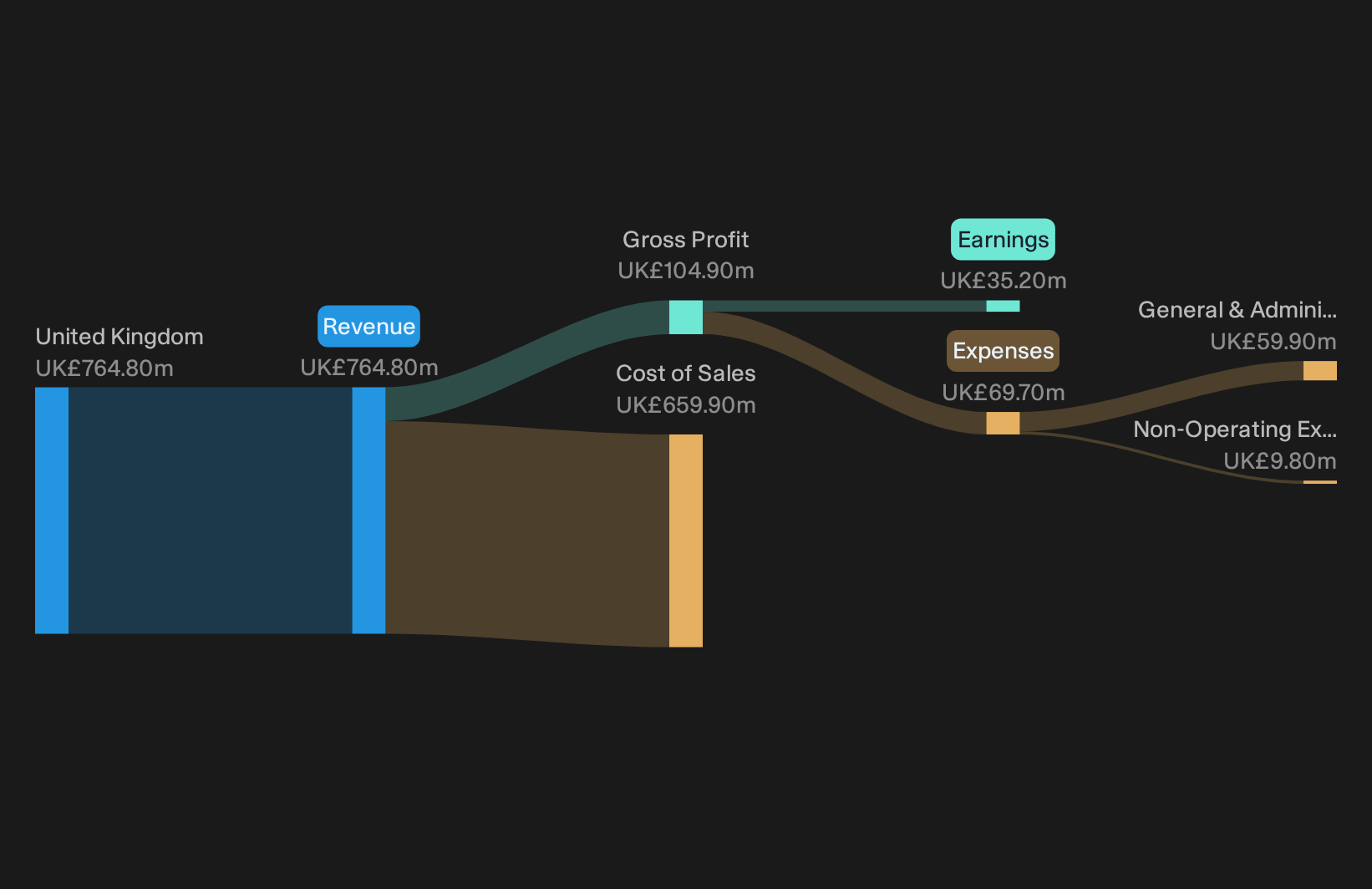
Operations: The group generates approximately £765 million of revenue in the United Kingdom, tying its fortunes closely to domestic energy conditions.
Market Cap: £309 million
Yü Group sits close to the fault line of UK gas and power pricing. According to European_Hidden_Gem_Stocks, an investor in the Simply Wall St Community, the way management is reshaping the business model matters directly for how this exposure plays out over the next few years.
"Management is targeting a significant increase in market share, while expanding cross-selling opportunities across electricity, gas, water and engineering services. At the same time, the company is building a growing portfolio of owned smart meters that generate recurring rental income while creating valuable customer data."
What happens to future profitability depends heavily on how one unseen pressure on unit economics ultimately feeds through to that evolving model.
That hidden pressure point is exactly what the full narrative for Yü Group unpacks, including how meter assets and cross selling could accelerate or stall the whole plan.
Fortum Oyj (HLSE:FORTUM)
Overview: Fortum Oyj is a Nordic utility that produces and sells electricity and heat, runs power and gas retail services, and supports decarbonization for households, businesses and industrial clients across several European markets.
Operations: Fortum generates most of its €7.7b revenue from Generation at €3.5b and Consumer Solutions at €3.7b, with earnings concentrated in the Nordics.
Market Cap: €20.1b
Fortum Oyj offers European gas and LNG investors a different angle on the theme, with low carbon Nordic generation and heat assets whose earnings sensitivity still links back to regional gas pricing, which is exactly what the analyst consensus Narrative on Simply Wall St focuses on in its current view.
"The 22 year nuclear power purchase agreement with Google that covers half of Loviisa’s capacity from 2030 to 2049 and is expected to lift group return on net assets by about 1.4 percentage points provides a long dated earnings stream that helps justify current valuation levels."
What happens to future returns hinges on how one unresolved pressure in Fortum Oyj’s retail and flexibility economics ultimately shapes group margins.
That margin question is exactly what the full narrative for Fortum Oyj tackles. It reveals how retail economics, nuclear contracts and gas exposure could be accelerating a quieter reset in Fortum Oyj’s earnings mix.

Drax Group (LSE:DRX)
Overview: Drax Group runs UK biomass and renewable power stations that provide dispatchable electricity and grid support, with revenues influenced by gas-linked power prices.
Operations: Drax Group generates most of its £7.6b revenue from Biomass Generation at £4.1b and Energy Solutions at £2.4b, with smaller contributions from Pellet Production and Flexible Generation.
Market Cap: £2.77b
Drax Group fits this gas and LNG screen as a renewable-heavy generator whose earnings still ebb and flow with UK gas-driven power pricing. The analyst consensus Narrative on Simply Wall St frames the appeal around how contracted low carbon output and flexible capacity might interact with that volatility.
"The recent agreement on a government backed low carbon dispatchable CfD for Drax Power Station, covering all units through 2031, continues to anchor long term revenue visibility and limit merchant power price exposure, which can support more predictable EBITDA and cash flow profiles than the share price appears to reflect."
What happens to future margins and cash generation hinges on how pressure in funding and executing the UK build out ultimately plays through.
That funding question is only the start, and the full narrative for Drax Group shows how Drax Group’s contracted base could be masking both upside optionality and real execution risk.

Seeking Alternatives Before The Crowd?
Fresh themes move fast. Breakout stories gain momentum while they are still under the radar for now and laggards keep dropping. Use these focused lists and look for opportunities early.
- Target resilient payers with cash to back their distributions by scanning a curated group of 6 dividend fortresses before yield hunters catch up.
- Consider structural demand for electrification and data by reviewing 53 AI infrastructure stocks that could gain momentum while grid investment stories are still mispriced.
- Explore exposure to the metals cycle by checking 16 top copper producer stocks that may be affected if energy transition demand tightens physical supply.
Have feedback on this article? Concerned about the content? Get in touch with us directly. Alternatively, email editorial-team@simplywallst.com