


- Procter & Gamble outlined plans to cut up to 30% of its product supply workforce by 2030 and target as much as US$10b in cost savings from fiscal 2027 to 2030. The company aims to rely heavily on artificial intelligence, automation and broader productivity measures while maintaining its stated sales outlook.
- The same period brings a limited Old Spice Holidudes holiday collection and continued organic sales expansion across regions and categories. This shows Procter & Gamble pairing heavy efficiency moves with fresh product launches to support demand in mature markets facing higher raw material, energy and freight costs.
- We will now look at how Procter & Gamble's cost savings and automation push could influence its existing investment narrative.
Compare Procter & Gamble's push on efficiency and premium pricing with other consumer staples by scanning our hand picked list of 32 resilient stocks with low risk scores that aim to balance resilience with return potential.
Procter & Gamble Investment Narrative Recap
To hold Procter & Gamble, you need to be comfortable owning a slow and steady consumer staples giant that leans on brand strength, pricing power and consistent cash returns. The key short term swing factor is how much of its organic sales growth drops through to profit while raw material, energy and freight costs move higher. The announced US$10b efficiency program and workforce cuts are important, but mostly about sustaining margins rather than changing the basic thesis.
The biggest operational risk right now sits in execution. Procter & Gamble is integrating Thorne, rolling out AI and automation across supply chains and trimming up to 30% of its product supply headcount by 2030. Any disruption to service levels or failure to offset higher costs would pressure margins in the near term. The Old Spice Holidudes launch sits more in the background as a brand and shelf visibility lever, not a core earnings driver.
The Old Spice Holidudes Collection is the clearest operational link to this news cycle. It is a limited holiday run, with six seasonal scents spread across deodorants, antiperspirants, body wash and 2 in 1 shampoo products, including retailer exclusives. For an investor, the relevance is less about the scent names and more about how Procter & Gamble uses time boxed launches to refresh a mature grooming franchise and support organic sales.
That fits with what andre_santos, a Simply Wall St Community investor who wrote the Narrative, argues about Procter & Gamble needing to defend margins in a highly competitive arena. In the short term, the interesting angle is whether these seasonal lines and similar product refreshes help support volume in Grooming and Beauty while the firm leans into automation and cost cuts. The catalyst to watch is how much seasonal demand, mix and productivity gains combine to offset the cost pressure already flagged by management.
In the narrative, andre_santos arrives at a fair value of US$107.52 for Procter & Gamble by blending discounted cash flow, earnings and dividend models, all built on revenue rising 3.5% a year and a future profit margin assumption of 17.5%.
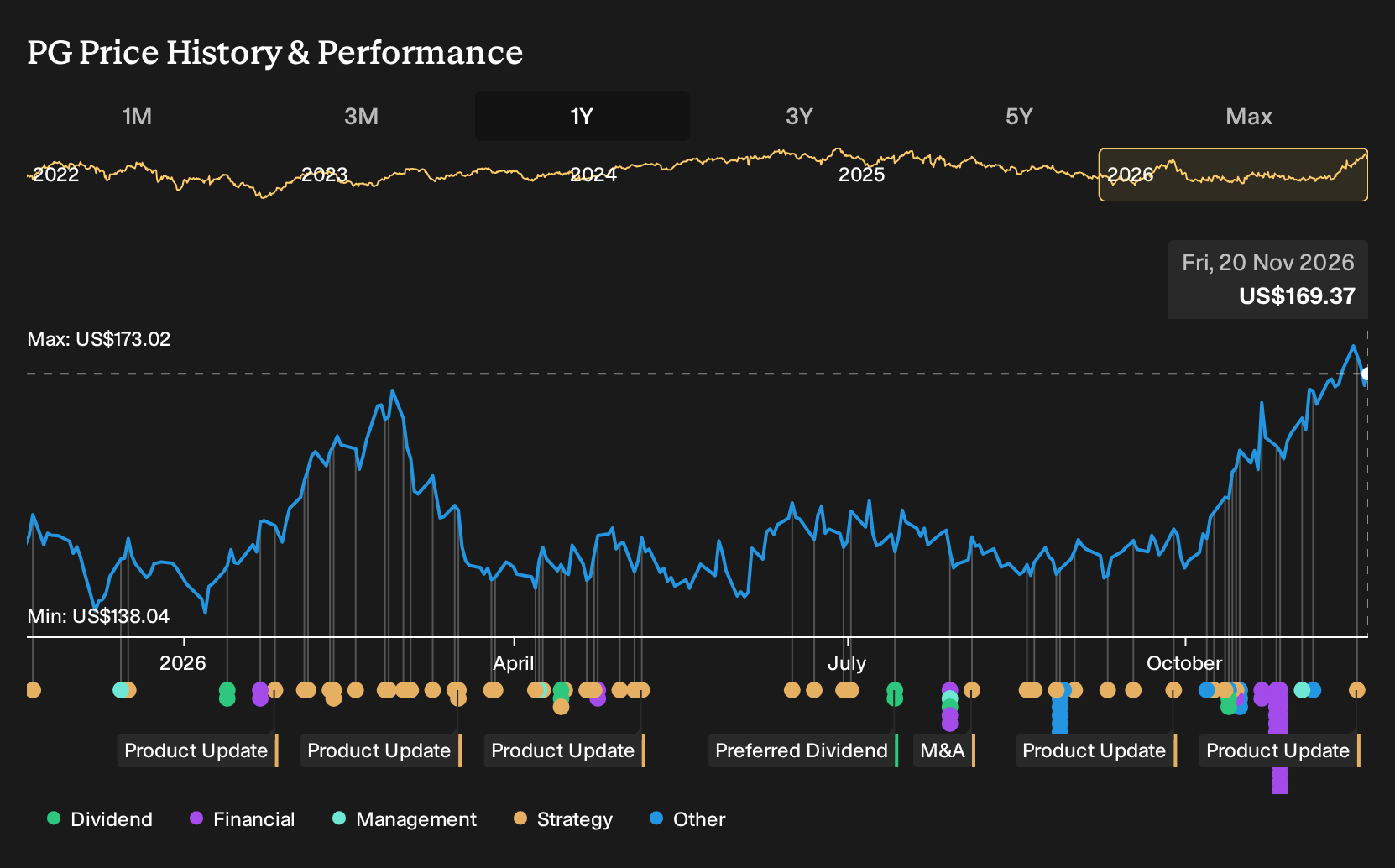
Uncover why Procter & Gamble's fair value indicates a 37% potential downside to its current price that leaves little room for error.
Exploring Other Perspectives
The 17 fair value estimates from the Simply Wall St Community span a wide band from US$107.52 to about US$208 per share, showing how far apart retail opinions on Procter & Gamble can land. Read these alongside current cost pressure, premium pricing, and the Old Spice Holidudes push to stress test your own view.
Explore 16 other Procter & Gamble fair value estimates, including one that suggests as much as 23% upside from the current price.
Form Your Own Verdict
Don't just follow the ticker; dig into the data and build a conviction that's truly your own.
- A great starting point for your Procter & Gamble research is our analysis highlighting 3 key rewards and 2 important warning signs that could impact your investment decision.
- See our latest analysis for Procter & Gamble. The report includes a comprehensive fundamental analysis summarized in a single visual, the Snowflake, making it easy to evaluate Procter & Gamble's overall financial health at a glance.
Looking for more investment ideas beyond Procter & Gamble?
Once you have a handle on Procter & Gamble, it can help to compare its profile with other listed businesses that offer different mixes of income, quality and risk. The Simply Wall St Screener is built for this kind of side by side work so you can see how alternatives stack up on the metrics that matter to you.
- If you want resilient balance sheets and sturdy fundamentals, start by scanning our list of solid balance sheet and fundamentals (24 results) to see financial strength and business quality in one place.
- For investors focused on value opportunities, you can review 40 high quality undervalued stocks to find companies that combine stronger fundamentals with prices that may not fully reflect them.
- If income is your priority, compare Procter & Gamble's profile with 8 dividend fortresses to explore higher yields with a focus on durability.
Have feedback on this article? Concerned about the content? Get in touch with us directly. Alternatively, email editorial-team@simplywallst.com