


- Walmart reported third-quarter revenue of US$188.8b and net income of US$4.9b, raised its full-year outlook, and highlighted strong gains in e-commerce, advertising, and membership income.
- Higher margin activities, such as a 25% rise in global advertising revenue and robust membership growth, are reshaping Walmart’s earnings mix away from pure low-margin retail.
- We will now look at how Walmart’s stronger high margin businesses and upgraded guidance shape the company’s broader investment narrative.
Walmart Investment Narrative Recap
To own Walmart, you need to believe its fee rich ecosystem of ads, marketplace, memberships and services can steadily matter more than low margin product sales, without breaking the low price promise that keeps traffic high. Recent Q3 results showed higher revenue but softer profitability, so execution on mix and cost control still looks like the key near term catalyst.
The main short term swing factor is whether advertising, e commerce and Walmart+ scale fast enough to offset fuel, logistics and price rollbacks that pressure margins. The biggest risk right now looks operational rather than demand related, with higher debt, lower net income and ongoing cost inflation limiting how much room management has to invest aggressively.
Among recent headlines, the US$7.8m Pennsylvania child labor settlement feels most relevant for today’s thesis. Compliance spend rarely shifts a retailer of Walmart’s size in isolation, but it does add to the broader cost stack at a time when Q3 net income fell to US$4.9b and full year capex is already elevated.
For catalysts, the real watchpoint is execution on higher margin activities while dealing with tighter regulatory scrutiny and labor oversight. Any further compliance misses or tougher enforcement could raise operating friction and reputational risk, at the same time that investors are focused on richer P/E multiples and on whether free cash flow can comfortably support both buybacks and growth investment.
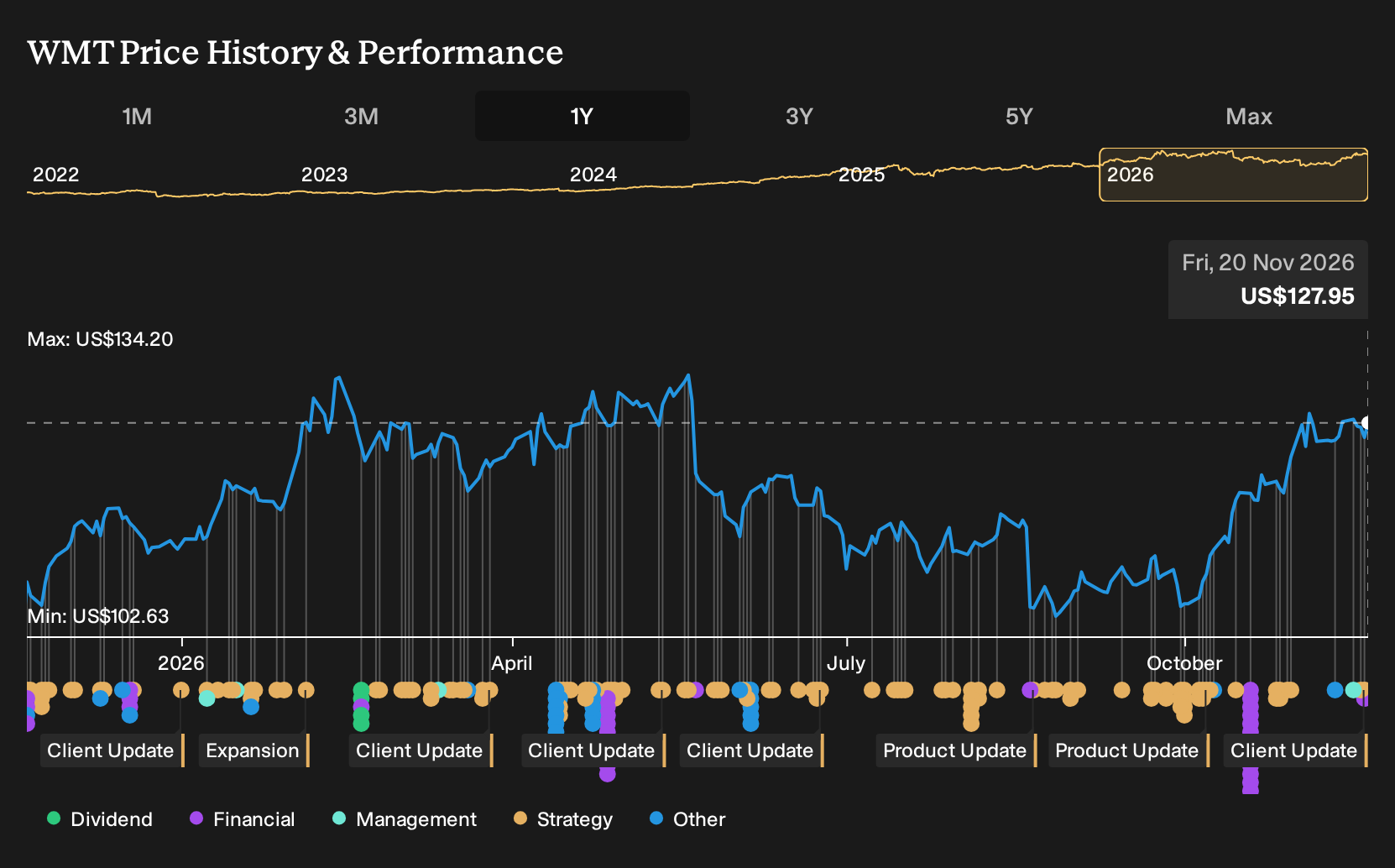
On these figures, the narrative from prakhar_ef9px arrives at a fair value of US$154.58 for Walmart by pairing a 13.0% annual increase in revenue with a 3.1% future profit margin. Together, these assumptions support a higher earnings base in the valuation model.
Uncover why Walmart's fair value indicates a 21% potential upside to its current price, highlighting a valuation gap that could narrow quickly.
Exploring Other Perspectives
The Simply Wall St Community has 14 different fair value views on Walmart, stretching from about US$79 to US$154.58. That spread shows how far opinions can drift when private investors weigh a premium P/E, heavy buybacks funded with US$10.8b of new debt, and fresh regulatory and compliance questions. Explore those alternative takes before deciding where you stand.
Explore 13 other Walmart fair value estimates, including one that suggests up to 21% potential upside from the current price.
Reach Your Own Conclusion
Don't just follow the ticker. Dig into the data and build a conviction that's truly your own.
- A great starting point for your Walmart research is our analysis highlighting 1 key reward and 2 important warning signs that could impact your investment decision.
- See our latest analysis for Walmart. The report includes a comprehensive fundamental analysis summarized in a single visual, the Snowflake, making it easy to evaluate Walmart's overall financial health at a glance.
Looking for more investment ideas beyond Walmart?
Once you have a view on Walmart, it can help to broaden your watchlist and compare it with other businesses that fit different risk and income profiles. The Simply Wall St Screener lets you quickly sort through global stocks using fundamentals, returns and balance sheet strength so you can build a line up that matches your own style.
- If capital preservation is top of mind, focus on stability first by reviewing companies in the 32 resilient stocks with low risk scores that score well on resilience and downside protection.
- For income focused investing, strengthen your watchlist with the 8 dividend fortresses to see which payers combine higher yields with a track record of supporting distributions.
- If you prefer to hunt for mispriced opportunities, widen the net with the 18 high quality undiscovered gems and compare those candidates with what you see in Walmart today.
Have feedback on this article? Concerned about the content? Get in touch with us directly. Alternatively, email editorial-team@simplywallst.com