


- Consumer advocates reported in recent days that certain Kroger-branded baby foods and snacks sold at Harris Teeter stores contained elevated lead levels compared with FDA guidance, raising product safety and compliance concerns for the grocer.
- The focus on lead in Kroger private label baby products puts a spotlight on quality control systems around the Our Brands portfolio. Any extra testing, reformulation, or potential recalls could affect costs and how shoppers view the wider Kroger label.
- We will examine how Kroger's investment narrative is influenced by scrutiny of lead risks in its baby food and snack portfolio.
Stress test your exposure to Kroger's headline risk by comparing it with a curated 31 resilient stocks with low risk scores that aims to keep regulatory and reputational shocks in check.
Kroger Investment Narrative Recap
To own Kroger, you need to believe the turnaround blueprint Greg Foran outlined, built on cost savings, e-commerce profitability, and higher Our Brands penetration, can support steady cash generation even when sales are soft. According to LunaRodas, an investor in the Simply Wall St Community, the key near term swing factor is whether cost discipline continues to offset pressure on profit margins, which currently sit at 0.7% versus 1.8% last year.
The lead findings in Kroger baby foods add a reputational and compliance overhang, but on current information they sit beside, not above, the main business catalyst. The bigger operational risk right now is that high debt, thinner margins, and a newer management team with an average tenure of around 1.9 years make execution on store improvement and pricing changes harder if sales stay sluggish.
With no fresh company announcements since the baby food headlines, the most relevant prior marker is the Q2 2027 earnings update that LunaRodas wrote about. That call framed e-commerce as structurally profitable, retail media growing 24%, and cost savings running ahead of internal plans. Taken together, those factors helped management argue that the operating model can absorb weaker sales periods if efficiency work continues to land.
For you as a shareholder, that earlier message now has an extra test. Any additional product testing, reformulation, or packaging changes tied to lead concerns would flow directly into the same cost and brand buckets Kroger is trying to strengthen. The more resilient the savings engine and Our Brands loyalty prove in everyday categories, the easier it is for the retailer to handle quality related spend without derailing the broader turnaround cadence.
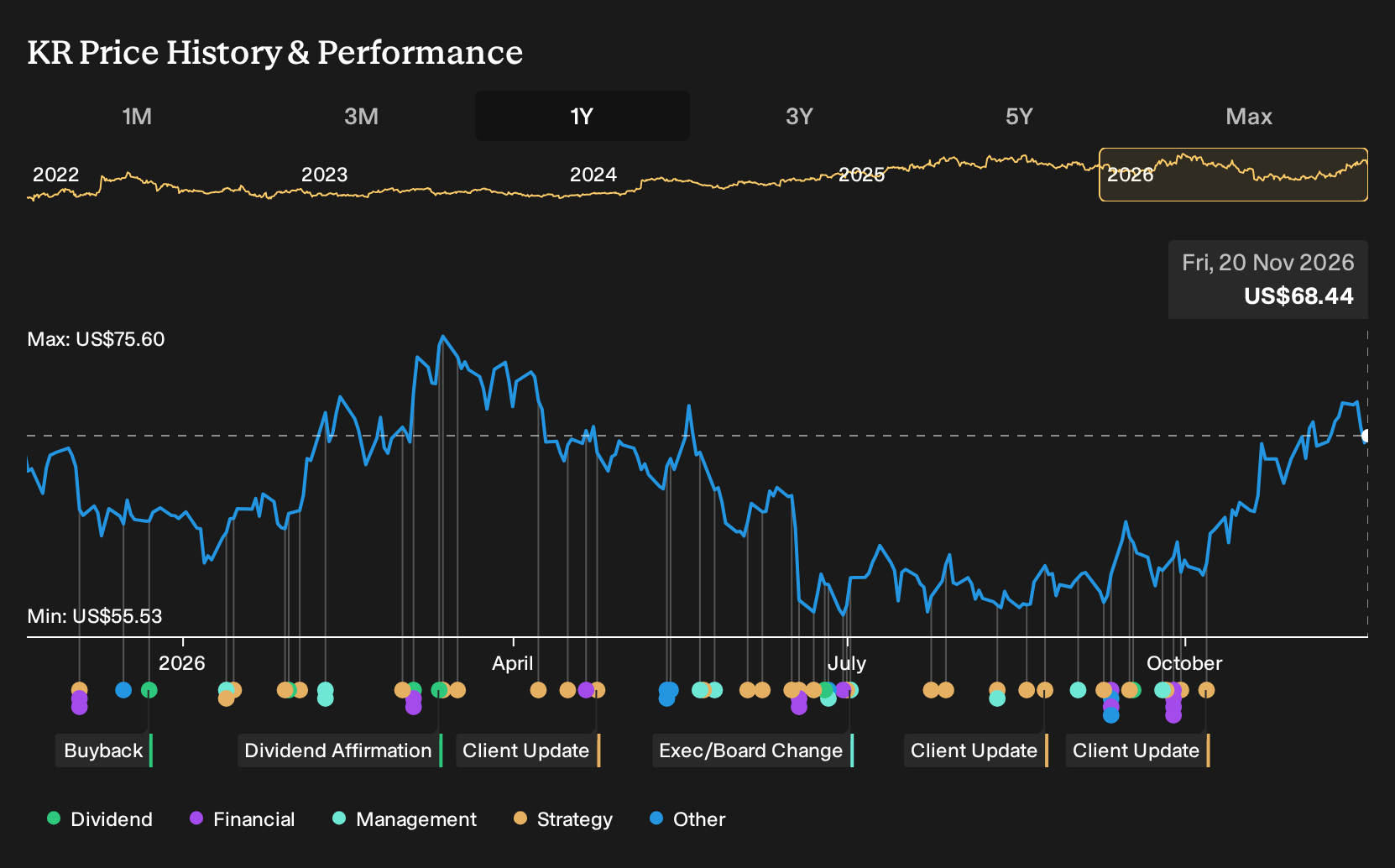
LunaRodas anchors a fair value of US$65.65 for Kroger based on the view that a sustained cost savings engine, profitable e-commerce cadence, and a growing retail media contribution can collectively support the operating model through softer sales without relying on a formal Five Fs framework.
Uncover why Kroger's fair value indicates a 4% potential downside to its current price, which leaves little room for error.
Exploring Other Perspectives
Some of the lowest Kroger analysts focus on a different weak spot for you to watch. They worry that higher transportation and fuel costs could keep net margins tight, even before any lead related quality costs are layered on. This cautious group was already penciling in only 1.7% annual revenue growth and earnings of US$2.7b by about 2029. Fresh regulatory or brand questions could easily push their narrative even more pessimistic. Use this as a prompt to compare several viewpoints before deciding how the new headlines might reshape your own expectations.
Explore 4 other Kroger fair value estimates, including one that suggests it could be worth just $69.50.
The Verdict Is Yours
Disagree with existing narratives? Extraordinary investment returns rarely come from following the herd, so go with your instincts.
- A great starting point for your Kroger research is our analysis highlighting 3 key rewards and 4 important warning signs that could impact your investment decision.
- See our latest analysis for Kroger. The report includes a comprehensive fundamental analysis summarized in a single visual, the Snowflake, making it easy to evaluate Kroger's overall financial health at a glance.
Looking for more investment ideas beyond Kroger?
If the Kroger story has sharpened your focus on risk, balance sheets, and valuation, it can help to line it up against a wider watchlist of potential opportunities using the Simply Wall St Screener.
- If capital preservation is high on your list, start with companies that screen as relatively resilient by reviewing the 31 resilient stocks with low risk scores in one place.
- If dependable income is more your style, scan for higher yielding payers that still clear quality hurdles by checking the 8 dividend fortresses.
- If you are hunting for underfollowed ideas with solid fundamentals, broaden your watchlist with the 18 high quality undiscovered gems.
Have feedback on this article? Concerned about the content? Get in touch with us directly. Alternatively, email editorial-team@simplywallst.com