


The Zhitong Finance App notes that US Treasury futures have declined because the recent sell-off in the stock market seems to be attracting back some buyers, and safe-haven demand has weakened as a result.
10-year US Treasury futures fell in early Asian trading on Monday, equivalent to a yield increase of about 4 basis points. Since Japan falls on a public holiday, there are no cash transactions during the Asian period.
This round comes at a time when US stock index futures are rising — previously, the closing of AI trades triggered a round of sell-off. Authorities across Asia have stepped up efforts to contain the deep decline in the stock market. Measures include expanding restrictions on short selling and easing margin requirements.
Andrew Tyshurst, senior strategist at Nomura in Sydney, said, “US stock futures rose during the Asian session this morning. This improvement in sentiment seems to be the driving factor behind the weakening of US debt.”
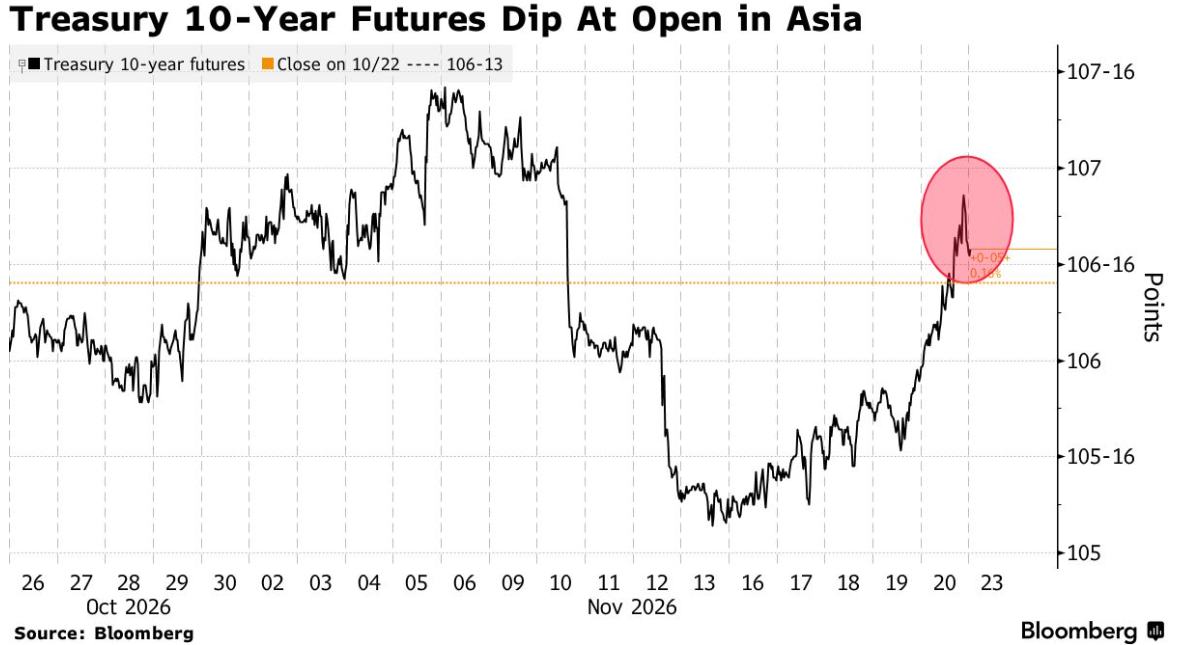
The decline in US Treasury futures highlights that bonds are once again at odds with the stock market — investors are debating whether the stock market is ready for a rebound. Sticky inflation and concerns about America's fiscal outlook have been dragging down the world's largest bond market, and have also heightened doubts about the extent to which sovereign debt can provide protection when risky assets fall.
Anna Wu, investment strategist and founder of Loodlines Research, said. “The AI sell-off has dragged down the whole market sentiment. If the sell-off is repeated, US bonds will once again be in demand. “F” The greater risk is the Federal Reserve. If it aggressively raises interest rates, it is likely to take the lead in stripping US bonds of the protective effect, and we will move from a 'yield trap' to a 'downturn in growth'.”
Bank of America and BMO capital market strategists have always been firm supporters of so-called “curve flattening” transactions, betting that the performance of short-term US bonds will lag behind long-term US bonds. The logic is that continued interest rate hikes by the Federal Reserve will drive up short-term yields, and the resulting drag on growth and inflation will eventually depress long-term borrowing costs.