


Repo rates are climbing toward 6%, inflation is pressing against the RBI’s ceiling, and India’s recent 8% growth has met a tougher reality, which puts large private banks under a sharper lens. This mix can reshape funding costs, loan demand, and margins in ways many investors underestimate, creating both openings and traps. This article walks through three Indian large cap private sector bank stocks exposed to these macro shifts and what that might mean for your portfolio decisions.
The three stocks discussed below are just a sample starting point, and the full screen surfaced 10 more large private-sector Indian banks with equally compelling narratives that are not covered in this article.
To size up the wider opportunity set and identify which lenders best fit your risk, return, and rate-view assumptions, head straight into the Indian Large-Cap Private Sector Banks screener.
Federal Bank (NSEI:FEDERALBNK)
Federal Bank anchors the Indian Large Cap Private Sector Banks theme as a mid to large private lender with a wide retail, NRI and corporate franchise. The analyst consensus Narrative on Simply Wall St outlines how its funding base and earnings mix relate to rising rate conditions.
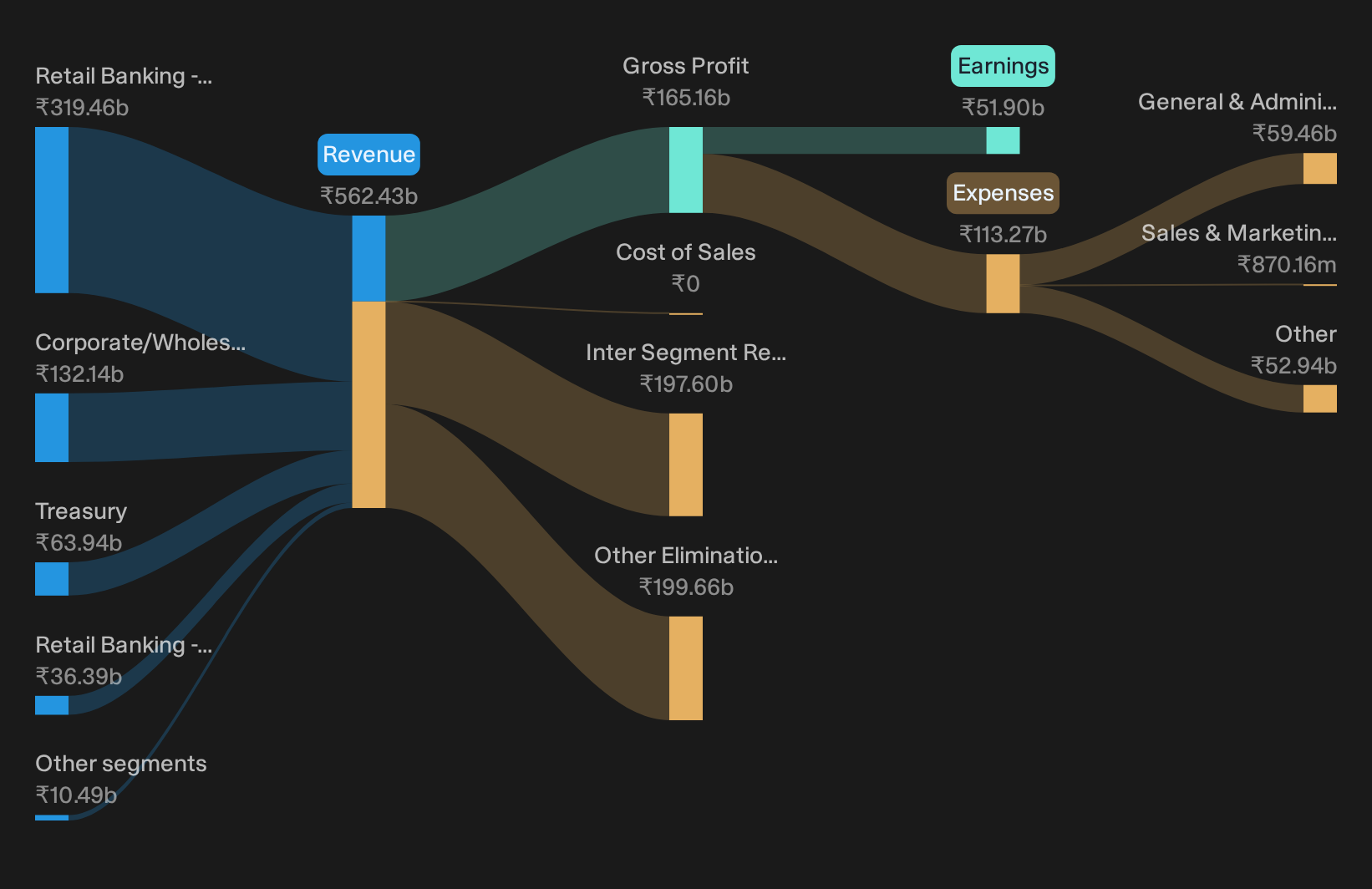
Federal Bank runs a diversified Indian banking franchise across treasury, corporate, SME and retail lending. Most revenue is drawn from retail banking at about ₹319.5b from other retail and ₹36.4b from digital, plus ₹132.1b from corporate and wholesale, and a market value near ₹922.7b.
"The accelerated rollout of digital transformation initiatives, including unified digital platforms for corporates such as FedOne, enhancements to the FedMobile app and early use of generative AI for customer and employee journeys, is positioned to improve operating efficiency and support a lower cost-to-income ratio. This can in turn support margins and earnings growth as usage scales."
What happens to those margins if a single key assumption about funding costs in the next leg of RBI tightening quietly falls away?
If that funding puzzle has your attention, the full narrative for Federal Bank explains how Federal Bank’s digital push, deposit mix and margin path could be diverging from headline rate moves.
IDFC First Bank (BSE:539437)
IDFC First Bank is a key part of the Indian Large Cap Private Sector Banks theme, giving you front row exposure to how a national private lender with a strong retail tilt can respond when the RBI keeps lifting rates. This is the focus of the bearish analyst Narrative on Simply Wall St.
"Although IDFC First Bank is highlighting a move toward lower risk corporate and retail segments, management continues to guide that margins could ease from the 5.9% level seen in the recent quarter as the loan mix shifts toward products that are NIM dilutive."
The central question is whether a relatively quiet shift in its funding and loan pricing balance ends up reshaping those net interest margins altogether.
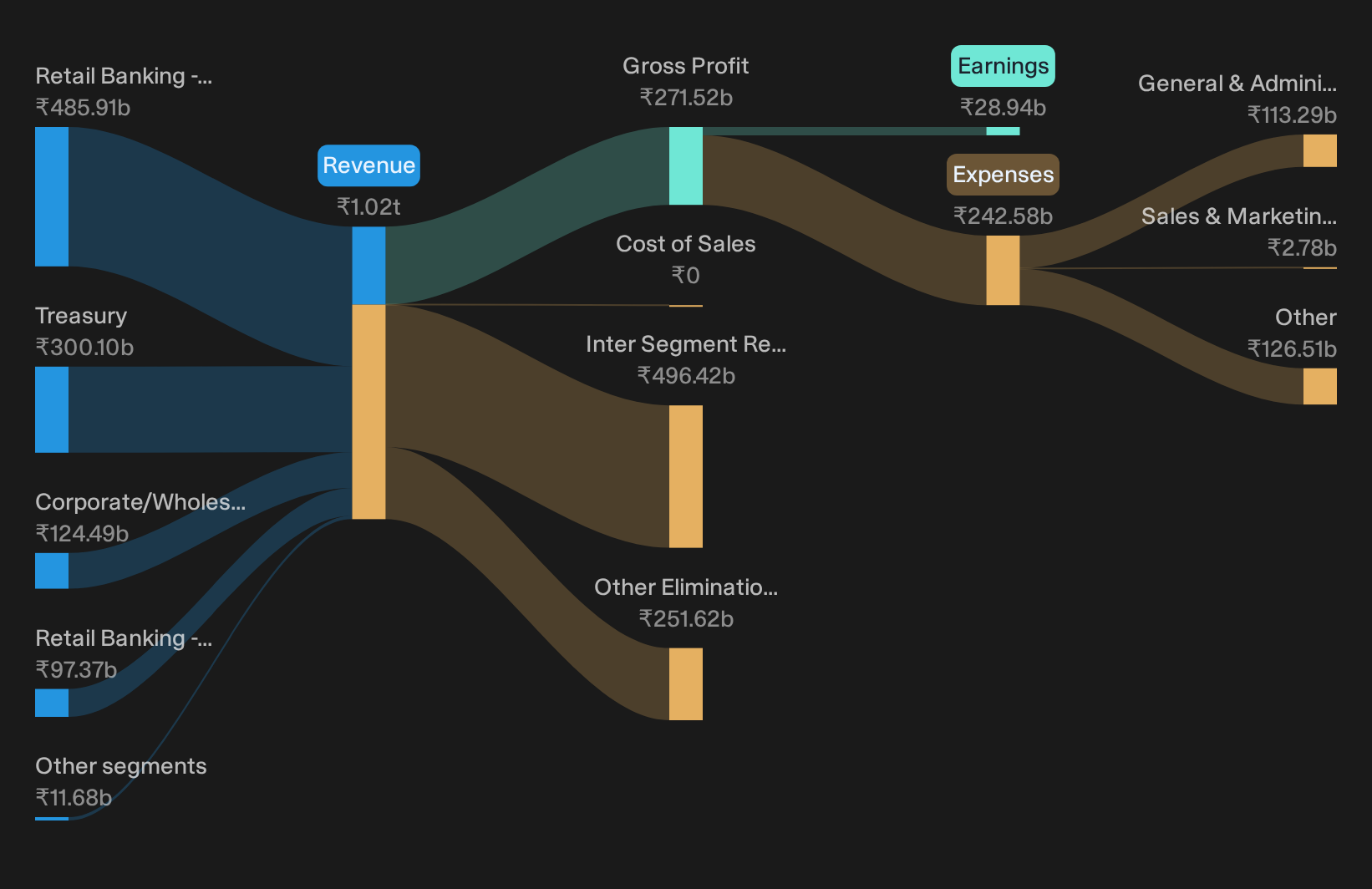
IDFC First Bank is a Mumbai based private lender in the Indian Large Cap Private Sector Banks theme, offering a full suite of retail, SME and wholesale banking services. It generates most of its income from retail activities, with other retail banking at about ₹485.9b, digital banking near ₹97.4b and corporate or wholesale at roughly ₹124.5b, on a market value around ₹750.7b.
If that margin reset is what you are really trying to judge, the full narrative for IDFC First Bank outlines where IDFC First Bank’s risk, pricing power and earnings path could be decoupling.
Axis Bank (BSE:532215)
Axis Bank is one of the clearest examples of what this Indian Large Cap Private Sector Banks theme is about, a large private lender with a broad deposit base and full service model. The analyst consensus Narrative on Simply Wall St sees it as closely tied to how rising rates and digital efficiency interact.
Axis Bank runs a wide banking franchise across treasury, retail, corporate and other banking operations, with most income coming from other retail banking at about ₹344.3b, digital retail at roughly ₹168.8b and corporate or wholesale banking near ₹252.1b, and it carries a market value around ₹4,507.1b.
"Accelerating digital adoption and growth in Axis Bank's AI led platforms, including customer facing tools that handle large interaction volumes, are expected to keep improving service quality and operating efficiency. This can support revenue growth and net margin recovery as more activity shifts to these channels."
What really matters next is how one less visible pressure on Axis Bank’s funding mix and pricing power shapes those future margins.
That quiet pressure is exactly where the full narrative for Axis Bank digs in, revealing how Axis Bank’s funding mix, fee engine and digital scale could be pulling ahead of headline rate moves.

Seeking Alternatives Beyond Big Banks?
Fresh ideas move first. Breakout themes, early momentum and under the radar stories rarely stay quiet for long. Scan these curated stock lists before the crowd and review them promptly.
- Spot resilient compounding potential by zeroing in on companies with strong balance sheets using the list of solid balance sheet and fundamentals (187 results).
- Explore income opportunities while prices are still settling by scanning hand picked high yielders in the 242 dividend fortresses.
- Follow the next wave of automation momentum by reviewing curated industrial and tech names inside the 91 robotics and automation stocks.
Have feedback on this article? Concerned about the content? Get in touch with us directly. Alternatively, email editorial-team@simplywallst.com