


- Zoetis secured past USDA licenses for Cytopoint Plus for canine allergic dermatitis and Poulvac Procerta HVT-ND-ILT, a triple-target poultry vaccine, expanding its monoclonal antibody and poultry vaccine offerings.
- Combining longer dosing intervals for allergic itch with a multi-disease poultry vaccine deepens Zoetis’ footprint in high-value companion animal and production health niches, where treatment compliance and flock losses are major economic issues.
- We will now look at how Zoetis’ investment narrative is affected by the new USDA license for extended duration Cytopoint Plus.
Zoetis Investment Narrative Recap
To own Zoetis, you need to believe in durable demand for pet medicines and vaccines alongside resilient livestock spending, with products like dermatology mAbs and poultry biologics anchoring that thesis. According to HarishPK, a Simply Wall St Community investor who wrote the Narrative, the draw is a wide moat business with strong returns on capital, not a quick trade. The key short term swing factor looks like sentiment around earnings quality and modest forecast growth, while high debt and recent share price underperformance remain front of mind. The latest product news supports the story but does not radically change it.
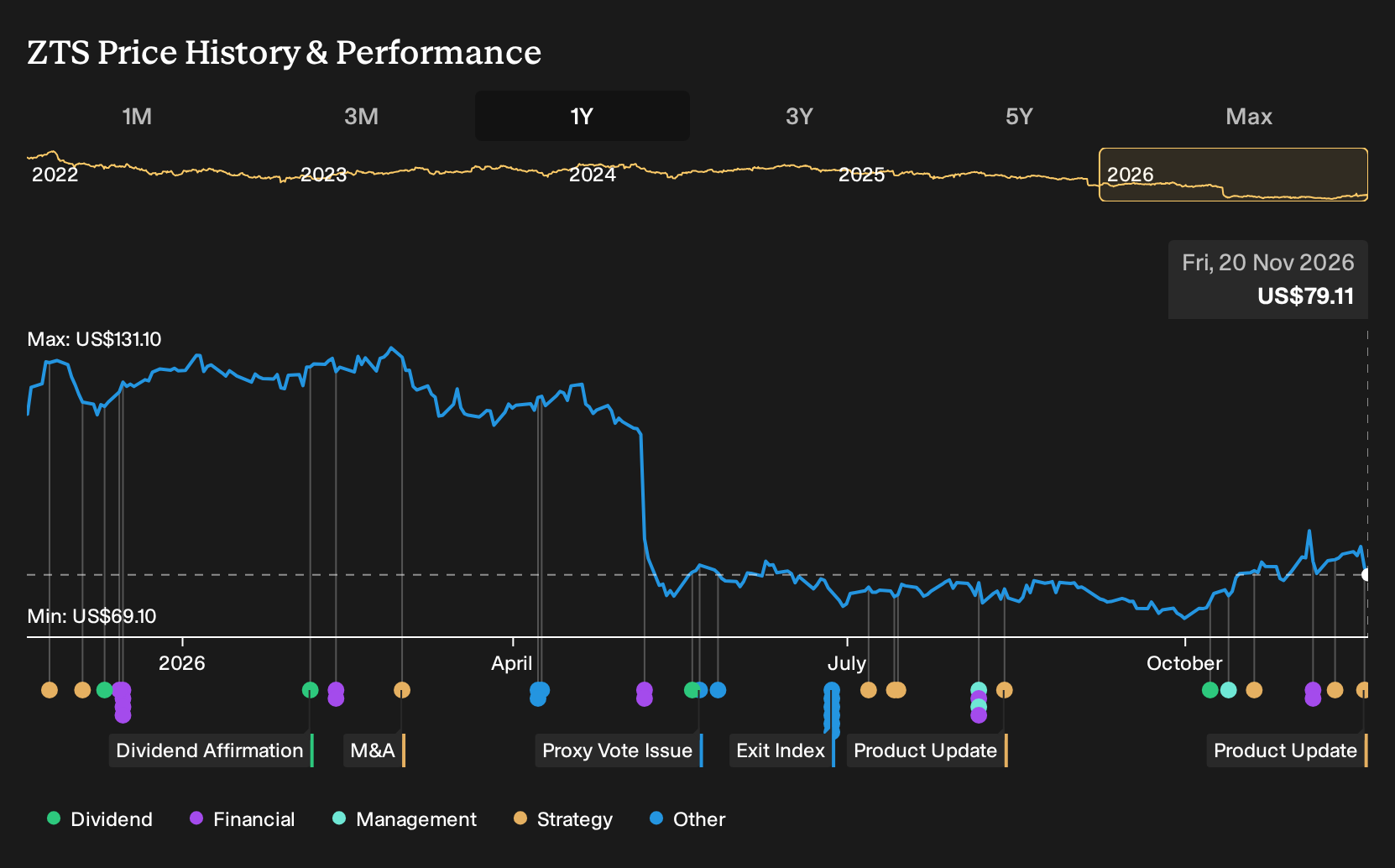
Operationally, Zoetis still has to prove it can turn its pipeline into consistent profit expansion when consensus revenue and earnings forecasts already assume steady progress. Investors are watching whether companion animal spending stays healthy and whether livestock customers keep prioritising premium vaccines. The biggest near term risk is that slower top line growth or FX pressure keeps weighing on reported numbers just as the market is already disappointed by the last one year share return and softer margin trends. The new approvals help, but do not remove those execution questions.
The Cytopoint Plus license is the clearest link to the existing Zoetis story because it builds directly on the core dermatology franchise that HarishPK highlights as a key pillar. A 75 day dosing interval aims to reduce missed shots and clinic fatigue, which speaks straight to real world adherence, something you can actually see in day to day vet practice behaviour. That sort of incremental convenience often matters more than flashy science for recurring therapies. For a shareholder, the immediate question is more practical: Do vets shift existing allergic itch dogs to Cytopoint Plus, or stay with current patterns because they already work and clinics are used to the old schedule?
Execution is where this matters most for current catalysts. Cytopoint Plus gives the dermatology portfolio another option just as Zoetis is trying to convince the market that earnings, which are forecast to grow 4.3% a year, can justify a re rating after a 1 year share return that lagged both the US market and the US pharma industry. If vets adopt the longer duration product without heavy discounting, it can help defend the high margin dermatology base that underpins the strong ROIC story HarishPK describes. If uptake is slower or payers push back on pricing, that would keep the spotlight on Zoetis’ debt load and reliance on a few flagship franchises rather than shifting attention to the pipeline wins.
HarishPK’s narrative reaches a fair value of US$91.30 per Zoetis share by running a discounted cash flow model that assumes revenue growth of 1.7% a year and a future profit margin of 27.7%, and then discounts ten years of projected cash flows at his chosen cost of capital.
Uncover how Zoetis' fair value indicates a 15% potential upside to its current price, which could narrow quickly if sentiment shifts back in Zoetis’ favor.
Exploring Other Perspectives
You might look at Zoetis’ new Cytopoint Plus license and focus on upside, yet the lowest analysts were already bracing for pressure, with revenue projected to decline 1% a year and earnings easing to about US$2.3b by 2029. That is a much gloomier script, and fresh product news could eventually push those expectations in either direction.
Explore 10 other Zoetis fair value estimates, including one that suggests as much as 6% downside from the current price.
The Verdict Is Yours
Disagree with existing narratives? Extraordinary investment returns rarely come from following the herd, so go with your instincts.
- A great starting point for your Zoetis research is our analysis highlighting 4 key rewards and 1 important warning sign that could impact your investment decision.
- See our latest analysis for Zoetis. The report includes a comprehensive fundamental analysis summarized in a single visual, the Snowflake, making it easy to evaluate Zoetis' overall financial health at a glance.
Looking For More Investment Ideas Beyond Zoetis?
Once you have a view on Zoetis, it can help to compare it with a few different types of opportunities so you can see where it fits in your portfolio. The Simply Wall St screener lets you do that in a structured way, whether you care most about value, resilience or income.
- If capital preservation and smoother returns matter most to you, scan through 31 resilient stocks with low risk scores and see which businesses match a more defensive profile.
- If you are looking for value with quality fundamentals, review the 40 high quality undervalued stocks and compare how those candidates stack up against Zoetis on cash flows and balance sheet strength.
- If reliable income is a priority, focus on the 9 dividend fortresses and see which high yield payers line up with your risk tolerance and time horizon.
Have feedback on this article? Concerned about the content? Get in touch with us directly. Alternatively, email editorial-team@simplywallst.com