


Cybersecurity is becoming one of the most important investment themes in the AI era. As artificial intelligence makes businesses more productive, it is also giving hackers new ways to launch faster, more sophisticated attacks. That creates a growing problem for governments and enterprises, and potentially a major opportunity for cybersecurity companies.
That's exactly what makes Palo Alto Networks (PANW) worth watching. The stock just received a fresh boost after Homeland Security Secretary Markwayne Mullin warned lawmakers about the growing threat of AI-powered cyberattacks. But this isn't simply a short-lived headline trade. Palo Alto is already benefiting from stronger security spending, growing demand for integrated platforms, and an expanding AI business.
Why Palo Alto Networks Stock Is Surging
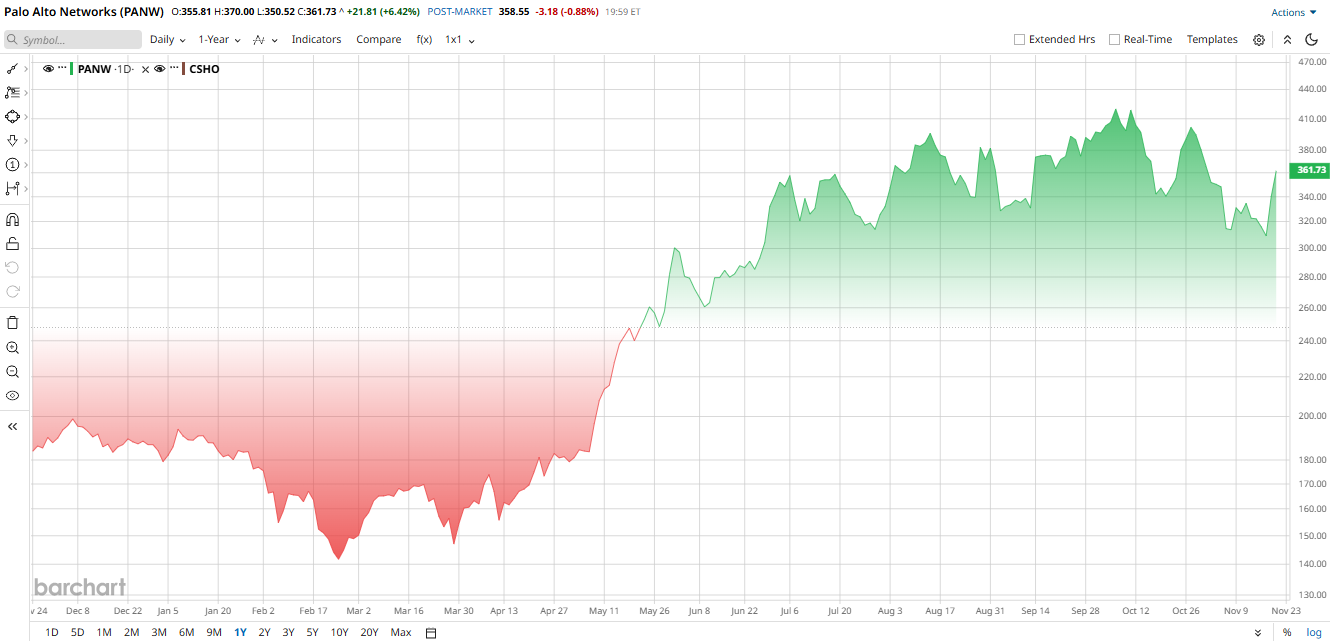
Palo Alto shares have delivered an impressive performance in 2026, gaining approximately 96% year to date (YTD). That significantly outpaces the broader market, which shows growing investor confidence in the company's position in cybersecurity.
However, the rally hasn't been entirely smooth. The stock pulled back nearly 19% from its early October peak as technology shares weakened and investors questioned elevated valuations.
The underlying catalysts are becoming harder to ignore. Enterprises are increasingly moving away from fragmented cybersecurity products and adopting unified platforms that can protect their entire digital infrastructure. Palo Alto is positioning itself directly in the middle of that transition.
The DHS Warning Could Be a Bigger Catalyst for Cybersecurity Stocks
The latest development came when Mullin warned lawmakers that artificial intelligence is making cyber threats faster and more dangerous. He highlighted growing threats from Iran and North Korea, including Iranian actors targeting American transportation, healthcare, water, and energy infrastructure. North Korean operations, meanwhile, include financial fraud and espionage.
Mullin's warning is particularly important here because AI is changing the economics of cybercrime. Attackers can increasingly automate operations, identify vulnerabilities, and launch sophisticated campaigns at a much faster pace.
The market responded quickly. Palo Alto shares gained around 6%. For Palo Alto, this could mean more than a temporary boost in investor sentiment. As companies face increasingly sophisticated threats, cybersecurity becomes a business necessity rather than an optional technology expense.
Its platform strategy also gives it an advantage. Instead of purchasing separate products for different security needs, enterprises can consolidate their spending with one provider. That creates opportunities for stronger customer relationships and additional recurring revenue.
Q1 Results Show AI Security Demand Is Translating Into Growth
Palo Alto’s first-quarter results provide some financial evidence behind the bullish narrative.
Revenue reached $3.44 billion, increasing 39% year over year and comfortably beating analysts' expectations of $3.31 billion. Adjusted earnings came in at $1.05 per share, compared with estimates of $0.97.
Other operating metrics were equally encouraging. Remaining performance obligations climbed 35% to $21 billion, while next-generation security annual recurring revenue surged 66% to $9.73 billion. Adjusted free cash flow reached $1.9 billion, demonstrating the company's ability to generate substantial cash while investing in growth.
Looking forward, Management also raised its outlook. Fiscal Q2 revenue is expected to reach approximately $3.53 billion, representing 36% annual growth. For fiscal 2027, revenue guidance stands between $14.52 billion and $14.57 billion, above Wall Street's previous expectations.
These numbers suggest that cybersecurity demand is translating into stronger business performance, not just a more exciting investment narrative.
Palo Alto Is Expanding Beyond Traditional Cybersecurity
Palo Alto is also looking to capture a bigger opportunity in enterprise AI. The company announced a $4.5 billion all-stock acquisition of Applied Compute, a business specializing in post-training and inference for open-weight AI models.
The strategic logic is straightforward. Businesses increasingly want to develop customized AI models while maintaining control over their data and security. Palo Alto wants to provide the infrastructure and protection needed to make that possible. CEO Nikesh Arora believes the opportunity could eventually become larger than the company's existing cybersecurity market. That's an ambitious goal, but it shows management is looking beyond its traditional business.
The company is also benefiting from platformization, encouraging customers to consolidate security products rather than manage dozens of disconnected solutions.
Wall Street Remains Bullish Despite the Expensive Valuation
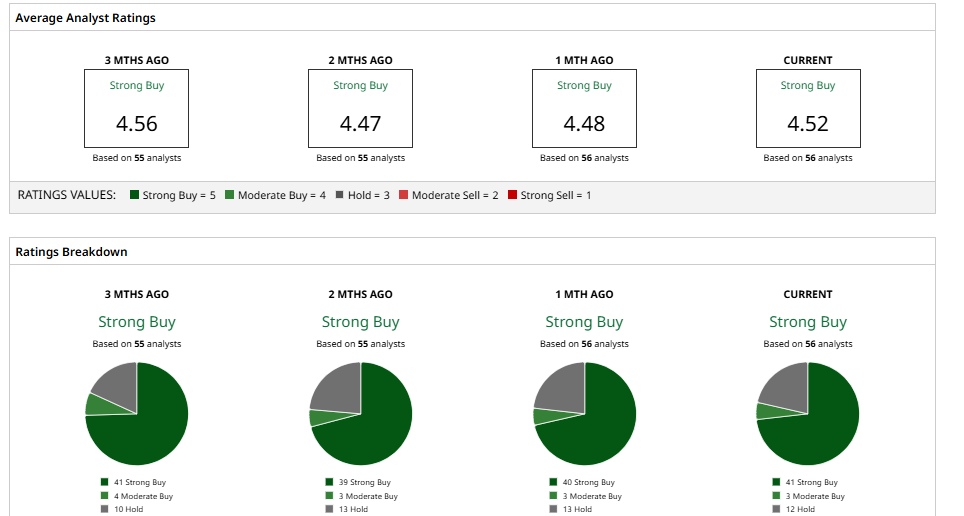
Wall Street is hopeful about Palo Alto's growth prospects. The consensus remains in the “Strong Buy” category, and the $398 average price target indicates about 10% upside from recent levels.
Much of the industry outlook is rosy, too, because of the firm's ability to win a greater share of enterprise spending on cybersecurity solutions. Major banks, including Morgan Stanley, Goldman Sachs, and JPMorgan, are bullish on the platform's long-term growth prospects. BofA Securities also notes companies are focusing on investments in cybersecurity.
But the top issue is still valuation. Palo Alto's forward price-to-earnings ratio is around 77x against a technology sector average of about 19x. In addition, the forward price-to-earnings ratio (PEG) is 4.4, suggesting a significant premium.
Investors are paying for ongoing extraordinary growth. If Palo Alto is, in fact, able to continue to grow its revenues and benefit from the continued market momentum that can be generated from security spending stemming from the capabilities of artificial intelligence, it's likely the premium will be warranted. However, it could make the stock hazardous if it is slowing down.
On the date of publication, Nauman Khan did not directly have a position in any of the securities mentioned in this article. All information and data in this article is solely for informational purposes. For more information please view the Barchart Disclosure Policy here.