



The end of the earnings season is always a good time to take a step back and see who shined (and who didn’t). Let’s take a look at how medical devices & supplies - specialty stocks fared in Q3, starting with Inspire Medical Systems NYSE:INSP.
The medical devices industry operates a business model that balances steady demand with significant investments in innovation and regulatory compliance. The industry benefits from recurring revenue streams tied to consumables, maintenance services, and incremental upgrades to the latest technologies, although specialty devices are more niche. The capital-intensive nature of product development, coupled with lengthy regulatory pathways and the need for clinical validation, can weigh on profitability and timelines. In addition, there are constant pricing pressures from healthcare systems and insurers maximizing cost efficiency. Over the next several years, one tailwind is demographic–aging populations means rising chronic disease rates that drive greater demand for medical interventions and monitoring solutions. Advances in digital health, such as remote patient monitoring and smart devices, are also expected to unlock new demand by shortening upgrade cycles. On the other hand, the industry faces headwinds from pricing and reimbursement pressures as healthcare providers increasingly adopt value-based care models. Additionally, the integration of cybersecurity for connected devices adds further risk and complexity for device manufacturers.
The 5 medical devices & supplies - specialty stocks we track reported a solid Q3. As a group, revenues beat analysts’ consensus estimates by 1.4%.
Amidst this news, share prices of the companies have had a rough stretch. On average, they are down 6.5% since the latest earnings results.
Inspire Medical Systems NYSE:INSP
Offering an alternative for the millions who struggle with traditional CPAP machines, Inspire Medical Systems (NYSE:INSP) develops and sells an implantable neurostimulation device that treats obstructive sleep apnea by stimulating nerves to keep airways open during sleep.
Inspire Medical Systems reported revenues of $206.7 million, down 7.9% year on year. This print exceeded analysts’ expectations by 1.1%. Overall, it was a favorable quarter for the company with a beat of analysts’ EPS estimates and a solid beat of analysts’ full-year EPS guidance estimates.
“We are pleased to have delivered sequential growth in the third quarter, with U.S. performance coming in ahead of our expectations. Results suggest that, despite some lingering headwinds, there is greater comfort among implanting physicians with the current coding dynamic. We will stay disciplined in our education initiatives and focused on executing our strategic priorities as we finish out 2026 and plan for a return to growth in 2027,” said Tim Herbert, Chairman and CEO of Inspire Medical Systems.
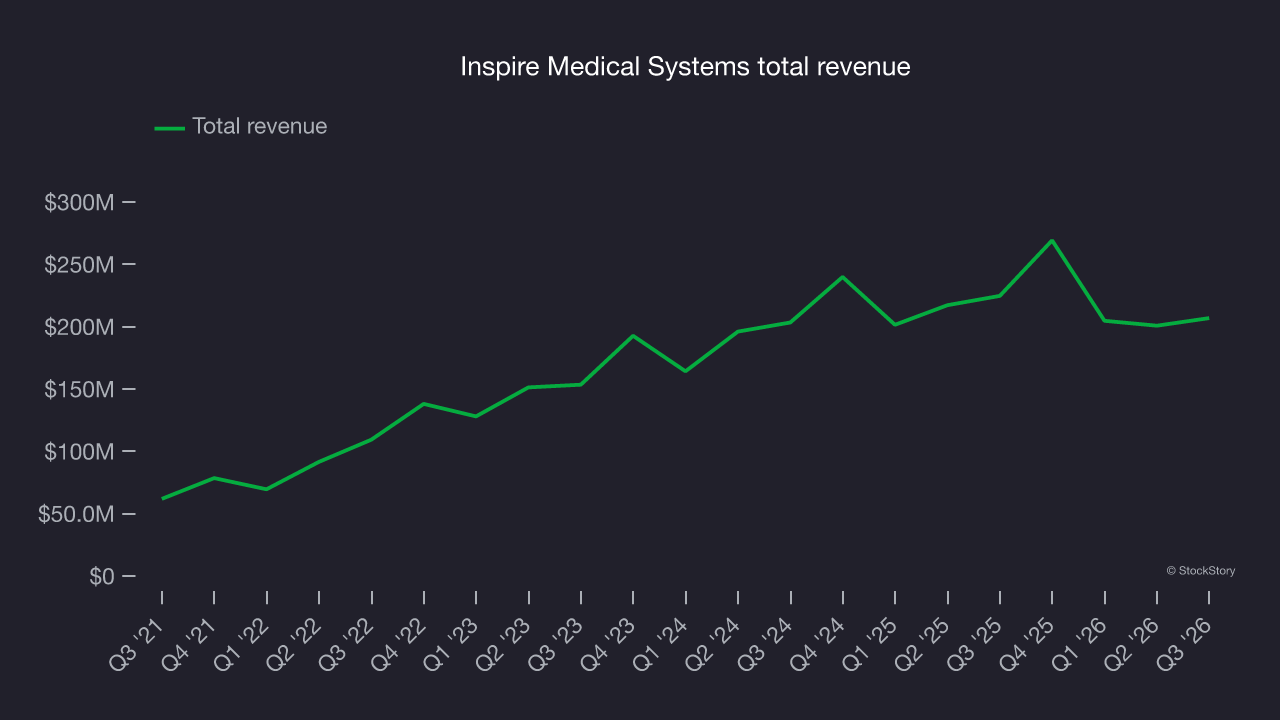
Inspire Medical Systems achieved the highest full-year guidance raise of the whole group. Investor expectations, however, were likely higher than Wall Street’s published projections, leaving some wishing for even better results (analysts’ consensus estimates are those published by big banks and advisory firms, not the investors who make buy and sell decisions). The stock is down 19.8% since reporting and currently trades at $53.91.
Is now the time to buy Inspire Medical Systems? Access our full analysis of the earnings results here, it’s free.
Best Q3: STAAR Surgical (NASDAQ:STAA)
With over 2.5 million implants performed worldwide, STAAR Surgical (NASDAQ:STAA) designs and manufactures implantable lenses that correct vision problems without removing the eye's natural lens.
STAAR Surgical reported revenues of $83.41 million, down 12% year on year, outperforming analysts’ expectations by 6.7%. The business had an impressive quarter with a beat of analysts’ EPS estimates.
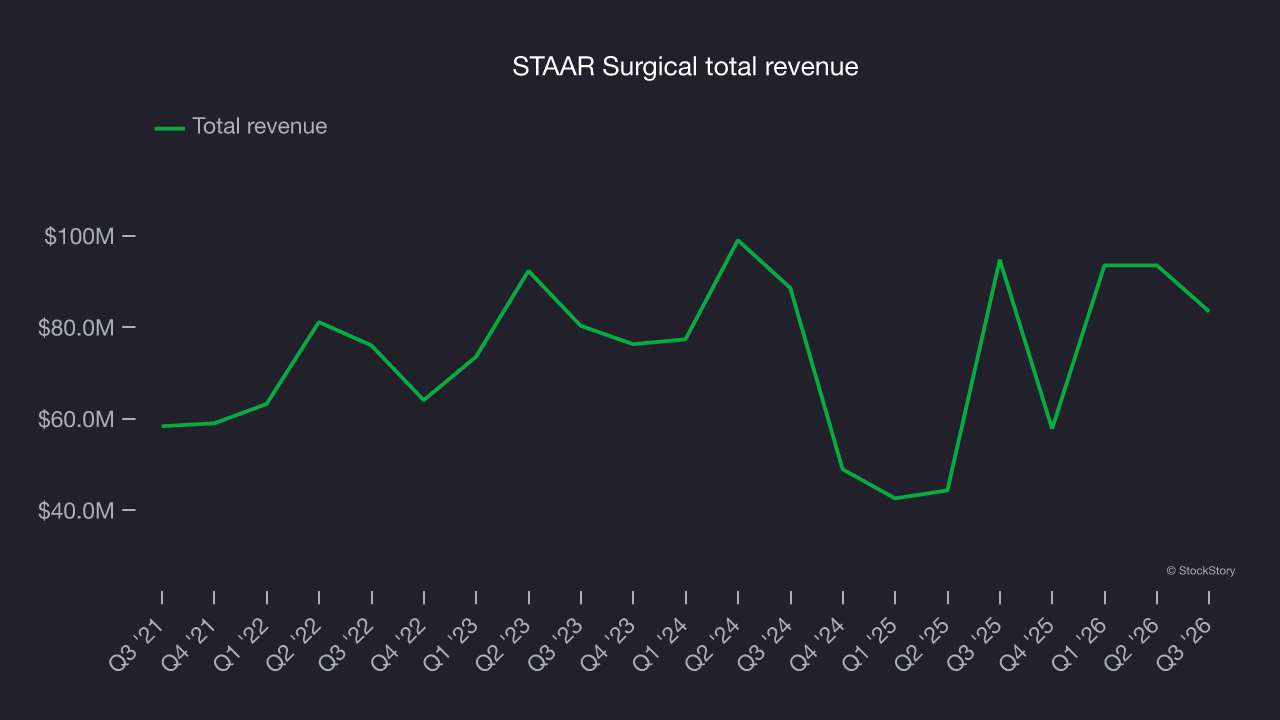
STAAR Surgical scored the biggest analyst estimate beat in the group. Although it had a fine quarter compared to its peers, the market seems unhappy with the results as the stock is down 10.9% since reporting. It currently trades at $24.22.
Is now the time to buy STAAR Surgical? Access our full analysis of the earnings results here, it’s free.
Weakest Q3: Globus Medical (NYSE:GMED)
With operations spanning 64 countries and a portfolio of over 10 new products launched in 2023 alone, Globus Medical (NYSE:GMED) develops and sells implantable devices, surgical instruments, and technology solutions for spine, orthopedic, and neurosurgical procedures.
Globus Medical reported revenues of $763.7 million, flat year on year, falling short of analysts’ expectations by 3.6%. It was a sluggish quarter as it posted full-year revenue guidance missing analysts’ expectations significantly and full-year EPS guidance in line with analysts’ estimates.
Globus Medical delivered the weakest performance against analyst estimates and weakest full-year guidance update among its peers. As expected, the stock is down 17.1% since the results and currently trades at $67.48.
Read our full analysis of Globus Medical’s results here.
Bausch + Lomb (NYSE:BLCO)
With a nearly 170-year history dedicated to vision care and eye health innovation, Bausch + Lomb (NYSE:BLCO) develops and manufactures a comprehensive range of eye health products including contact lenses, pharmaceuticals, surgical devices, and consumer eye care solutions.
Bausch + Lomb reported revenues of $1.38 billion, up 7.3% year on year. This number was in line with analysts’ expectations. Overall, it was a solid quarter as it also put up a beat of analysts’ EPS estimates and full-year EBITDA guidance beating analysts’ expectations.
The stock is up 10% since reporting and currently trades at $19.39.
Read our full, actionable report on Bausch + Lomb here, it’s free.
Haemonetics (NYSE:HAE)
With roots dating back to 1971 and a mission to improve blood-related healthcare, Haemonetics (NYSE:HAE) provides specialized medical devices and software for blood collection, processing, and management across plasma centers, blood banks, and hospitals.
Haemonetics reported revenues of $357.8 million, up 9.3% year on year. This print topped analysts’ expectations by 3.7%. It was a very strong quarter as it also logged a solid beat of analysts’ organic revenue estimates and a beat of analysts’ EPS estimates.
Haemonetics pulled off the fastest revenue growth of the whole group. The stock is down 5.7% since reporting and currently trades at $120.19.
Read our full, actionable report on Haemonetics here, it’s free.
Market update
Over the past year, investors have been forced to repeatedly answer the same question: What is the market’s biggest risk? The answer has changed several times, and each shift has reshaped market leadership.
Late in 2025 and early 2026, artificial intelligence became the market’s primary uncertainty. Investors questioned whether AI would erode software pricing power and weaken competitive moats as AI made it easier to replicate once-differentiated products.
By the spring, technology took a back seat to geopolitics. The U.S. conflict with Iran briefly became the market’s dominant narrative, raising concerns about oil prices, inflation, and global growth. But as energy markets remained orderly and fears of a prolonged supply disruption faded, investors quickly turned their focus back to fundamentals.
Want to invest in winners with rock-solid fundamentals? Check out our Hidden Gem Stocks and add them to your watchlist. These companies are poised for growth regardless of the political or macroeconomic climate.