


The Zhitong Finance App notes that under cautious optimism about efforts to end the US-Iran war, oil prices stabilized after a sharp drop of nearly 4% on the previous trading day.
West Texas Intermediate (WTI) traded around $80 per barrel, while Brent crude settled above $89. According to reports, Vice President JD Vance met with the Prime Minister of Qatar to discuss negotiations with Iran. This Persian Gulf country has been acting as a mediator to resolve this conflict, which has been going on for almost nine months.
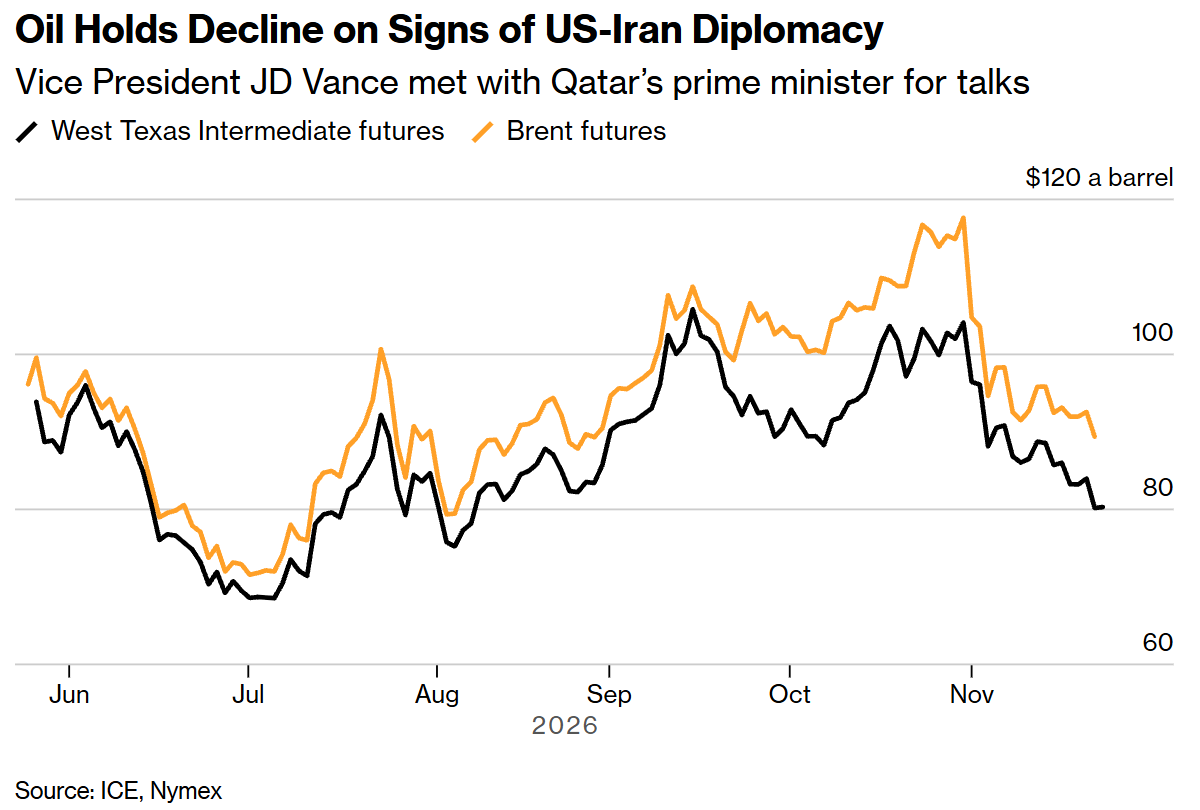
The downward trend in oil prices was maintained, boosted by signs of diplomacy between the US and Iran
Brent crude oil, the global benchmark, fell sharply this month, after US President Trump suspended a new round of attacks on Iran after the Democratic Party swept the US midterm elections, despite an increase in low-intensity clashes. Trump recently threatened to resume attacks next year if negotiations fail.
Despite ongoing hostilities, including frequent attacks on oil tankers passing through the Strait of Hormuz, crude oil exports from the Persian Gulf have risen sharply. The International Energy Agency (IEA) expects the market to shift to oversupply this quarter, and Goldman Sachs has indicated that there may be an oversupply next year.
Robert Yorg, head of the US energy futures department at Mizuho Securities, said, “Supply and demand dynamics and geopolitical winds are all blowing in a bearish direction.”
Despite some hope for a negotiated settlement, major differences between the two sides remain. Tehran wants the US to lift the maritime blockade of its ports, ease sanctions, and unfreeze frozen assets before fully reopening the Strait of Hormuz. Washington, on the other hand, demands that Iran make concessions on its nuclear program.