


Wall Street is hunting for companies that can turn artificial intelligence (AI) investments into real profits. According to JPMorgan (JPM), Meta Platforms (META) and Amazon (AMZN) stand out as top contenders in this race. In a recent move, JPMorgan analyst Doug Anmuth added Meta to the bank's Analyst Focus List, placing it alongside Amazon as a favored internet stock. This choice highlights two different growth opportunities. Let’s explore what sets these companies apart and how investors can act on the opportunity.
Why JPMorgan Picked Meta Platforms
JPMorgan’s bullishness on Meta comes down to one important development. Meta’s advertising business is showing that AI is paying off. Analyst Doug Anmuth says Meta is showing stronger short-term earnings, especially since its third-quarter ad growth beat expectations. JPMorgan estimates Meta brought in about $13 billion in extra ad revenue, almost double what Google Search added. This strong performance led Meta to replace Alphabet on the bank’s list of top internet stocks.
In the most recent third quarter, Family of Apps advertising revenue reached $63.1 billion, up 26% year over year (YOY). Total company revenue also rose 26%, to $64.6 billion. Meta benefited from both higher ad volumes, up 10%, and a 14% increase in the average price advertisers paid per placement. Meta is not just relying on showing more ads but is also increasing the value advertisers get from each placement.
In September, Meta’s platforms averaged 3.64 billion daily active users. The company is reaching more people, showing more ads, and charging higher prices per ad. Its AI-driven recommendations and advertising tools are boosting campaign results, which encourages advertisers to spend more. Meta is expanding the limits of AI’s commercial potential far beyond advertising. In just one quarter, nearly 10 million advertisers tapped into its generative AI creative tools, while smarter ad-ranking systems boosted conversions across a range of campaigns. Its Muse personal assistant presents another potential monetization opportunity through paid features and business services. Already, over 10 million people in the U.S. and Canada had set up Muse within its first six weeks. Still, this remains an emerging opportunity rather than an established earnings contributor.
The biggest concern is the cost of keeping up this growth. Meta’s Q3 expenses soared by 68%, weighed down by a hefty $9.9 billion legal charge. Without that charge, operating income would have climbed to $22.9 billion, up from $20.5 billion the previous year. Capital spending surged to $34.9 billion, and free cash flow slipped into negative territory at $2.1 billion. Going forward, management projects capital expenditures for 2026 to land between $135 billion and $145 billion. JPMorgan is effectively betting that stronger advertising returns and new AI-driven revenue opportunities will eventually justify that enormous investment.
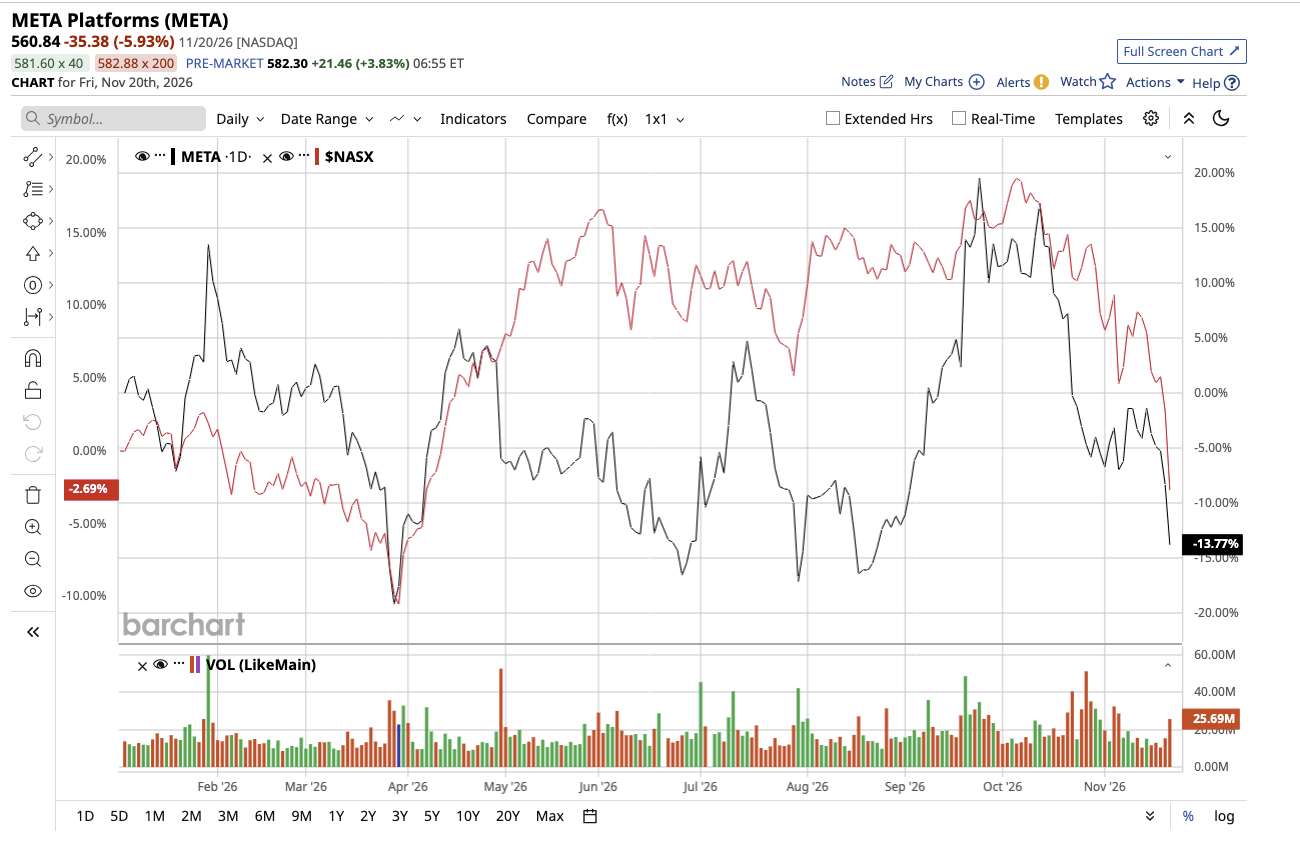
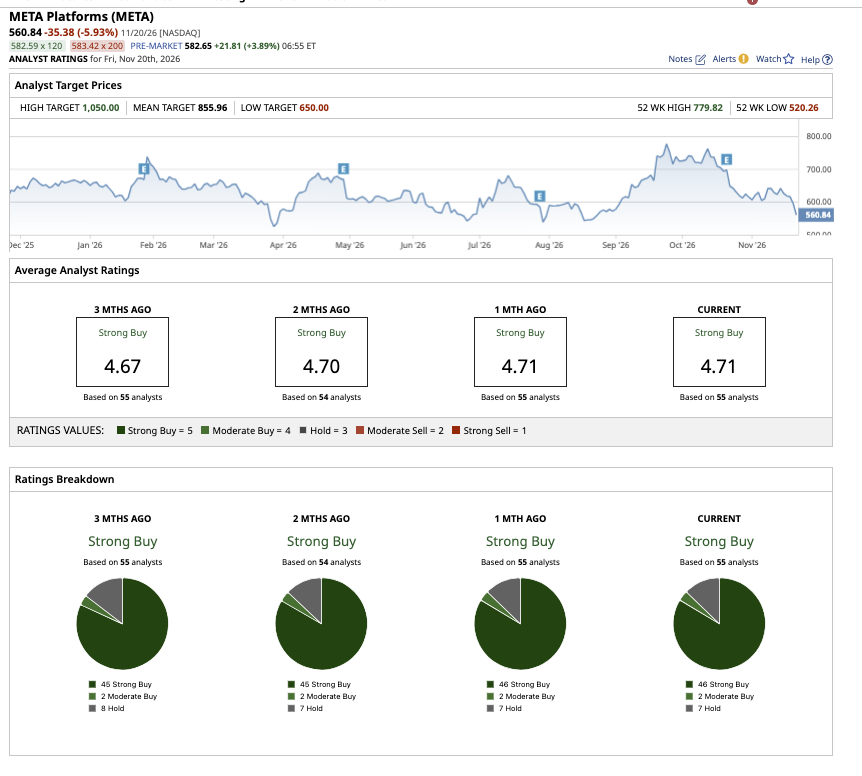
Overall, analysts consider META stock a “Strong Buy,” with an average target price of $855.96. This indicates a possible 52% increase from the current price. Of 55 analysts, 46 rate it a "Strong Buy," two a "Moderate Buy," and seven a "Hold." META stock is down 13.7% year to date, but the highest price target of $1,050 implies a potential gain of 87%.
Why JPMorgan Picked Amazon
JPMorgan’s bullishness on Amazon rests largely on Amazon Web Services (AWS). The bank sees an opportunity for Amazon to capture a much larger share of enterprise AI spending as more companies use AI at scale. Anmuth noted AWS's faster growth, expanding backlog, and better returns on infrastructure investments. He also mentioned that management expects AWS revenue to grow by more than 40% each year in 2027 and 2028, which could help the business reach $1 trillion in annual revenue over the next five to 10 years.
In the third quarter, AWS revenue rose 39.3% year over year to $46 billion, recording its strongest growth in nearly five years. Its backlog also climbed to $578 billion, more than doubling year over year. This backlog shows customer demand that will turn into revenue as Amazon adds more computing capacity. AWS also earned $17.8 billion in operating income, up from $11.4 billion a year ago.
Amazon's custom AI chips provide another reason why JP Morgan is bullish. Trainium accelerators and Graviton processors are seeing more customer interest, and management says revenue commitments for both have grown more than 20 times from last year. Customers using Amazon’s chips also saved over $2 billion this quarter. By making its own chips, Amazon can better manage infrastructure costs and offer customers a less expensive computing option. This could help AWS stay competitive and improve profits as AI workloads grow. Additionally, Amazon says it is improving the time required to recover its infrastructure investments, giving JPMorgan another reason to remain optimistic. AWS already operates at an annualized revenue run rate of $184 billion, and management believes its growing AI business can become a substantially larger source of revenue and free cash flow.
Nonetheless, Amazon’s spending plans raise major concerns. Management expects to spend about $220 billion in cash capital expenditures in 2026, and even more in 2027. Most of this money will go toward AWS infrastructure. While operating income rose 61% to $28.1 billion in Q3, free cash flow over the past 12 months dropped to negative $42.4 billion as investment picked up. Amazon is betting that customer demand will make this spending worthwhile. If new capacity takes longer to pay off, cash flow could stay under pressure, even if AWS revenue keeps growing quickly.
JP Morgan is effectively betting that Amazon can turn its enormous infrastructure spending into a durable competitive advantage rather than simply chasing the AI boom.
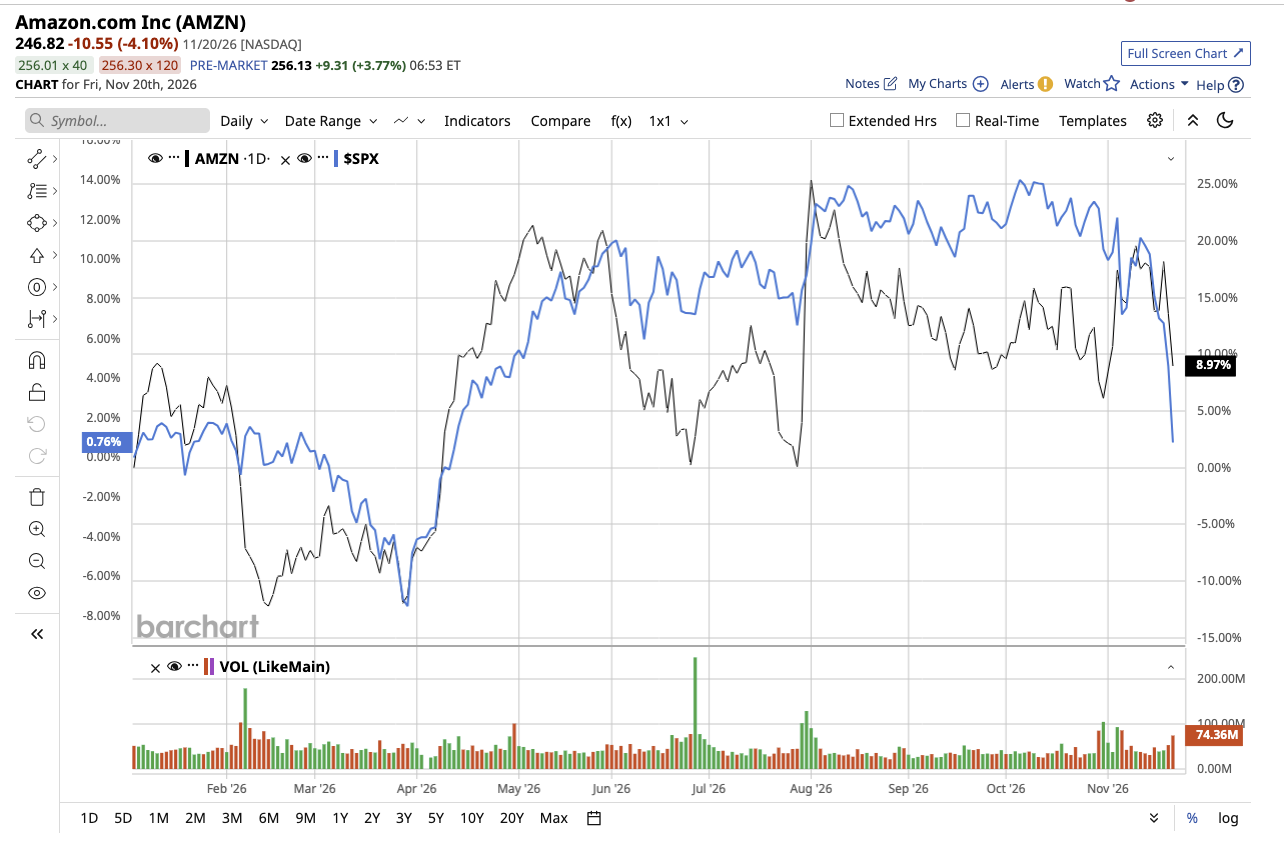
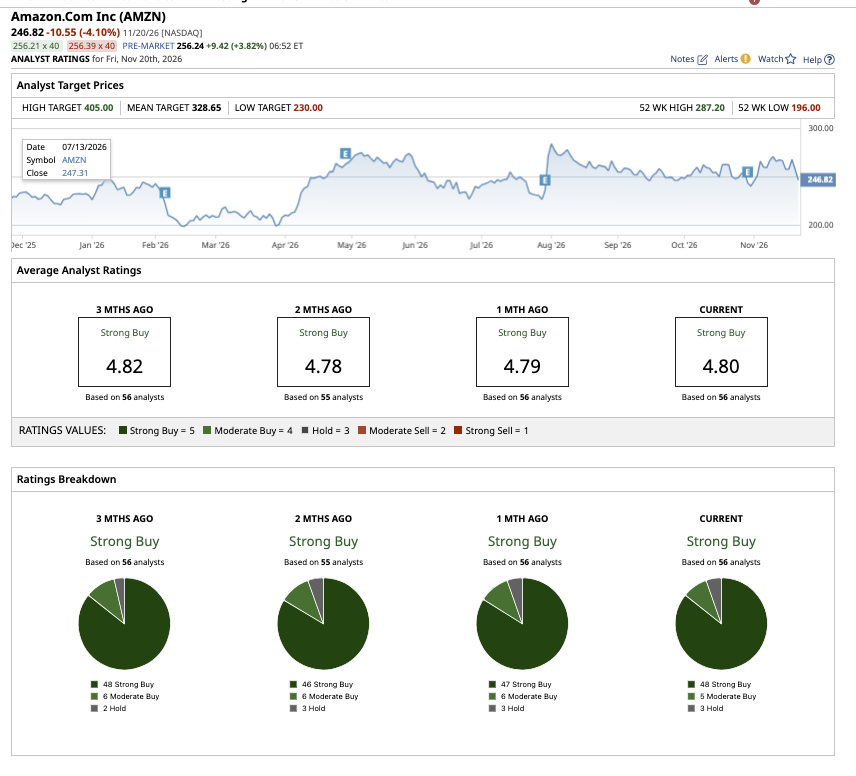
Overall, on Wall Street, AMZN stock has earned a consensus “Strong Buy.” Of the 56 analysts covering the stock, 48 have a “Strong Buy,” five have a "Moderate Buy" rating, and three analysts rate the stock as a “Hold.” AMZN stock has climbed 8.9% year-to-date (YTD). But its mean target price of $328.65 implies 33% potential upside from current levels. Plus, the high target price of $405 suggests that shares could climb as much as 64% over the next year.
Is It Time to Buy META and AMZN?
JPMorgan’s picks are backed by solid fundamentals. Meta offers more immediate AI-driven advertising returns, while Amazon provides exposure to the expanding AI infrastructure market. Both have significant growth opportunities, but rising capital expenditure and valuation risks deserve attention. Investors should weigh the growth potential against the cost of sustaining it before deciding.
On the date of publication, Sushree Mohanty did not directly have a position in any of the securities mentioned in this article. All information and data in this article is solely for informational purposes. For more information please view the Barchart Disclosure Policy here.