


Meta Platforms (META) is taking another big swing at artificial intelligence, but this time, it is not building another chatbot or competing smartphone. Instead, the company is reportedly preparing a $300 pocket-sized AI device called Muse Charm, designed to make interacting with its Muse AI agent as effortless as talking to a friend.
The gadget could even come bundled with 12 months of free Verizon 5G data, lowering the barrier for consumers to give it a try. But the bigger story is not how many units Meta can sell or how much money it makes on the hardware. It is whether the company can turn AI into an everyday habit, keeping users engaged across its growing ecosystem.
That distinction matters for investors, especially as Meta pours billions into AI infrastructure while facing mounting pressure to prove those investments can generate meaningful returns. And the Charm could become an important test of that strategy.
Meta Stock Is Feeling the Cost of Its AI Ambitions
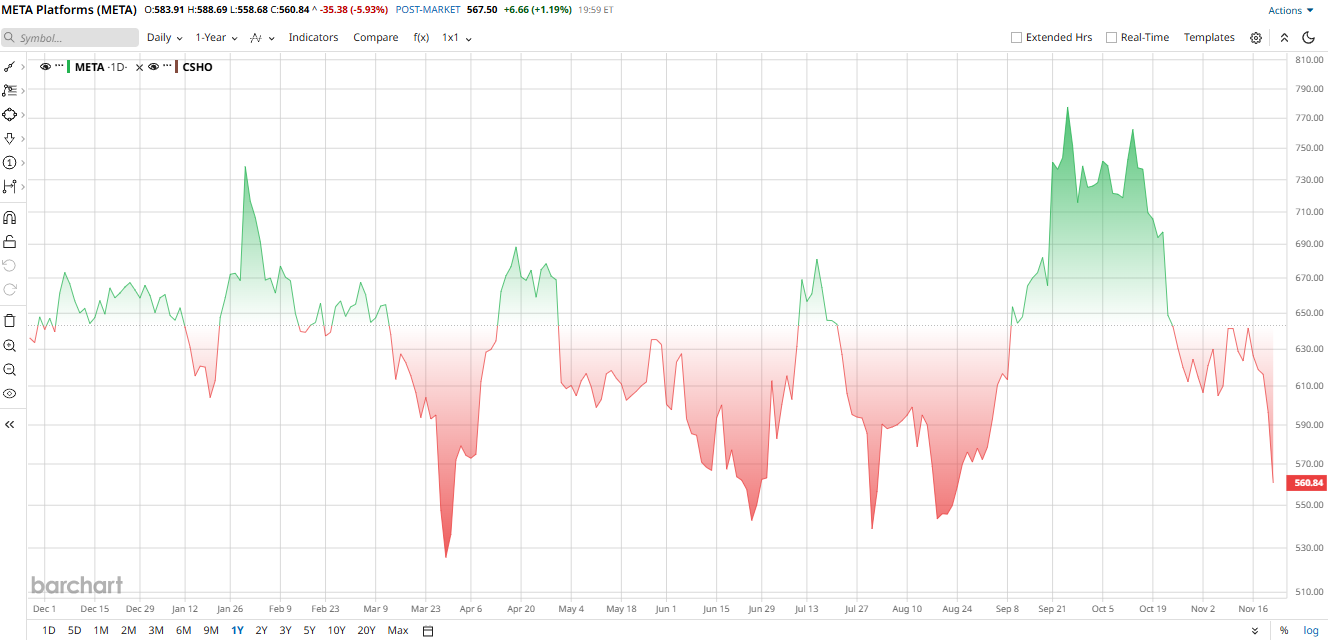
Meta shares are down about 15% in 2026 as concern over AI costs more than weakness in advertising is growing. Meta expects 2026 capital expenditures of $135 billion to $145 billion, while third-quarter free cash flow was negative $2.12 billion. S&P Global Ratings cut its outlook to negative in October, questioning when AI returns will catch up with spending.
The $300 Charm is an AI distribution bet. Reuters reported on Nov. 19, citing The Information, that Meta is considering a $300 price and up to a year of Verizon 5G data. Unveiled in September, Charm has a roughly two-inch screen, built-in 5G, and a customizable Muse character. A tap opens the agent; it is not a phone and cannot make calls.
The idea is to remove friction. Users reach Muse without unlocking a phone or opening an app, while Meta gains a direct interface that could reduce its dependence on Apple (AAPL) and Google’s mobile platforms. If people use Charm to shop, plan trips, or complete tasks, Meta could make AI a recurring habit. The company has not announced a monetization plan, so repeat use matters more than launch sales.
Meta Is Building More Than a Standalone Gadget
Charm will support a larger AI investment push. Meta launched Muse Wonder models in the insurance claim, lease, and building application agent tasks in October. It has also been adding such styles to its AI glasses family during its Connect event in September, topping out at over 100 by the end of the year with Ray-Ban, Oakley and Meta carrying the items. The glasses are also getting the Muse.
AI is already working to make more recommendations and boost ad targeting. While management expects Reality Labs losses to converge to approximately $15 billion in 2027, infrastructure costs still remain extremely high.
The Latest Quarter Shows the Opportunity and the Risk
Meta recently delivered another solid quarter, which topped analysts’ estimates.
During the third quarter, revenue grew 26% year over year to $64.6 billion. Its applications saw a daily active user population of 3.64 billion, with ad impressions up 10% and average ad prices up 14% when compared to the previous year.
The cost and expenses also increased by 68% to $51.6 billion, tied to a $9.89 billion legal charge resulting from an agreement with U.S. state attorneys general. If this charge is removed, then diluted EPS would have been $7.40 rather than $3.83. Capital expenditures of $34.91 billion, along with free cash flow of $2.12 billion. Meta is expanding, but it's taking up cash that can be used to invest in returns to come.
Wall Street Still Sees Substantial Upside
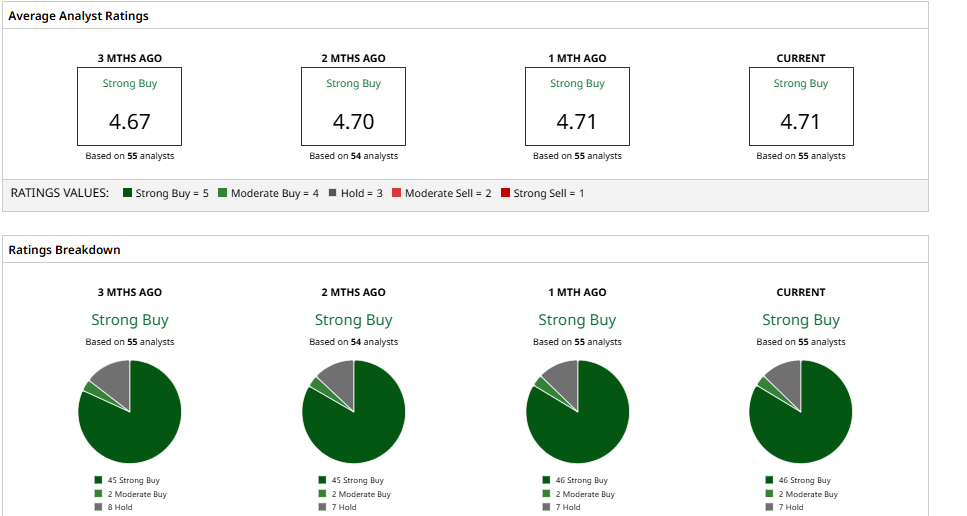
During the last few months, analysts have been increasingly bullish on Meta stock, highlighting its moat. 55 Wall Street analysts tracking Meta stock gave a consensus “strong buy” rating with a mean price target of $856. This shows the stock could climb up to 52% from the current price.
Separately, JPMorgan recently added Meta to the bank’s Analyst Focus List in November and kept a $940 target, implying a massive 68% upside. He cited stronger AI-driven advertising, highlighting 26% ad growth and estimating Meta generated about $13 billion in incremental ad revenue, roughly twice Google Search’s increase.
In addition, Karl Keirstead, an analyst at UBS, initiated coverage with a Buy rating after noting that Muse and Meta Business Agents should help address concerns about capex and cash flow.
But UBS stuck with its $815 target, and the projection ended up 45% higher than the day's close but lower than the $892 forecast. That offering translates to even the bulls feeling a sense of “execution risk.” The big one, of course, is if Charm can monetize AI engagement in a sustainable, repeatable, and speedy way that will make it worth the investment.
On the date of publication, Nauman Khan did not directly have a position in any of the securities mentioned in this article. All information and data in this article is solely for informational purposes. For more information please view the Barchart Disclosure Policy here.