


The recent price decline of 11% in Potter & Moore Plc's (LON:PAM) stock may have disappointed insiders who bought UK£67.3k worth of shares at an average price of UK£0.25 in the past 12 months. Insiders invest with the hopes of seeing their money grow in value over time. However, as a result of recent losses, their initial investment is now only worth UK£50.5k, which is not what they expected.
Although we don't think shareholders should simply follow insider transactions, logic dictates you should pay some attention to whether insiders are buying or selling shares.
Potter & Moore Insider Transactions Over The Last Year
In the last twelve months, the biggest single purchase by an insider was when Independent Non-Executive Director Paul Watts bought UK£38k worth of shares at a price of UK£0.24 per share. That means that an insider was happy to buy shares at above the current price of UK£0.19. Their view may have changed since then, but at least it shows they felt optimistic at the time. To us, it's very important to consider the price insiders pay for shares. It is generally more encouraging if they paid above the current price, as it suggests they saw value, even at higher levels. We note that Paul Watts was both the biggest buyer and the biggest seller.
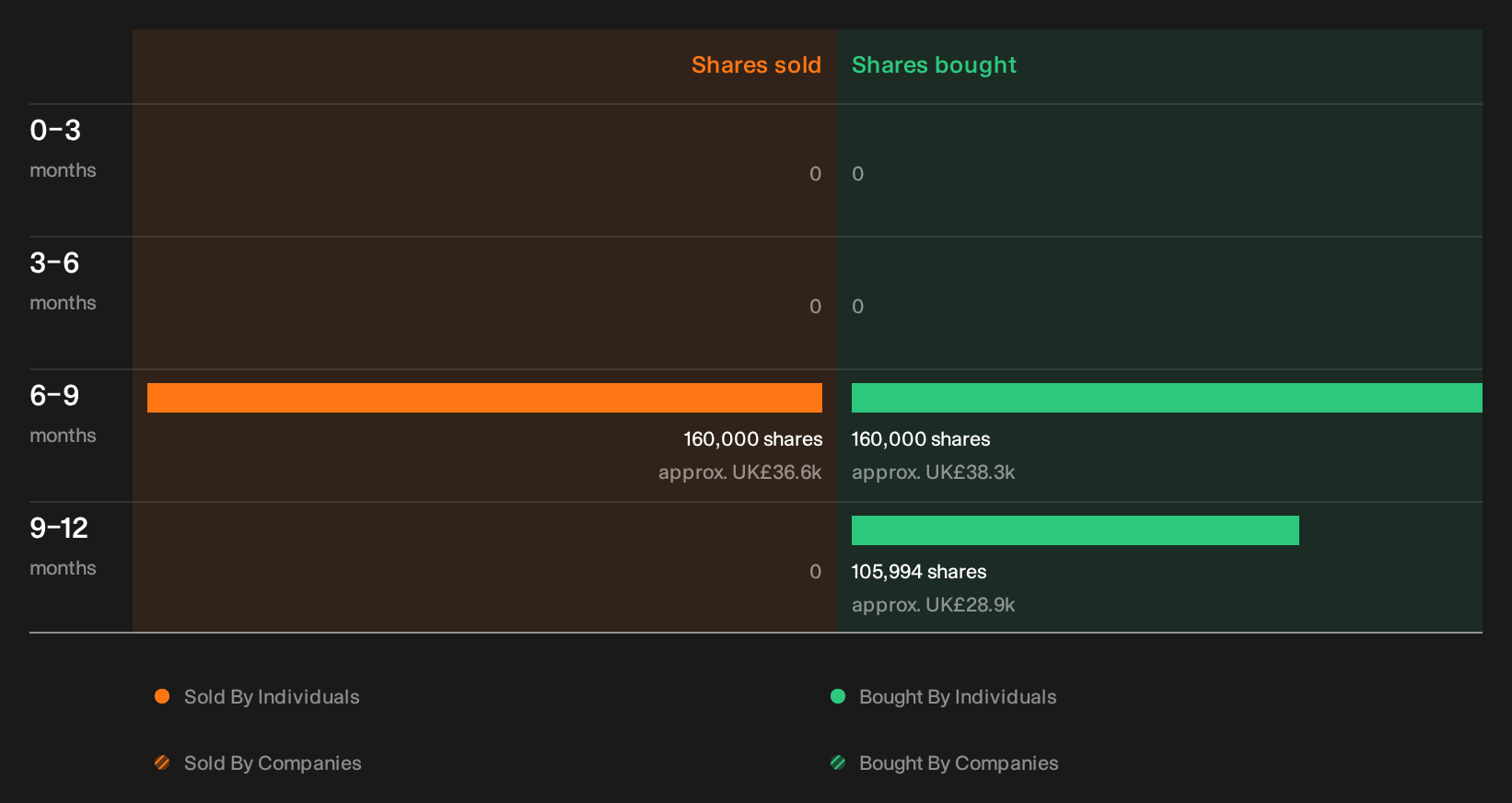
In the last twelve months insiders purchased 265.99k shares for UK£67k. On the other hand they divested 160.00k shares, for UK£36k. In the last twelve months there was more buying than selling by Potter & Moore insiders. The chart below shows insider transactions (by companies and individuals) over the last year. By clicking on the graph below, you can see the precise details of each insider transaction!
Check out our latest analysis for Potter & Moore
There are plenty of other companies that have insiders buying up shares. You probably do not want to miss this free list of undervalued small cap companies that insiders are buying.
Does Potter & Moore Boast High Insider Ownership?
Looking at the total insider shareholdings in a company can help to inform your view of whether they are well aligned with common shareholders. Usually, the higher the insider ownership, the more likely it is that insiders will be incentivised to build the company for the long term. Insiders own 18% of Potter & Moore shares, worth about UK£2.3m. This level of insider ownership is good but just short of being particularly stand-out. It certainly does suggest a reasonable degree of alignment.
So What Do The Potter & Moore Insider Transactions Indicate?
There haven't been any insider transactions in the last three months -- that doesn't mean much. However, our analysis of transactions over the last year is heartening. Insiders own shares in Potter & Moore and we see no evidence to suggest they are worried about the future. So while it's helpful to know what insiders are doing in terms of buying or selling, it's also helpful to know the risks that a particular company is facing. Every company has risks, and we've spotted 2 warning signs for Potter & Moore you should know about.
Of course, you might find a fantastic investment by looking elsewhere. So take a peek at this free list of interesting companies.
For the purposes of this article, insiders are those individuals who report their transactions to the relevant regulatory body. We currently account for open market transactions and private dispositions of direct interests only, but not derivative transactions or indirect interests.
Have feedback on this article? Concerned about the content? Get in touch with us directly. Alternatively, email editorial-team (at) simplywallst.com.