


- American Airlines Group reported that David G. Seymour stepped down as Chief Operating Officer at the end of 2026, with JonCarlo Gulbranson, a long-serving internal operations leader, taking over the role from January 2027.
- The handover to Gulbranson, who has overseen airport, flight and inflight operations, concentrates operational control in an executive closely tied to American Airlines Group's day to day running.
- We will now look at how American Airlines Group's COO transition to JonCarlo Gulbranson could influence the broader investment narrative.
Compare American Airlines Group's leadership reshuffle with other carriers by scanning list of solid balance sheet and fundamentals (23 results), which may be better positioned to handle operational and cost pressures.
American Airlines Group Investment Narrative Recap
To own American Airlines Group, you need to believe the operational reset, focused on premium cabins and loyalty economics, can outweigh fuel and balance sheet pressure. The COO transition to JonCarlo Gulbranson looks operational rather than thesis changing. It does not directly alter the near term swing factor, which remains fuel expense and its effect on already thin earnings.
The biggest risk is still leverage and interest costs sitting on top of an unprofitable income statement and negative equity. Execution on premiumization and AAdvantage loyalty growth, highlighted in the analyst consensus Narrative on Simply Wall St, only really matters if cash generation consistently services that US$30.5b net debt load.
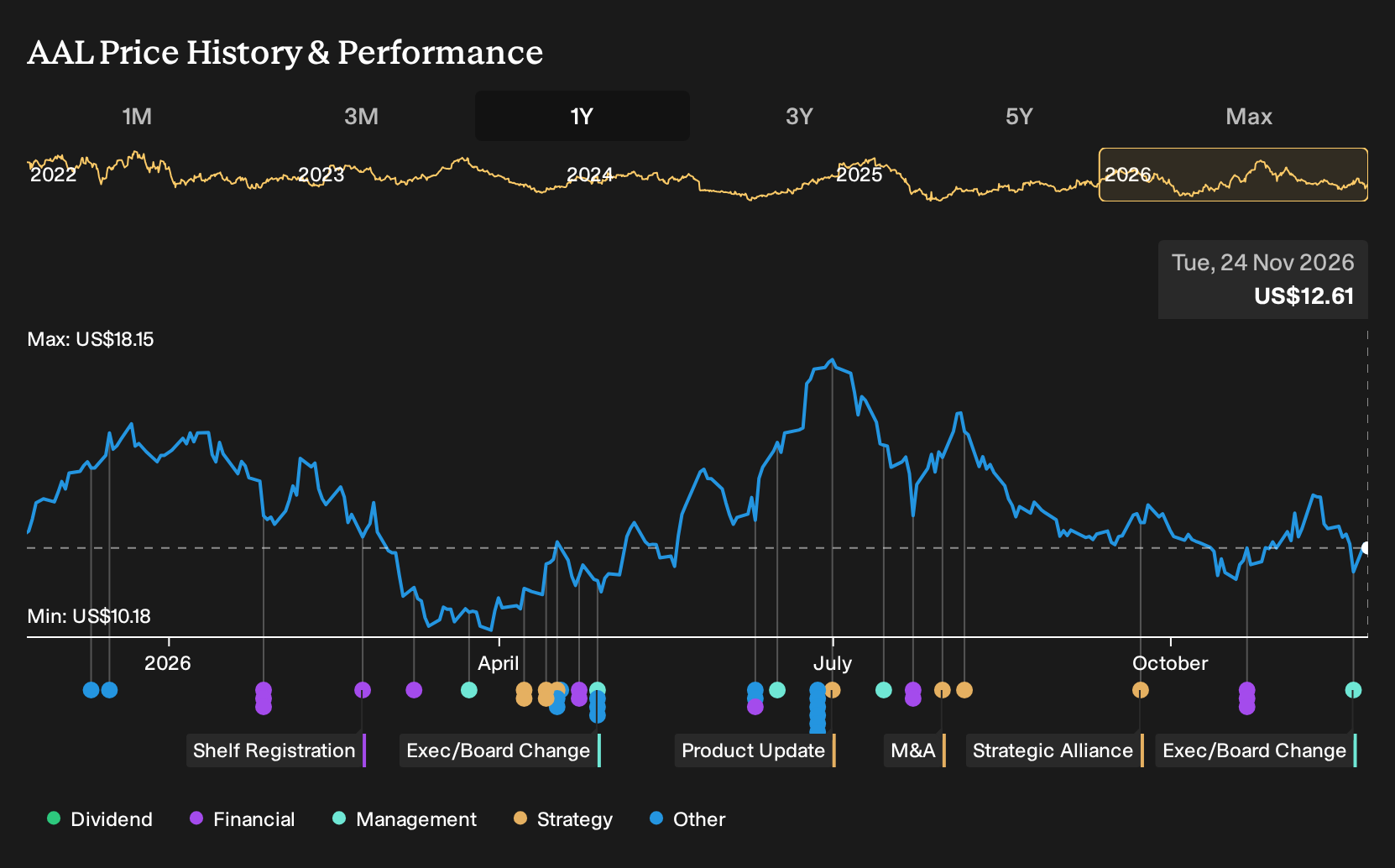
The most relevant development beside the COO news is the recent sector wide move in American Airlines Group stock that coincided with lower crude oil prices. Jet fuel remains one of the largest line items in the cost base. Any relief there can give management a bit more room to focus on operational reliability and product improvement instead of constant capacity tweaks.
The analyst consensus Narrative on Simply Wall St frames catalysts around domestic demand, premium revenue mix and loyalty cash flows, all of which rely heavily on stable operations. Gulbranson has direct experience running airports, flight and inflight operations along with the Integrated Operations Center. That background ties the leadership change tightly to whether American can keep flights running predictably enough to support higher yielding customers and recurring co brand card economics.
American Airlines Group's current analyst story points to revenues of US$71.5b and earnings of US$1.5b by 2029, built on revenue growth of 5.4% a year and an earnings shift of roughly US$2.0b from today’s loss of US$481.0m to that projected profit level.
Uncover why American Airlines Group's fair value indicates a 22% potential upside to its current price that may not last much longer.
Exploring Other Perspectives
One alternate view zeroes in on fuel risk rather than operational upside from the new COO at American Airlines Group. The most cautious analysts were working off revenue of about US$66.3b and earnings of roughly US$1.7b by 2029 before this leadership news. That outlook implies a far lower P/E and a more skeptical stance on execution. Use it as a reminder that opinions can differ widely and that this shift in the operations seat could reshape both the bullish and bearish narratives you are comparing.
Explore 5 other American Airlines Group fair value estimates, including one that suggests as much as 35% downside from the current price.
Decide For Yourself
Don't just follow the ticker; dig into the data and build a conviction that's truly your own.
- A great starting point for your American Airlines Group research is our analysis highlighting 3 key rewards and 2 important warning signs that could impact your investment decision.
- See our latest analysis for American Airlines Group. The report includes a comprehensive fundamental analysis summarized in a single visual, the Snowflake, making it easy to evaluate American Airlines Group's overall financial health at a glance.
Looking for more investment ideas beyond American Airlines Group?
If the American Airlines Group story has sharpened your thinking on risk, balance sheets and earnings power, use that momentum to widen your watchlist with other businesses that fit your preferred style of investing.
- For investors who want potential upside without ignoring financial resilience, start with a 19 high quality undiscovered gems that pair quality fundamentals with less crowded ticker symbols.
- If capital preservation and steadier profiles matter more to you than sharp swings, focus on a 31 resilient stocks with low risk scores that screen well on resilience metrics.
- When you care about durability in stressed conditions, concentrate on companies in the list of solid balance sheet and fundamentals (23 results) that can better withstand funding or earnings shocks.
Have feedback on this article? Concerned about the content? Get in touch with us directly. Alternatively, email editorial-team@simplywallst.com