


The Zhitong Finance App learned that due to the sharp contraction of Turkey's central bank reserves, traders are withdrawing their bets on the country's December interest rate cut, and the market is concerned that it may be more difficult for policy makers to support the lira. According to BBVA's Tufan Comert, the market is currently pricing only 10 basis points of easing for the central bank's December 12 meeting, while the previous expectation was to cut interest rates by 100 basis points at a time.
The shift in interest rate expectations coincides with a sharp decline in the Turkish central bank's net reserves. According to estimates, from mid-September 11 to this Monday, the central bank's net reserves fell by about 43 billion US dollars to about 2 billion US dollars — this period just covered the outbreak of the Turkish fund industry crisis; net reserves of the same caliber were about 53 billion US dollars at the end of August.
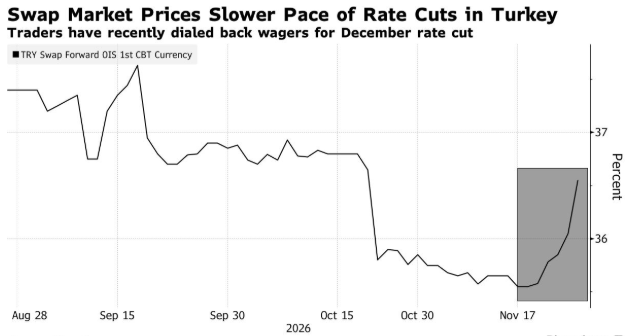
The shrinking reserves reduce the possibility of further interest rate cuts, as it weakens the central bank's ability to support the lira. According to the central bank's anti-inflation strategy, the rate of depreciation of the lira is currently controlled below the price increase; maintaining this practice requires both sufficient reserves and investors' demand for the lira. However, interest rate cuts may erode the lira's yield advantage, trigger an outflow of funds from arbitrage transactions, and damage both.
“The rate at which reserves are being consumed is now becoming a more important factor to consider in the outlook for monetary policy,” said BBVA's Comert. He added that despite falling global oil prices, the probability that the market is betting on cutting interest rates in December is declining.
The market is already reflecting less relaxed expectations. Turkish lira-denominated government bonds fell on Wednesday. The 10-year yield rose to a record high of 37.02%, and the two-year yield also rose; the price of derivatives linked to the December central bank meeting rose by about 1 percentage point this week, and the 1-month and 3-month overnight index swap (OIS) interest rates also rose at the same time.
The sharp drop in reserves marked a reversal of the trend for several months — previously the central bank had been rebuilding its foreign exchange buffer. The crisis in the fund industry has shaken investor confidence, and a range of risks, from the sell-off of technology stocks to the prospects of narrowing interest rate premiums, have also dampened preferences for emerging market currencies.
“Monetary confidence is a major risk,” said economist Selva Bahar Baziki. “The weakening sentiment in the lira coincided with the outflow of hot money, and the recent demand from domestic savers to increase their foreign exchange holdings has further increased the pressure on central bank reserves.”
Part of the recent pressure coincided with global safe-haven arrangements in emerging markets ahead of the US Thanksgiving holiday. But the scale of the decline in reserves suggests that this pressure may have gone beyond seasonal capital flows — it is questionable how much room policymakers have to both continue to cut interest rates and support exchange rates.
In response to these concerns, Turkey's central bank resumed swaps auctions for lira for foreign exchange this week to help rebuild foreign exchange positions. Central Bank Governor Fatih Karahan also said that the central bank may use gold-lira swaps, and tax measures can also provide additional support for the exchange rate.
“The central bank should balance the double pressure of domestic and external financial stability and avoid cutting interest rates next month,” said Banu Kivci Tokali, founder of BVeri Consulting. “I think it's time to move forward with a plan to reduce withholding tax on lira deposits to make lira assets more attractive.”