


The Zhitong Finance App learned that the Spanish stock market is making great strides, but the early parliamentary election to be held this Sunday (November 29) cast variables on it. The prospects for government changes put the banking, utilities and other sectors at greatest risk. Polls show that a coalition formed by the center-right People's Party and the anti-immigrant far-right voice party is likely to win a majority of seats in the parliament.
The IBEX 35 index performed well on the eve of voting. It is one of the best performing indices in major European markets this year, and is expected to rise for the fourth year in a row. Barclays strategists believe that taxation and regulation are the areas where this election will have the greatest impact on individual stocks that focus on local businesses.
If the right-wing coalition wins, it will end the ruling position of the Workers' Socialist Party since 2018, and it will also be the first time that a far-right political party has entered Spain's central coalition government since the end of Franco's rule in 1975. Prime Minister Sanchez's eight-year tenure coincided with Spain's economic growth surpassing most of Europe, partly driven by strong immigration. The final poll on November 23 showed that its Workers' Socialist Party lags behind BJP leader Feho.
The election was announced early by Sanchez in October. It was originally scheduled for the summer of 2027, a full 10 months ahead of schedule; the immediate trigger was that the tenant protection housing bill proposed by his minority government was rejected in Parliament. According to the schedule, the election campaign officially ended on November 27. November 28 is a legal day of reflection, canvassing is prohibited, and there is a referendum on November 29. It is expected that the formation of the new Senate and House of Representatives will be completed on December 23.
Spain's renewable energy giants face greater uncertainty under the government led by the People's Party in the future. The party may prioritize the development of nuclear power; its claims to relax planning and construction rules or boost builders, and the election results will also determine whether bank profiteering can survive.
The Barclays team, led by Magesh Kumar Chandrasekaran, said the coalition between the BJP and the Voice Party could increase the appeal of Spanish stocks through tax cuts and a more pro-business agenda. Kevin Thozet, portfolio advisor at Carmignac, said: “If economic growth is strong, the political level is more orthodox, and policies are more pro-business, the market is likely to view this outcome positively.”
The following are the main stock sectors and bonds that may be affected:
Banks: Profitability Tax Remains Undecided
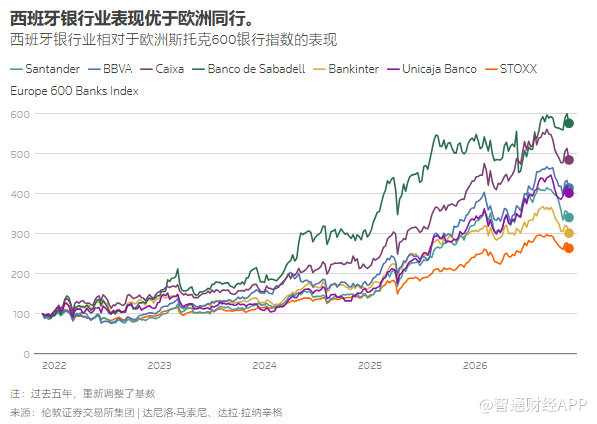
Bank stocks are the biggest driving force behind the Spanish stock market's rise in recent years, and they are also market proxy indicators for investors to judge the impact of elections.
The temporary profiteering tax introduced in 2022 in response to the cost of living crisis is still being implemented. Sanchez promised to extend the tax to raise 1.4 billion euros ($1.5 billion) for housing; but the BJP said it would push for cancellation. Jefferies analysts believe it is unlikely that the tax will be completely abolished, but a “more pro-business government” may adjust its design to benefit CaixaBank, the bank with the largest domestic assets.
Citibank analyst Borja Ramirez's team believes that CaixaBank, Sabadell, and Unicaja Banco are most sensitive to profiteering taxes due to their concentration on the mainland.
The vote is particularly critical for CaixaBank — the stock has accumulated a cumulative increase of more than 350% since January 2022, the government holds 18% of its shares, and the People's Party led by Feiho has indicated that it will gradually sell this portion of its holdings.
However, Ramirez said, “Banco Santander and BBVA seem to be more immune to the election results due to their international diversification.”
Energy and data centers: Nuclear power policies shift to data centers or welcome loosening
Spain is one of Europe's fastest-growing renewable energy markets. While private investors have invested billions of euros in the sector to drive expansion, solar producers are also facing negative wholesale price difficulties.
Sanchez supports renewable energy companies through subsidies and other support measures, which explains why Grenergy, Acciona Energías Renovables, and Audax Renovables stock prices fell on the day the election was announced.
Analysts at Alantra said that the BJP and Calling Party governments may prioritize extending the life of Spanish nuclear power plants; Barclays analysts expect that a clear nuclear power policy and reduced regulation will benefit Iberdrola and Endesa. Fernando Garcia, a capital market analyst at the Royal Bank of Canada, added that the People's Party's proposal to extend the life span of nuclear power plants is beneficial to both nuclear power plants and power grid operators.
However, renewable energy companies are being affected in different ways, and developers such as Solaria may benefit from data center expansion. Garcia said, “The market is pricing government changes, which will bring additional power requirements from data center electricity use and economic development.”
Spain's booming data center industry has attracted billions of dollars of investment from Amazon, Blackstone, and Merlin Properties. The People's Party said it will abolish a decree requiring 80% of the hourly electricity consumption of data centers to come from renewable energy. The regulation will be gradually implemented over five years; although the new regulations are looser than the original proposal, Merlin still fell 3.6% on the day the law was approved.
Alantra believes that the change of government will constitute a “clear advantage” for data center related stocks such as Merlin and Solaria, and that the coalition led by the BJP will support investment in this field.
Real Estate and Bond Market: Housing Policy Changes and Treasury Bond Interest Spreads Narrow
The housing crisis was a key trigger for this election. It is difficult for developers to keep up with the demand brought about by population growth. Immigration is one of the driving factors, driving up housing prices and rents. After the Tenant Protection Housing Act was vetoed, Sanchez dissolved Parliament, and his government later approved a rent freeze, tax benefits, and a ban on evictions of vulnerable groups.
The new government is likely to change construction and housing policies, putting the spotlight on Spanish listed housing developers such as Neinor Homes and Metrovacesa. The latter was the strongest performing individual stock in the sector in 2026, with a 19% increase, while Neinor led in the four-year dimension. Thozet said the policy clarity is expected to encourage more construction activities.
Thanks to strong economic growth and improving public finance conditions, Spanish government bonds were in a relatively strong position before the vote. The yield premium on 10-year treasury bonds narrowed in January to its lowest level since 2008. Currently, it is about 60 basis points, far lower than the 150 basis points of French treasury bonds; this is due to the sharp decline in debt as a share of GDP. Barclays expects that regardless of the election results, Spain's budget deficit will remain below 3% of GDP in 2026 and 2027, while public debt will fall from 100% in 2025 to slightly more than 98% by the end of 2027.
Barclays economists, including Saadalla Nadra-Yazji, believe that election risks are “basically manageable,” that any government could be led by a mainstream center-right or center-left party, and the possibility of a major policy shift is limited. “Spain's credit outlook is still supported by factors that are relatively independent of the election cycle,” said Carlo Capuano, executive director of Scope Ratings.
Telefónica and Indra: Expectations of national shareholding and withdrawal are heating up
The change of government will focus on the Spanish state's ownership of strategic enterprises. The government holds 10% of Telefónica's shares and 28% of defense technology group Indra Sistemas through industrial holding company SEPI.
Feiho hinted that he would push the new government out of Telefónica's holdings. “I don't know what the Spanish government is doing in this company,” he said in a radio interview this week.
On the Indra side, the election comes at a time when management is in turmoil, and former chairman Ángel Escribano's proposal to merge the company with the family defense company has sparked controversy. The company may also be sensitive to the new government's increase in defense spending — Sanchez previously boycotted NATO targets, while Fejo said it would audit public finances before promising to increase spending. Alantra expects the new government's intervention in Indra and Telefónica to be reduced.
The Economy, the Euro, and European Spillover: The election's impact is not limited to the stock market
In addition to the stock market sector, the election results will also influence the Spanish economic path. Lauren van Biljon, portfolio manager at Allspring Global Investments, said: “As far as macroeconomics are concerned, Spain has always been one of Europe's best performing economies; this early election is a reminder that the political level is even more chaotic.”
Spain's economy grew 2.6% last year, double the Eurozone average. However, if the right-wing government tightens immigration controls and the EU's NextGeneration Recovery Fund expires in 2026, it may weaken this leading performance. UBS believes that strong underlying growth, a declining debt-to-GDP ratio, and lower energy prices brought about by the expansion of renewable energy provide a favorable starting point for the new government. Paolo Grignani, a senior economist at the Oxford Institute of Economics, predicts: “Spain's leading performance will continue for several years, after which the growth rate will gradually converge to the Eurozone average.”
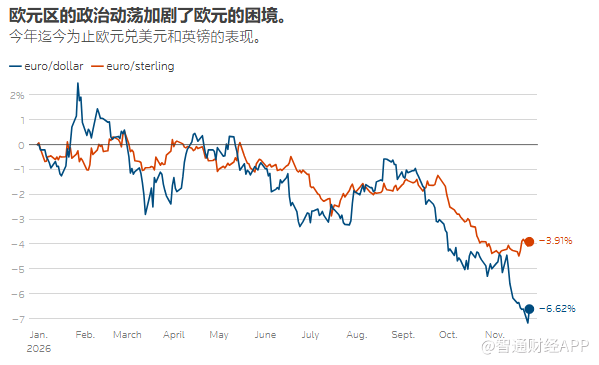
On the foreign exchange side, if the election results clearly point to political stability, the euro may be supported. The recent turmoil in France and Belgium combined with early Spanish elections has put pressure on the euro. The exchange rate is slightly below 1.10 US dollars, and once hit its lowest level since April 2025. Van Biljon believes the euro is still vulnerable to further weakening: “In the very near future, you face this lingering risk — not only Spain, but France, which may return to the focus.”
More broadly, the election is seen as an important weather vane for observing the expansion of far-right power in Europe. If the Voice Party enters the cabinet, it will further break down the traditional European establishment faction's “firewall” of power against the extreme right, and may encourage far-right political parties in France, Italy, Poland and other countries to seek ruling seats; France, Italy, and Greece are expected to hold elections next year, and Germany will also hold regional voting. Mizuho multi-asset strategist Evelyne Gomez-Liechtenstein said, “There is a trend towards the right in Europe as a whole, which raises questions about the future of centrist political parties. If it goes further to the extreme, it won't be so friendly to the market.”