


On November 23, China's A-share market robot benchmark index, the Guosheng Robotics Industry Index, rose 8.43%. Yushu Technology closed with a 20% increase and closed at 708 yuan. In US stock trading on the same day, Tesla, the “physical AI leader” focusing on AI, autonomous driving, and humanoid robots, rose 11.46% to $385.46, while Nvidia, the core underlying technology and hardware provider of physical AI, rose 31.48% to $165.05 after Hwang In-hoon was reinstated as CEO.
By the close of trading on November 25, Tesla and Nvidia had fallen back to 380.14 US dollars and 149.30 US dollars respectively, and the China Securities Robotics Industry Index also rebounded 6.05% on the same day. This round of sharp rise and fall can be described as pushing the most investment-worthy industrial chain outlook of Goldman Sachs's November 26 humanoid robot research report to the front of the financial market: Nvidia has already received revenue from physical AI, and machine manufacturers need to turn the popularity of the physical AI theme into a continuous profit trend, and also prove that customers are willing to pay repeatedly for the work done by robots.
In this major physical AI research report entitled “Physical AI | China's AI Robotics Industry Research Guide: From Data Factories to Large-scale Commercial Use, Assessing the Competitiveness of Global Machine Manufacturers”, the Goldman Sachs analyst team predicts that annual shipments of humanoid robots in China will increase from about 54,000 units in 2026 to about 3.33 million units in 2035, accounting for 51% of global shipments at that time. The key to supporting this forecast is a shift in procurement goals: by 2035, about 95% of demand for humanoid robots in China is expected to come from industrial, commercial, and core consumption scenarios, and customers will increasingly value whether machines can continue to perform economically valuable work.
Following the main line of physical AI requirements pointed out by Goldman Sachs analysts, end-side computing power allows the robot to correct movements in a timely manner based on visual and force feedback. The continuous load capacity and heat dissipation performance of the joint actuator determine whether the machine can work stably throughout the shift, while whether the complete machine platform can use field failure data to reduce the manual takeover rate, and then replicate the verified plan to the next production line to determine whether the first batch of trials can be converted into batch repurchases. According to media reports, Samsung Electronics' semiconductor department plans to evaluate related technology in 2027 and deploy robots starting in 2028 to target consumables replacement, spare parts delivery, and equipment maintenance that still require manual participation — so for the largest potential customers in the first phase of this type of physical AI, the most persuasive procurement reason is how much downtime a robot can actually reduce for an expensive device and the resulting increase in production.
What Hwang In-hoon and Musk call “physical AI,” why is future demand expected to grow exponentially?
“Physical AI” generally refers to an intelligent system that can sense the real environment, reason and plan under physical constraints, perform actions through physical devices, and correct in real time based on action results. It covers autonomous vehicles, autonomous mobile robots, drones, humanoid robots, intelligent industrial equipment, and medical robotic arms with environmental feedback capabilities.
Nvidia founder and CEO Huang Renxun explained this technology chain using three types of computation: training models in data centers, testing actions in a simulation environment, and operating strategies on the machine side. Taking robotic arm pickup as an example, the solution to identifying a part is “where is it”. Only by adjusting the grip strength according to the weight of the component, gripper friction, and real-time tactile sensation can the solution “how to take it out completely”.
Enterprise demand is likely to accelerate, mainly because the cost of deploying a new task and the cost of each successful operation are expected to drop at the same time. The vision-language-motion model (VLA) transforms language instructions and live observation into action, the world motion model (WAM) further predicts the consequences of different actions, and the airframe controller processes critical motion feedback in cycles of less than 10 ms. Once similar equipment can reuse learned skills, the plant will have the opportunity to reduce reprogramming and on-site commissioning by adding an additional bin or replacing a component.
Returning this technology path to the Samsung case, what is most worth tracking is whether the equipment can shorten the average maintenance downtime, how many tasks need to be taken over manually, and whether it can be promoted to the next production line after passing productivity verification. These three metrics directly link technology progress, customer returns, and supplier follow-up orders.
Musk is concerned about whether the whole machine can simultaneously use these AI-based comprehensive capabilities efficiently in the consumer sector. He believes that the utility of Optimus (the “Optimus” humanoid robot being built by Tesla) depends on the combined progress of mechatronic dexterity, AI software, and end side chips, and he expects it to be capable of cleaning, drying, and storing plates within 12 to 18 months. Washing a dish involves identifying debris, controlling grip on slippery surfaces, finding empty cupboards, and recovering safely after a mistake. This also explains why he judged that dangerous, repetitive, and industrial jobs that can operate around the clock will first show strong economic value; for families, the changes that can actually drive purchases are the time saved by robots to complete a complete set of household tasks, which continues to exceed the time spent by the owner to monitor and correct errors.
From data factories to real workstations, Samsung Fab gave specific samples
The Goldman Sachs analyst team predicts that global annual shipments of humanoid robots will increase from 75,000 units in 2026 to 890,000 units in 2030 and 6.478 million units in 2035. At that time, China will ship about 3.33 million units, accounting for 51% of the world. Of these, about 2.56 million units will meet domestic demand, and about 770,000 units will be net exports. It is worth noting that Goldman Sachs's calculation model did not include the contribution to exports to the US.
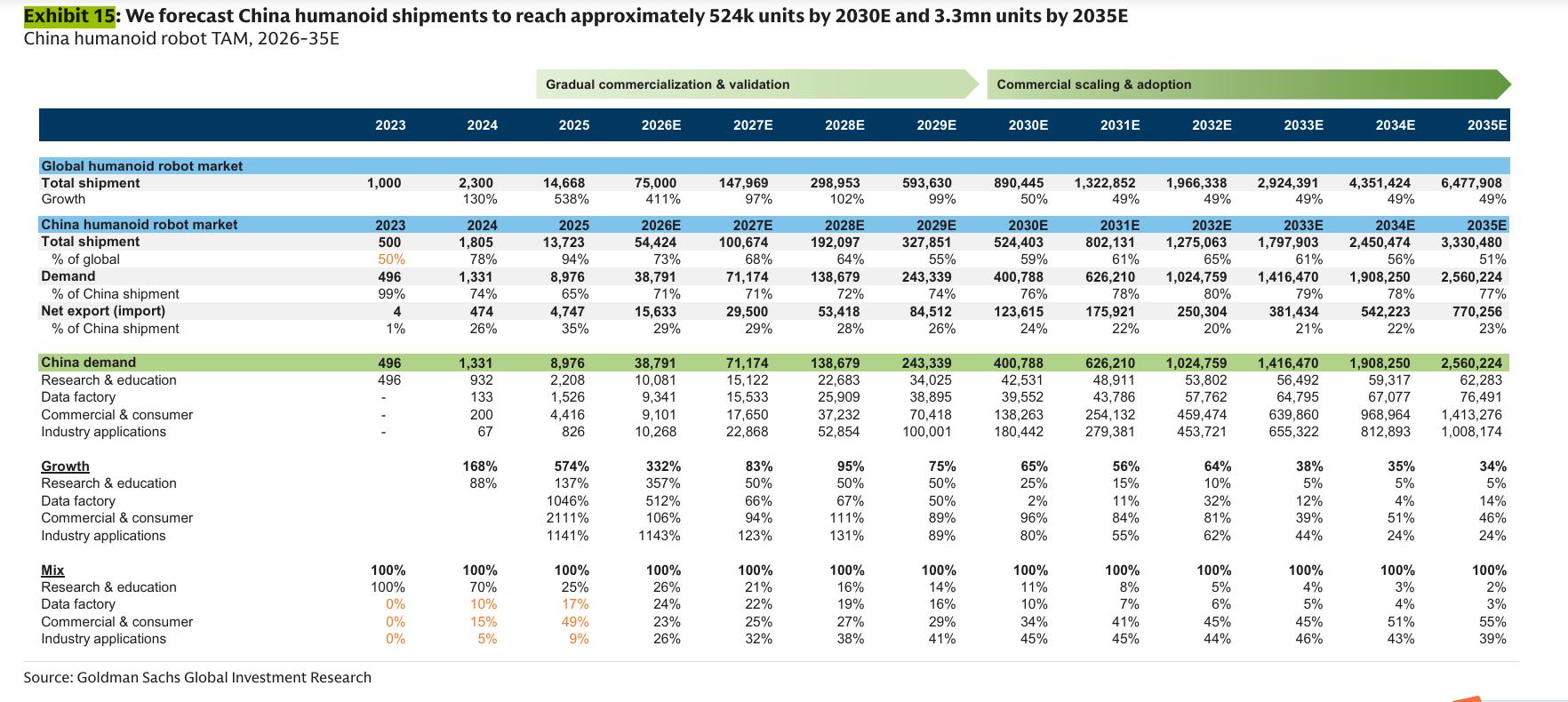
A more important change is taking place in the buyer structure: China's scientific research and education and “data factories” that specialize in collecting robot training data will together reduce the share of domestic demand from about 42% in 2025 to about 5% in 2035. At that time, industrial use (that is, B-side humanoid robots) will require about 1.01 million units, and commercial and consumer use (focusing on C-end humanoid robots) will require a total of about 1.41 million units. The premise behind the establishment of this growth curve is that the purpose of customers purchasing robots is gradually shifting from a “data collection training model” to “using a well-trained model to complete the work.”
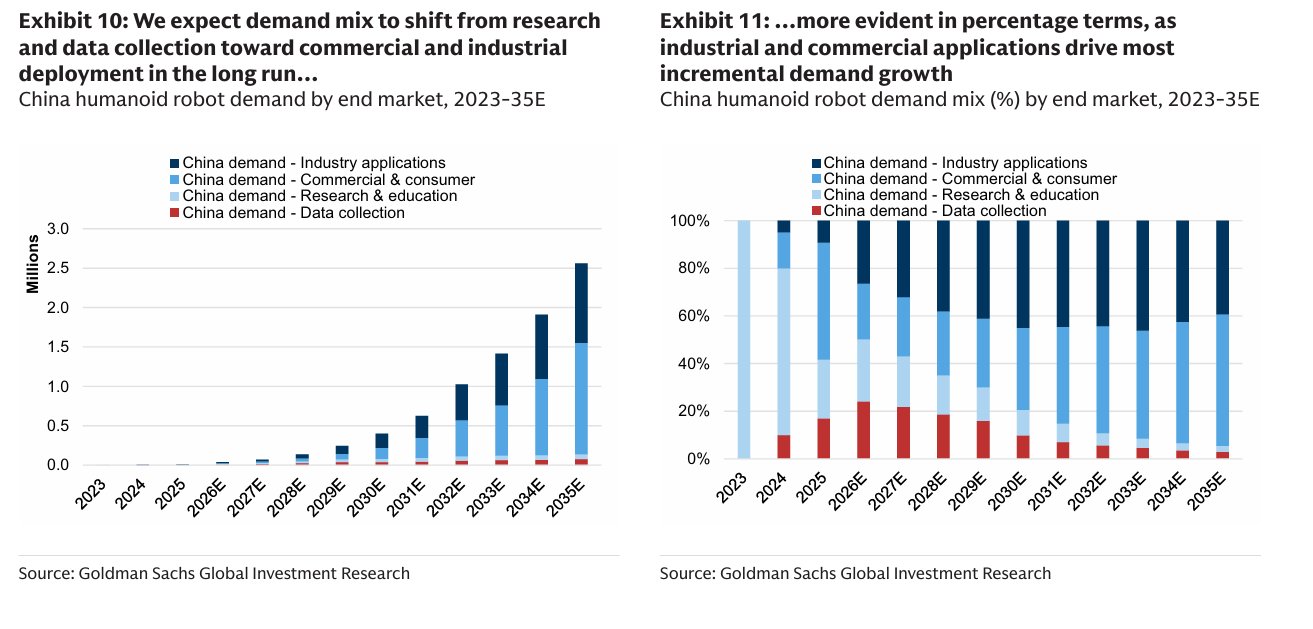
Therefore, for enterprise customers, especially those with large manufacturing plants, Goldman Sachs is concerned about whether additional purchases can be made after the pilot is successful, and the same solution can be extended to more stations, stores, or factories. For home consumers, the report discusses when robots will have sufficient safety, versatility, and price appeal to drive initial purchases and popularity.
Samsung Electronics' semiconductor factory explains where the first economically valuable tasks may appear. According to South Korea's “E-News” on November 26, citing industry insiders, Samsung's Electronic Equipment Solutions (DS) division has set up a robotics team at the global manufacturing and infrastructure headquarters. It plans to select partners within 2026, conduct technical evaluations in 2027, and deploy at production sites starting in 2028.
According to the unanimous predictions of industry analysts, the automation rate of semiconductor front-end device manufacturing and back-end packaging has reached about 90% and 80%, respectively, but manual replacement of parts and consumables, equipment maintenance, and spare parts distribution are still required. The devices listed in the report include automated guided transport vehicles, autonomous mobile robots, and robotic arms. For fabs, even if a robot is only responsible for spare parts delivery, as long as it can shorten the waiting time for expensive equipment to be serviced, the return comes from saving labor and restoring production capacity at the same time. This is also the reason why Goldman Sachs determines that industrial customers will first verify processes such as logistics and equipment assistance within the factory.
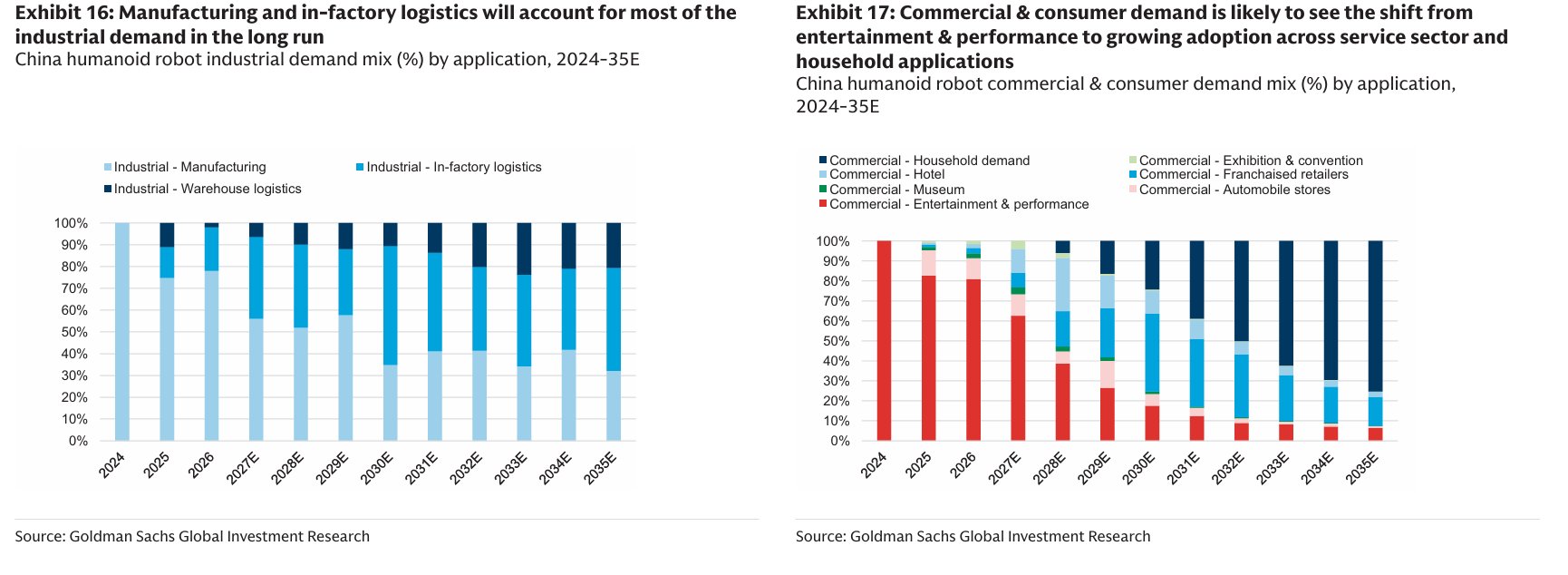
Goldman Sachs sees 2027 to 2029 as a customer verification period, and it is expected that after 2030 it will be in a better position to place orders for thousands of units from a single customer. The threshold of the industrial and home markets also has its own focus: automotive core processes may require at least 99.99% task reliability and sub-millimeter-level repetitive positioning accuracy, and specialized automation equipment already has advantages in these processes. Families can tolerate robots folding clothes again, but they require the same machine to recognize different clothes, avoid children, and secure fragile dishes in an unfamiliar room. The reason industrial customers are the first to pay is that the task can be measured, and the condition for household market volume is that it can still be used in another environment.
Goldman Sachs evaluates 20 robotic automakers around the world: who can turn pilots into batch orders? How to distinguish between leading shipping and leading technology?
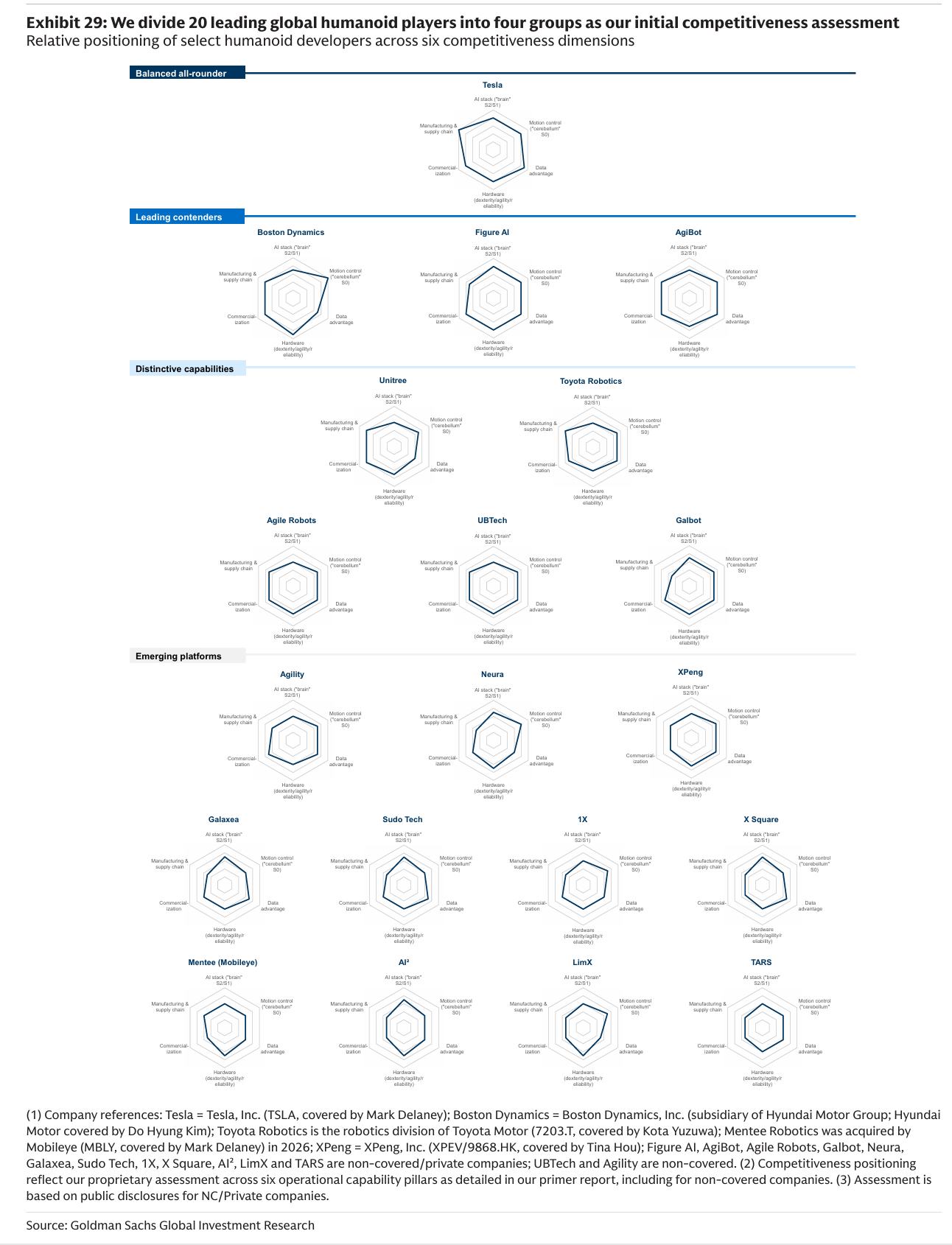
Goldman Sachs compared 20 machine manufacturers in terms of cognitive and motion planning, underlying motion control, proprietary data, hardware, commercial implementation, manufacturing, and supply chain capabilities, and then considered whether their capital could be maintained to large-scale delivery.
Tesla is the only company classified as having balanced capabilities. Boston Dynamics, Figure AI, and Zhiyuan are leading challengers. Yuki, Toyota Robotics, Siling Robotics, Preferred Choice, and Galaxy GM each have outstanding expertise. Eleven companies including Xiaopeng are emerging platforms. Goldman Sachs anticipates that the top five automakers during the maturity period may account for 40% to 70% of global shipments. One variable that determines concentration is the degree of openness of the generic model: more vendors can use the same model to understand instructions, but adapting the model to their own joints, sensors, and chips, and making the equipment run stably at the customer site for a long time can still close the gap.
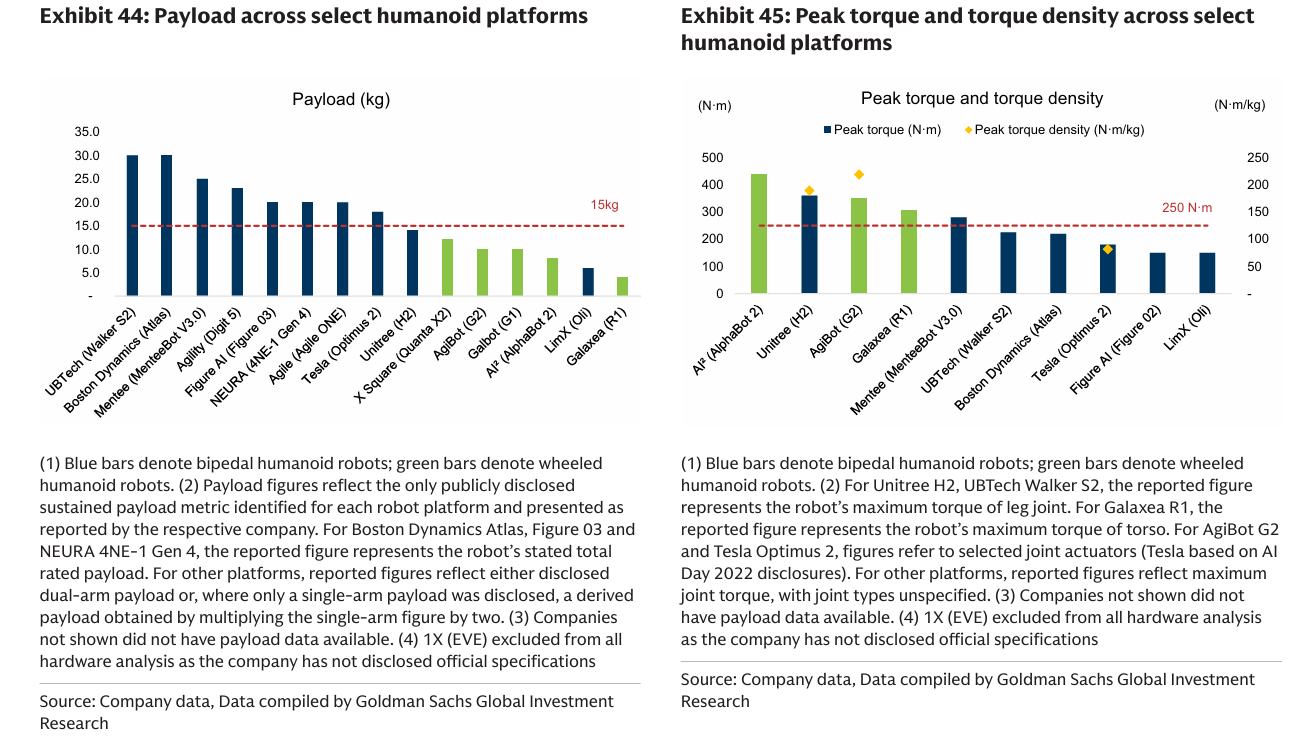
To determine the value of hardware, the most useful unit is how many qualifying tasks can be completed in a shift. Actuators account for more than half of the hardware costs of humanoid robots. Goldman Sachs regards whether the arms can continuously carry 15 to 20 kg throughout the cycle and whether the joint motor can control the steady state temperature below 75°C as reference conditions for industrial adaptation.
Lifting a heavy load at a time can only prove peak capacity. Continuous load, heat dissipation, charging and switching, and fault recovery all together determine how many devices a customer needs to buy to hold one station. Data competition is the same: After the robot fails to grab the actual shelf, whether it can record the visual, tactile, and joint state when slipping off, and then use corrective movements to train the next version of the strategy is more indicative of whether the product will be used more and more reliable than how many hours it has been collected.
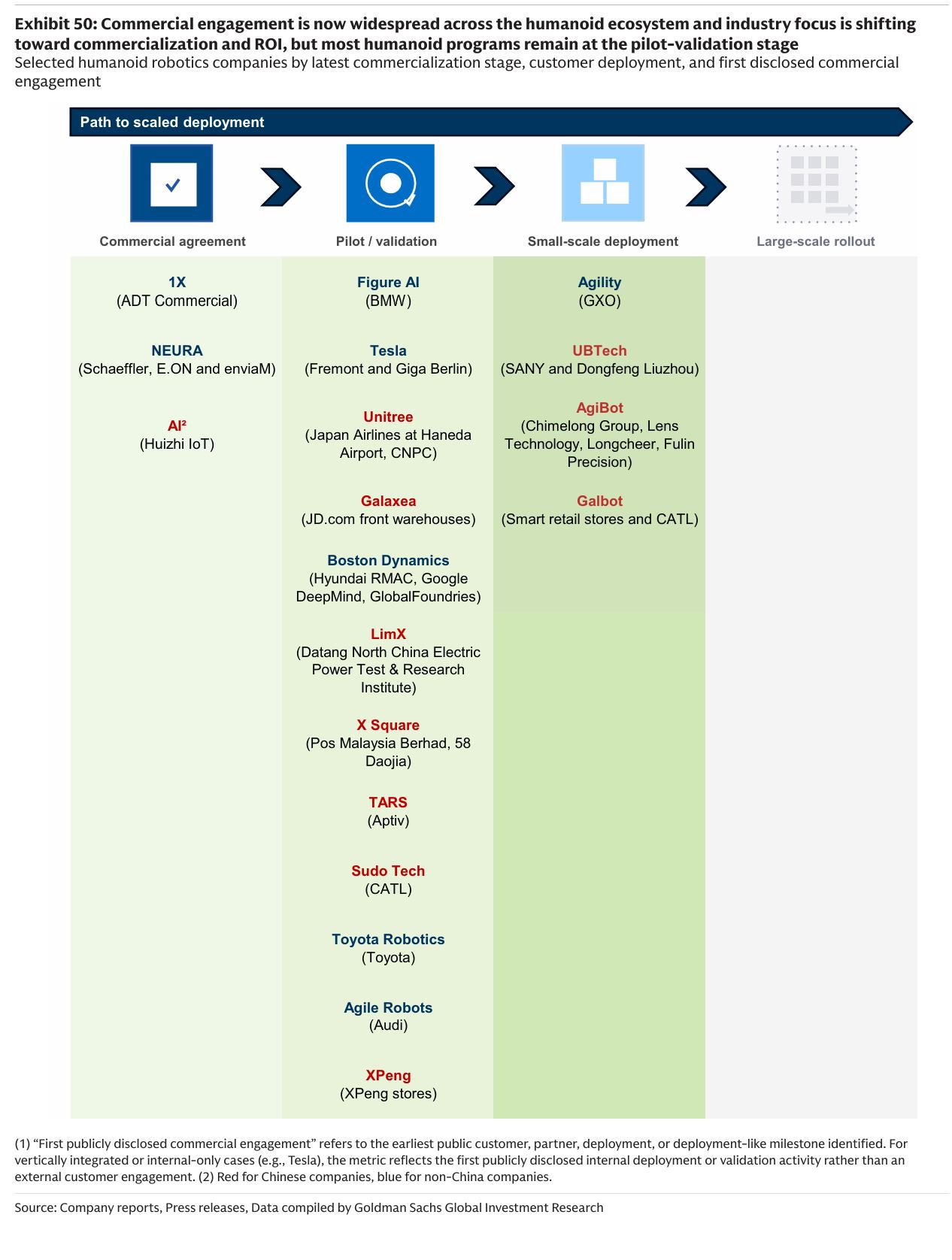
Customer repurchases are a watershed moment of valuation differentiation. In the first half of 2026, Zhiyuan and Yushu accounted for 44% and 31% of global humanoid robot shipments, respectively, including scientific research, development, and pilot procurement. Among the samples listed by Goldman Sachs, Agility has already used a robot-as-a-service model to carry turnover boxes for GXO, and Preferred Choice, Zhiyuan, and Galaxy GM have also entered the small-scale deployment stage at some customer sites.
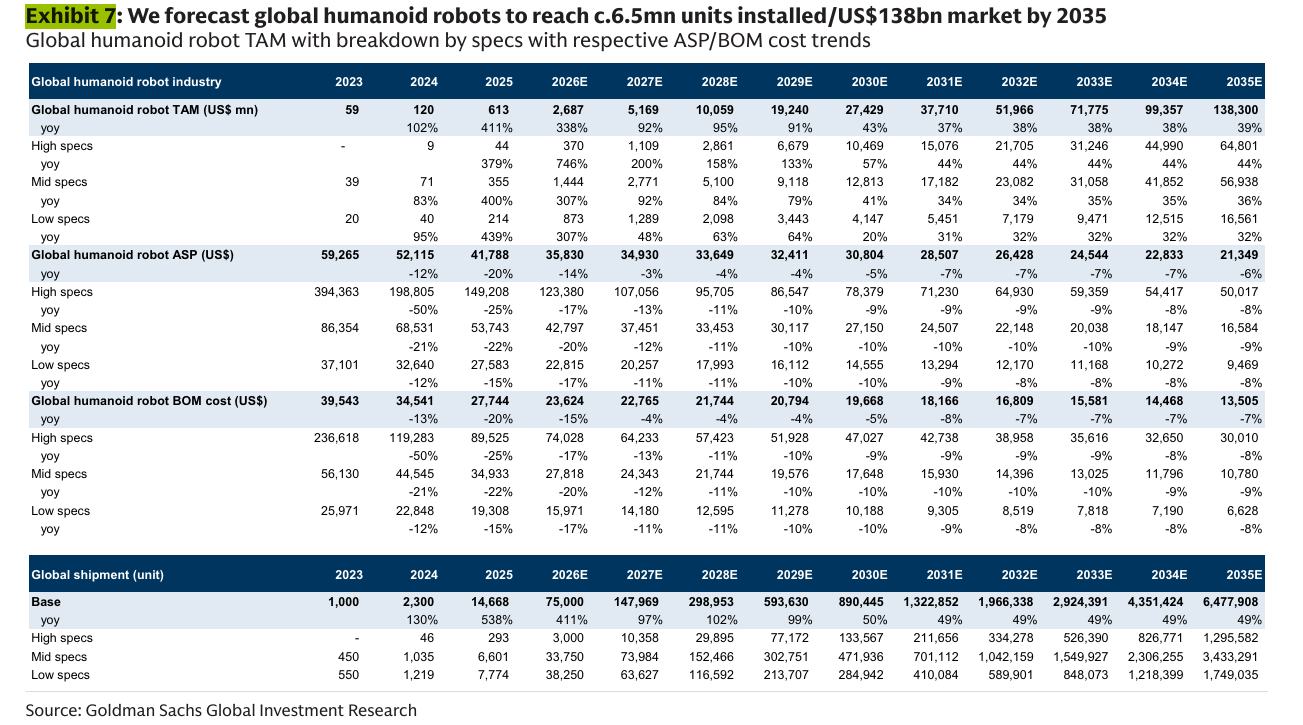
According to the same 2026-2035 comparison, Goldman Sachs predicts that global annual sales of humanoid robots will increase from 2,687 billion to 138.3 billion US dollars, implying a compound annual growth rate of 54.9%; another Wall Street financial giant, Morgan Stanley's latest forecast is to increase from about 5 billion to 336 billion US dollars, implying a growth rate of 59.6%. Goldman Sachs predicted an annual increase of 64.1% in shipments over the same period, which was faster than sales because it assumed that the average price of a complete machine would drop from $35,830 to $21,349. The Morgan Stanley analyst team clearly looked further. It is estimated that the global annual sales of humanoid robots will be about 1.99 trillion US dollars in 2040, about 7.52 trillion US dollars in 2050, and an implied annual increase of about 23.0% from 2035 to 2050. At that time, the world is using about 1 billion units.
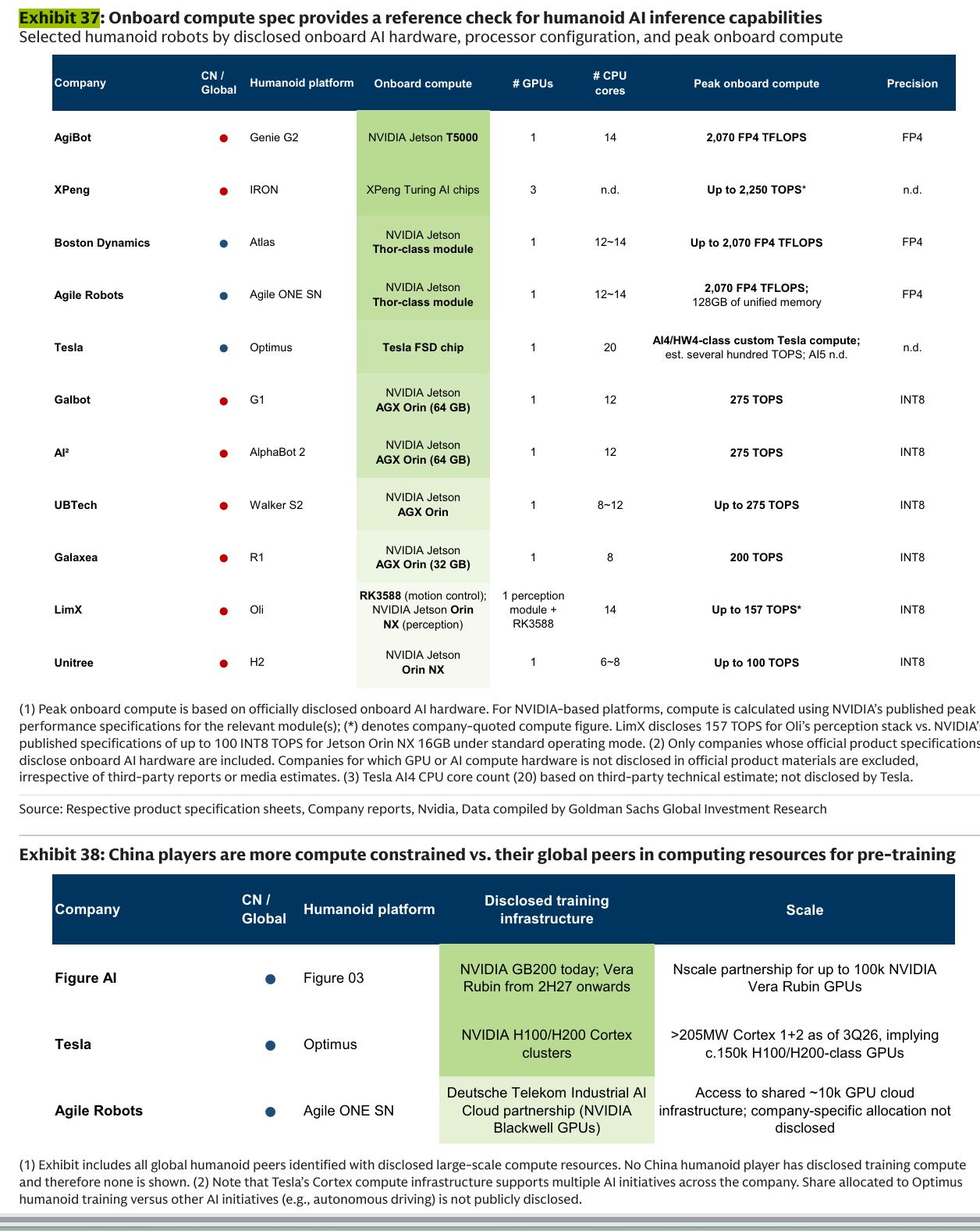
The core logic of Nvidia being the biggest winner in physical AI at this stage of initial growth is that while customers are still verifying which robot is worth mass production, training, simulation, and machine-side reasoning already require computational power. The company disclosed that in fiscal year 2026, physical AI revenue was about US$6 billion. The third quarter of fiscal year 2027 is close to three times that of the same period last year, and management expects it to exceed US$25 billion for the whole year. This revenue covers various applications such as robotics and autonomous driving, and intersects with data center and edge computing revenue. This is why the Goldman Sachs analyst team emphasized that for investors, what is more meaningful is the revenue redemption order: platform suppliers can earn revenue in the R&D and trial production stages for multiple customers, while machine manufacturers have a better chance of diluting development, integration, and after-sales costs by waiting for the same set of solutions to be replicated across stations and factories.
Why do machine manufacturers have to go through a longer customer verification cycle? From purchasing computing power to batch delivery of complete machines, it is also necessary to pass inspection at customer stations. Taking gripping parts as an example, the robot must not only understand which part to pick, but also plan the gripping trajectory, and adjust grip strength in time when the parts slide. Goldman Sachs divides robot intelligence into three layers: high-level reasoning (System 2), action strategy (System 1), and low-level control (System 0), based on the capabilities required for such tasks.
The Goldman Sachs research report breaks down robotic intelligence into three layers. High-Level Reasoning (System 2) is responsible for understanding tasks, planning, and reflection. Action Strategy (System 1) uses a vision-language-motion model or a world motion model to transform environmental perception and language goals into trajectories. The underlying control (System 0) adjusts movements in real time using force and tactile feedback. Execution and feedback frequencies are increasing step by step, and full-body motion control requires a closed loop of less than 10 ms on the fuselage side. According to Goldman Sachs's functional division, GPT‑6 Astra, Claude Fable 5.2, and GeminiRobotics‑ER are high-level reasoning examples, while Gemini Robotics 2.5, GR00T 2, and Physical Intelligence's Pi series are action strategy examples.
Frontier model factories can undertake spatial reasoning and task decomposition, and machine manufacturers still need to solve end-side adaptation, mechatronic joint design, motion control, thermal management, and scale delivery. After the external model lowered the entry threshold, proprietary actuators, real interactive data backflow, and redeemable equipment availability became conditions to protect profits.
For machine manufacturers, whether these technical advantages can be converted into batch orders must go through the customer process from trial and on-site verification to expanded procurement. Based on this, Goldman Sachs divided the commercialization process of humanoid robots into three overlapping stages. That's why Goldman Sachs listed three overlapping stages. From 2023 to 2028, the focus will be on data collection for laboratories, development kits, and private enterprise use. From 2027 to 2029, structured industrial stations, logistics centers, exhibition halls, retail stores, and hotels will begin to verify actual operation. After 2030, material costs will drop, actuator architectures tend to be standardized, and software reliability will meet enterprise requirements. Only then will it be possible to support thousands of orders from a single customer and gradually enter an unstructured home environment.
Core industrial processes require a task success rate close to 100%, and some processes require at least 99.99% reliability, sub-millimeter repetitive positioning accuracy, and deterministic motion control. Early opportunities for humanoid robots are in-factory logistics, warehousing, automotive parts sorting, electronics packaging, and hazardous, dirty, and monotonous non-core processes. Existing human stations can reduce investment in plant renovation. Families can tolerate individual retries, but require robots to handle different positions and contact conditions for clothes, dishes, and furniture. Goldman Sachs expects the use of entertainment and entertainment in China to drop from about 80% in 2025 to about 6% in 2035, with chain stores, hotels, and home services growing.
Overall, Goldman Sachs expects China to remain the largest physical AI regional market in the future. China's AI humanoid robot shipments are expected to rise from 13,723 units in 2025 to 54,424 units forecast in 2026, 524,403 units in 2030, and 3,330,480 units in 2035, corresponding to a global share of about 94%, 73%, 59%, and 51%. Shipments from China include domestic demand and net exports. In 2030, there were 400,788 units and 123,615 units, respectively, and in 2035, 2,560,224 units and 770,256 units, accounting for 77% and 23% of China's shipments in that year. The net export forecast does not take into account the US market contribution.