


- Independent Director Todd Wider sold $242k of ASP Isotopes (NasdaqCM:ASPI) stock on November 24, 2026.
- The $242k sale reduced Wider's holding by 30%.
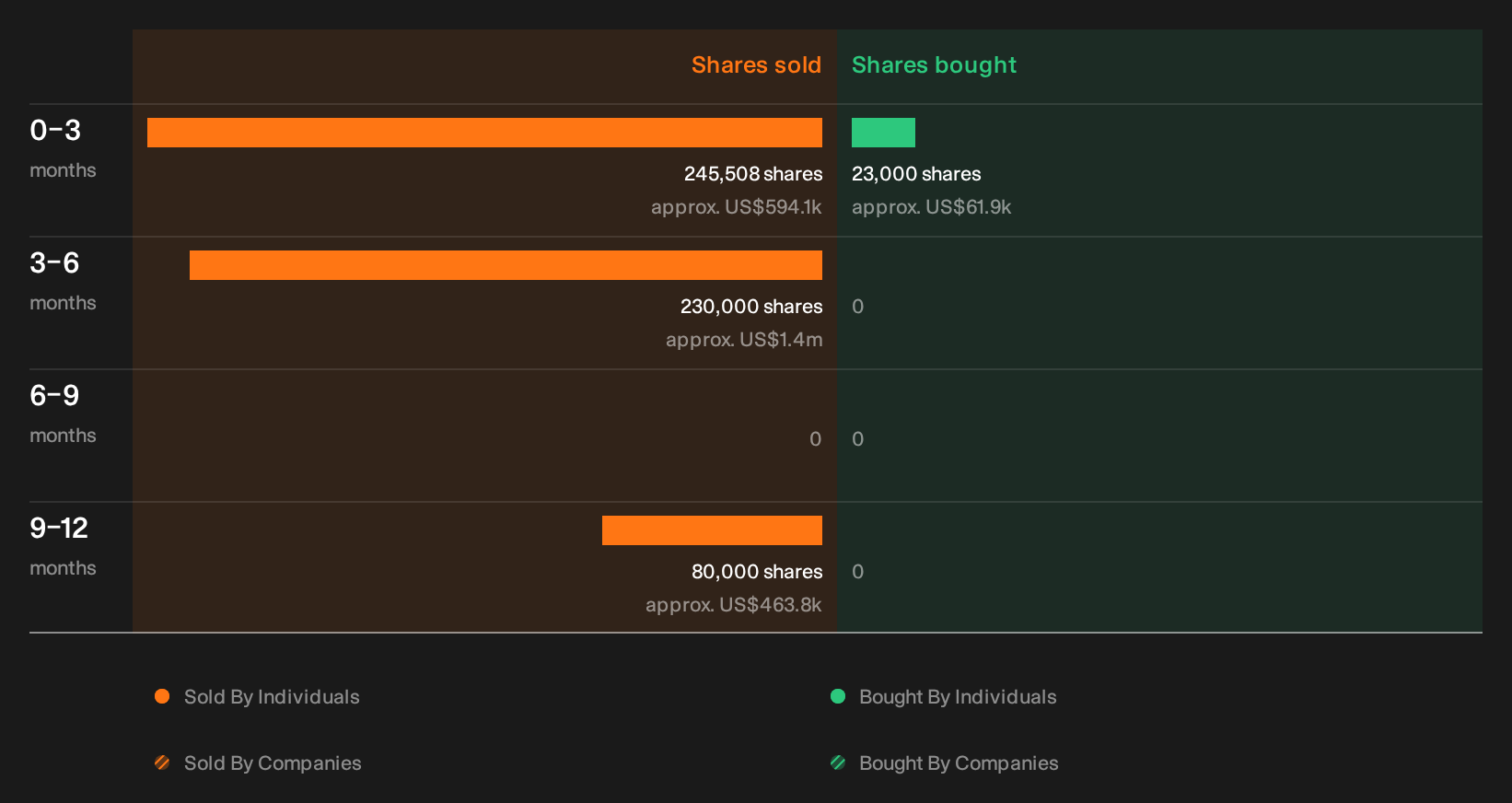
- Over the past year, one insider bought on the market while four insiders sold, with $61.8k bought compared with $2.1m sold.
ASP Isotopes has recently seen insiders move in the opposite direction, choosing to reduce their exposure rather than add to it. For investors who want to focus on businesses where company insiders are committing fresh capital because they are willing to pay for more ownership, 70 undervalued small caps that insiders are buying.
ASP Isotopes insiders leaned hard to the sell side
Todd Wider is the insider investors see most in the ASP Isotopes filings, and the pattern over the past year has been consistent, with a run of open market sales that together cut their holding by 39% and left the shares now trading 55% below Wider's average sale price, a fall they avoided.
The earlier sale on June 30, 2026 came just before ASP Isotopes reported its second quarter and half year results in mid August, when the business set out higher revenue than a year earlier and a narrower loss. Three months after that day the share price was 58% lower than on the date of Wider's trade, after which Wider returned to sell again in November. On the same June day, EVP, General Counsel & Secretary Donald Ainscow also sold $614k and cut their holding by 11%, then did not make another open market move in the following months.
Read together, these filings point to insider trading that has been firmly on the cautious side, led by Wider and joined by Ainscow rather than balanced by buyers.
Helium output needs to scale and stay reliable for ASP Isotopes
For the ASP Isotopes sellers to have parted with stock too early, the helium platform and related projects would need to deliver stable, growing throughput that supports the broader enrichment story. On November 16, 2026, the third quarter update set out higher revenue and a wider loss compared with a year earlier, which left the share price well below where Todd Wider had been trading.
The Narrative argues that the big swing factor is getting the Virginia Gas Project to full Phase 1 output, then building into Phase 2 so helium and LNG volumes support better use of fixed infrastructure. Around that, ASP Isotopes would need its nuclear medicine pipeline, from enriched isotopes through PET Labs into Alpa Theranostics programs, to build dosing volumes and product range. A further leg in that case is scaling Silicon 28 and Carbon 12 sales, while progress at Quantum Leap Energy on LEU and HALEU facilities creates an extra option on future nuclear fuel revenue.
Did insiders sell too soon? Find out ASP Isotopes' fair value and what it rests on.
Insider stakes put ASP Isotopes trades in context
The run of open market sales only tells part of the story, because ASP Isotopes filings also show insiders together hold 12.8% of the company, worth $26.0m at today’s price. This level of insider ownership is typical for a micro-cap and means their moves come from a group whose wealth still tracks the shares. One of the sellers, Heather Kiessling, is the 14th-largest holder with 1.0% of the company, so that trade involved a substantial personal position. Paul Elliot Mann is the second-largest holder with 6.0% of the company and, in the filing of September 4, 2026, cut that holding by 2.6%. This means ownership is still concentrated even as filings record sales.
The insiders and major holders together leave these sales looking like adjustments within a tightly held register rather than trades that reshape who owns the stock.
Insiders who chose the sell side now leave a clear question as ASP Isotopes heads into its annual general meeting on December 15, 2026, where updates on the helium projects or nuclear medicine pipeline could make those moves look either early or well judged.
Add ASP Isotopes to your watchlist to get an alert ahead of its annual meeting.
For the purposes of this article, insiders are those individuals who report their transactions to the relevant regulatory body. We count open-market transactions and private dispositions of directly held shares only, not derivative transactions such as option exercises or interests held indirectly, for example through a family trust or company.
Have feedback on this article? Concerned about the content? Get in touch with us directly. Alternatively, email editorial-team@simplywallst.com