


Oil is back in the spotlight, with Brent circling $100 and disruption risks in key Middle East routes reminding investors how fragile supply can be. Volatile crude often sparks a fresh look at oilfield services and equipment companies, as producers reassess drilling, maintenance and production plans. This article walks through three stocks exposed to the latest news shock, explaining where some investors might see opportunity and where others may prefer to stay cautious.
The stocks in the list below are just a starting sample, and the full screen picked up 63 more global oilfield services and equipment providers with equally detailed stories that are not covered here.
To go straight to the source and identify which operators best fit your thesis, head into the Global Oilfield Services & Equipment Providers screener to filter and analyze the broader group of potential high conviction ideas.
Baker Hughes (BKR)
Baker Hughes sits right in the flow of capital that higher and more volatile oil prices can pull into drilling, production and long-life infrastructure projects. This is why the bearish analyst Narrative on Simply Wall St focuses so heavily on how its energy hardware and services pipeline is built.
"Although Baker Hughes is booking large Power Systems awards tied to AI data centers, the decision to invest in capacity that could support nearly US$5b of annual Power Systems revenue by 2029 increases fixed costs."
What happens to Baker Hughes’ margins now hinges on how one unseen pressure on project timing and customer follow-through actually plays out.
Baker Hughes is a global energy technology provider. Its Oilfield Services & Equipment arm supplies drilling, completion and production tools that tie directly into oilfield spending cycles, while Industrial & Energy Technology adds gas turbines and infrastructure equipment. Both OFSE and IET each generated about US$13.9b in revenue, and the business carries a market value near US$46b.
That pressure point is exactly what the full narrative for Baker Hughes unpacks, showing where capacity bets could accelerate returns or quietly compress profitability.

SLB (SLB)
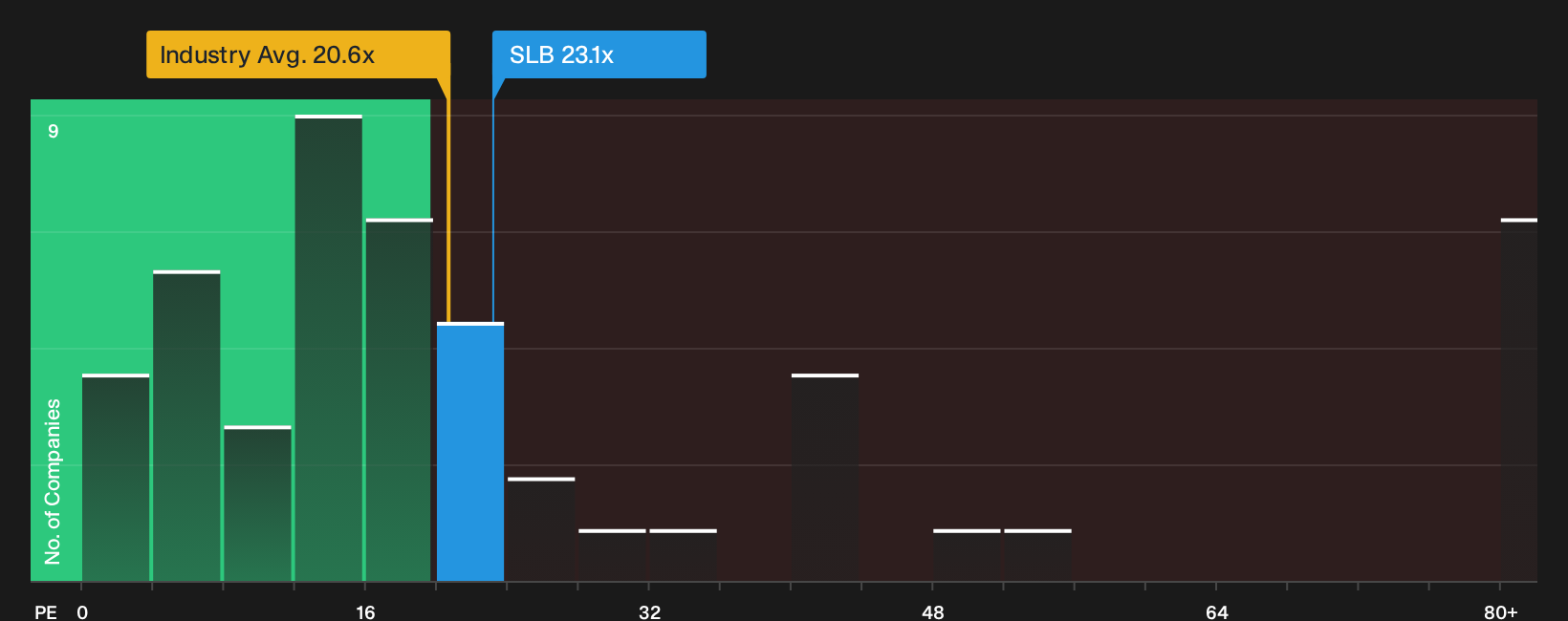
SLB is one of the purest expressions of this screener’s theme, because its drilling, reservoir and production technology sits directly where higher and more volatile crude prices tend to push producer spending. This is exactly what the analyst consensus Narrative on Simply Wall St is focused on here.
SLB is a global energy technology group that helps producers plan fields, drill wells and keep hydrocarbons flowing, with Well Construction generating about US$11.4b in revenue, Production Systems roughly US$15.4b, Reservoir Performance about US$6.5b and Digital close to US$2.9b, while its market value sits near US$71.6b.
"Persistent customer demand for digital transformation, automation and efficiency, together with SLB’s Digital division revenue of US$697 million in Q2 2026 and adjusted EBITDA margin of about 35% with annual recurring revenue up 15% year on year, continues to build a larger, higher margin recurring revenue stream that can support net margin expansion."
What happens if a single assumption about how quickly this higher margin work scales ends up shifting the future path of SLB’s profitability?
That single assumption is exactly what the full narrative for SLB pulls apart, revealing where SLB’s recurring digital engine could quietly accelerate or stall the wider business story.
Halliburton (HAL)
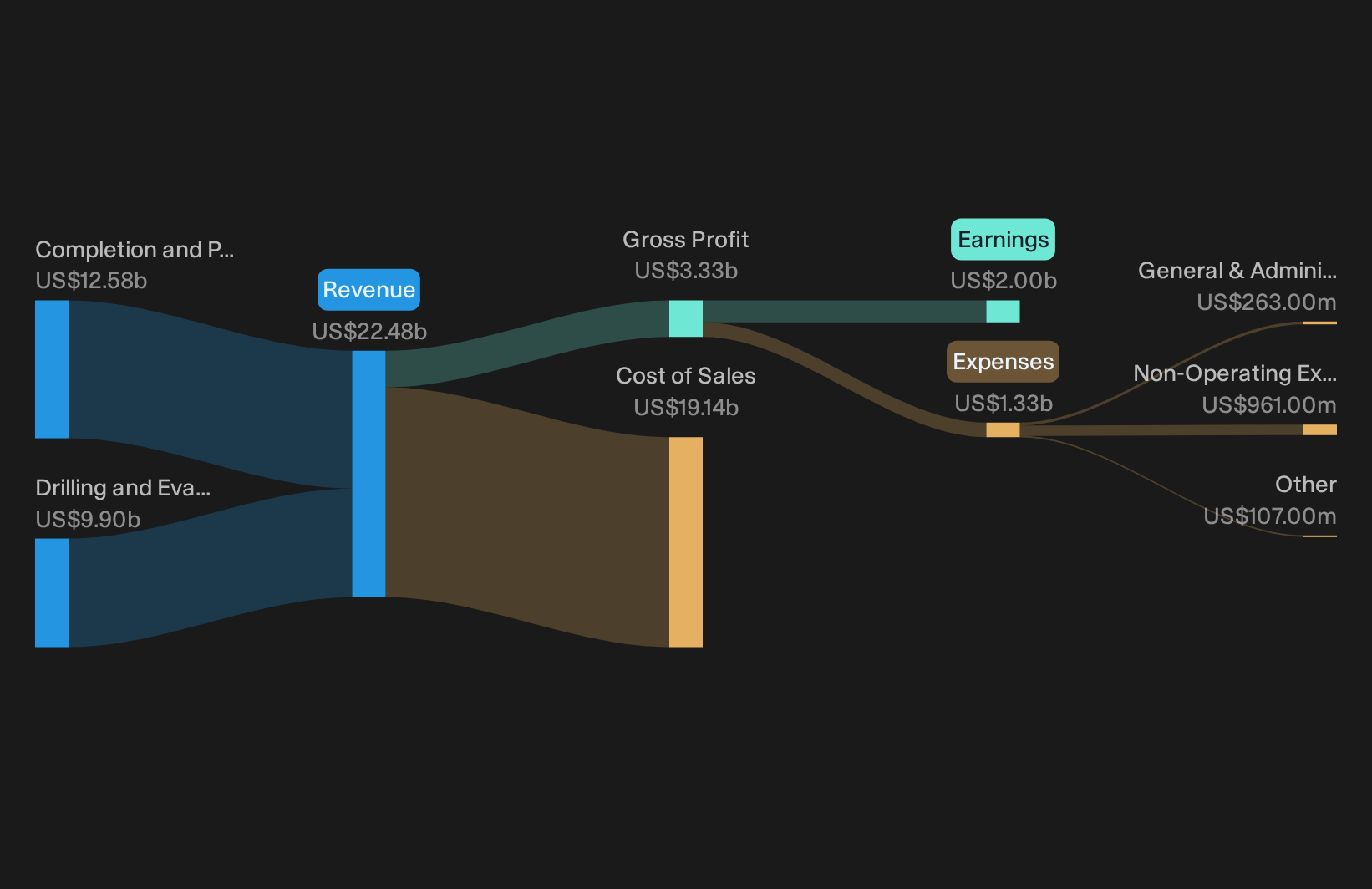
Halliburton is one of the purest plays on this oilfield services theme, with its Completion and Production arm generating about US$12.6b and Drilling and Evaluation around US$9.9b of annual revenue. This supports a roughly US$26.1b market value that is tied closely to global upstream activity cycles.
The business is tightly wired into drilling and completion work that producers tend to prioritise when oil prices jump and supply fears build. This is exactly why the bearish analyst Narrative on Simply Wall St focuses on how shifting activity patterns interact with geopolitical risk.
"While management is shifting frac fleets and other equipment from North America into higher margin international markets, the concentration of this redeployed capacity in regions affected by geopolitical risk raises the possibility that conflict related disruptions and cost inflation absorb much of the expected return uplift and weigh on operating margins."
What happens if one key assumption about how smoothly that higher margin work actually runs ends up deciding where Halliburton’s profitability settles?
If that single assumption is what decides where Halliburton’s profitability lands, the full narrative for Halliburton shows whether geopolitical risk is masking a stronger earnings engine.
Seeking Fresh Alternatives Beyond Oil?
Fresh opportunities rarely stay quiet for long. Breakout stories build momentum, slow movers get caught chasing, and under the radar ideas drop off fast. Scan what others miss and act now.
- Spot under followed value stories before the crowd by scanning the 37 high quality undervalued stocks and focus on companies where strong fundamentals and reasonable prices still line up.
- Track where real cash generation meets AI momentum with the 45 profitable AI stocks that aren't just burning cash and filter for businesses funding growth from operations instead of constant dilution.
- Zero in on income ideas that aim to pay you while you wait by reviewing the 39 dividend fortresses and concentrating on higher yield opportunities with staying power.
Have feedback on this article? Concerned about the content? Get in touch with us directly. Alternatively, email editorial-team@simplywallst.com