


Markets are bracing for a punchy few weeks, with the November jobs report, a closely watched Fed meeting, and fresh questions around AI spending all pulling on valuations at once. Rate expectations, cash flows, and balance sheet strength suddenly matter more than hype. This article walks through three stocks exposed to these headlines, all drawn from a screener focused on high quality, cash generative value in a rising rate backdrop.
The three stocks below are just a sample, and the full screen surfaced 28 more US-listed companies with similar cash flow traits and balance sheet profiles that are not covered here. To identify and analyze the highest conviction ideas for your own watchlist, go straight to the High-Quality, Cash-Generative Value Stocks in a Rising-Rate Environment screener.
Popular (BPOP)
Popular fits this high-quality, cash-generative value screen as a long-established regional bank that leans on core deposits and lending rather than speculative growth stories, and the analyst consensus Narrative on Simply Wall St argues that its earnings engine still has room to run.
Popular is a US$9.2b bank focused on retail, mortgage, and commercial banking across Puerto Rico and the mainland U.S., with most revenue coming from Banco Popular de Puerto Rico at about US$3.1b and Popular U.S. at roughly US$484 million, and a smaller US$18 million corporate segment.
"Ongoing investments in digital infrastructure, including Popular’s treasury and cash management platform, Mi Banco marketplace and branch upgrades, are starting to show through in higher debit and credit card fee income and are expected to support further noninterest revenue growth and operating leverage."
What really matters now is how one pressure point in its funding and rate mix shapes the next leg of its margin story.
That hinge in the margin story is exactly what the full narrative for Popular unpacks, revealing where Popular’s earnings profile could be decoupling from headline rate fears.

Old National Bancorp (ONB)
Old National Bancorp is a US regional lender built around spread-based consumer and commercial banking, a profile that fits a screener focused on cash-generative banks with moderate debt and lower volatility. The analyst consensus Narrative on Simply Wall St highlights one specific rate lever that could be important for this earnings model.
"Repricing of roughly US$8b of fixed rate loans and securities over the next 12 months at yields that are about 60 basis points higher on loans and about 100 basis points higher on securities than the existing book provides a clear path for Old National Bancorp to improve net interest income and net interest margin."
What happens if one less visible funding pressure shifts at the same time will go a long way toward determining how much of that flows through.
Old National Bancorp is a US$9.1b bank headquartered in Evansville, Indiana, focused on traditional consumer and commercial banking services. It generates about US$2.7b in community banking revenue and carries a market value of roughly US$9.1b.
That quieter funding swing is exactly where the story gets interesting, and the full narrative for Old National Bancorp shows how those pressures could reshape Old National Bancorp’s earnings mix and rate sensitivity.

UMB Financial (UMBF)
UMB Financial ties neatly into this high-quality, cash-generative value theme as a mid cap bank holding company that leans on traditional lending and fee-based asset servicing. The analyst consensus Narrative on Simply Wall St points to one key integration milestone as a real test of that story.
"The successful integration of the Heartland acquisition, including vendor consolidation and conversion to the UMB platform, is now feeding through to lower underlying operating expenses and earlier contract termination synergies."
What happens if one less visible cost pressure shifts at the same time could make a material difference to how much of that efficiency reaches margins.
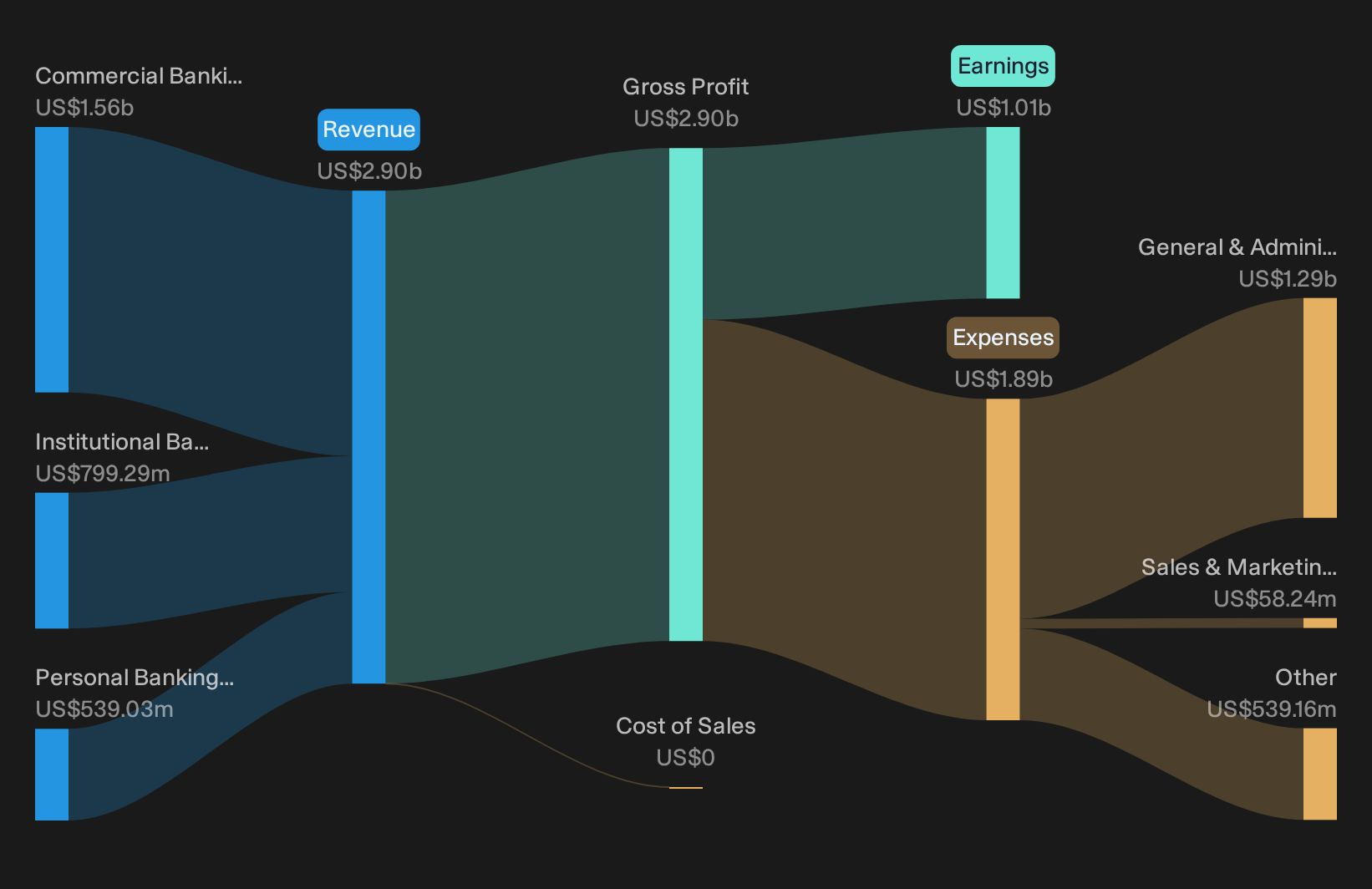
UMB Financial is a Kansas City based bank holding company that earns most of its money from commercial and institutional clients, with about US$1.6b from Commercial Banking, roughly US$799 million from Institutional Banking and healthcare services, and around US$539 million from Personal Banking, all in the US. The stock has a market value of roughly US$9.8b.
When those quieter cost currents matter, the full narrative for UMB Financial shows how UMB Financial’s integration work, fee mix, and risk profile could be quietly accelerating the story.
Seeking Alternatives Before The Crowd Moves
Fresh ideas move first. Breakout themes, early momentum, and under the radar potential often get caught by focused screeners before prices start flying. Do your homework while it matters and get in early.
- Spot income workhorses that aim to keep paying even when sentiment is dropping by scanning a curated set of potential 39 dividend fortresses before everyone else notices.
- Track early movers at the front of AI infrastructure momentum by pulling up a tight short list of curated 52 AI infrastructure stocks while they are still under the radar for now.
- Hunt for suppliers of the metals powering electrification by reviewing a hand picked group of potential 16 top copper producer stocks and act now while sentiment is still catching up.
Have feedback on this article? Concerned about the content? Get in touch with us directly. Alternatively, email editorial-team@simplywallst.com