

How to Invest
Learning how to invest is an important skill. By working through this ASX lesson you are developing a base of knowledge that will help you understand how to invest and determine what might be a suitable investment for you. Getting started in investing is just like any project, you first need to draw up a plan.
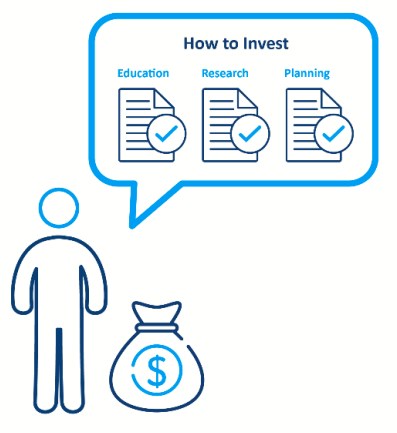
What is financial planning?
A financial plan is a strategy for meeting your financial requirements and realising your lifetime goals. It takes into account your income, expenditure, investments and liabilities over the long term. It generally involves a few key steps:
- Analyse your current financial position
- Identify the level of risk with which you are comfortable
- Regularly review the investment portfolio once it is established.
You can prepare your own plan, or pay an adviser to help you. The perspective provided by a skilled professional is often invaluable.
Let's look at some of the steps you might take when developing a financial plan.
Analyse your current financial position
Establish your needs and objectives. Needs are basic requirements such as food, rent, payment of tax, insurance and school fees. Objectives are goals that can change over a lifetime, such as tax minimisation, wealth accumulation and retirement.

Identify the level of risk you are comfortable with
Everyone has a different tolerance for risk. That is, how comfortable they are with the prospect of losing some or all of their money invested.
Your risk profile will be determined by a number of factors. Some of these are outlined below.
Your stage of life
If you are young, it is likely you can afford to take greater risks with a view to achieving higher returns in the longer term. If you are older, then security of capital will probably be more important, although capital -growth investments still have their place in any portfolio.
Your investment
If your goals are long term, then you may be able to take the risk of short term volatility because you should have the time to ride out any market corrections (a market correction is another term used to describe a market downturn). However, if you need money for a deposit on a home, say in three years, you may need to be more cautious.
Every investor has a different risk/reward profile. Taking the time to identify your own risk/reward profile will help both you and your adviser choose the best investments for your needs.
Review your investments
Regularly review your investment portfolio once it is established. By reviewing your investments you can check to see if they are meeting your goals and act early to rectify them if they are underperforming.