

2 Key Risks of Investing in Australian ETFs
Investing in ETFs involves risk. Two key risks particularly relevant to domestic ETFs are:
Market risk
The portfolio underlying an ETF is diversified across many securities, protecting you against the 'specific risk' of an individual security performing poorly.
However, you are still exposed to market risk.
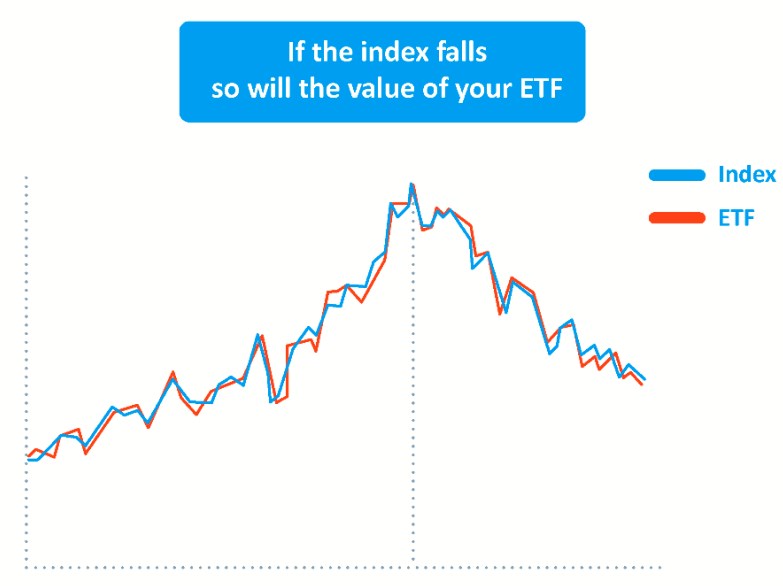
For example, if the broad Australian sharemarket falls, an ETF that tracks the S&P/ASX 200 index will fall in value.
Similarly, an ETF that tracks a sector index such as the S&P/ASX 200 Resources Index will fall in value if the resources sector performs poorly. This is called 'sector risk'.
Portfolio duplication
This is a risk associated with sector ETFs.
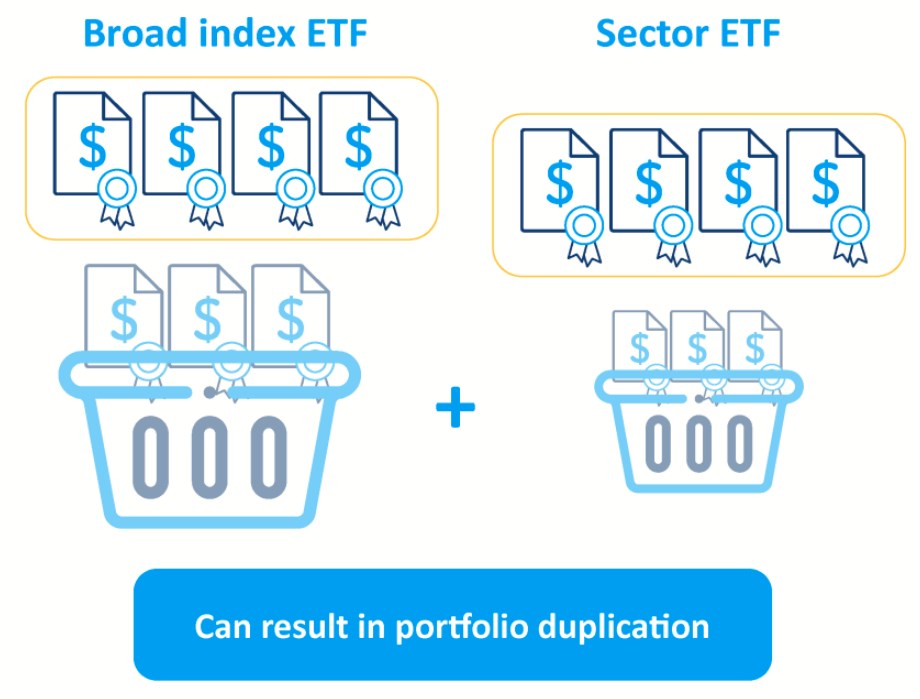
If you hold a diversified portfolio of shares, or an ETF that tracks the broad sharemarket, adding a sector ETF may duplicate an existing exposure to that market sector.
You should consider your total exposure to a market sector, not just the exposure the sector ETF gives you.
For example, a diversified share portfolio is likely to include stocks in the financial sector. It is wise to take this existing exposure into account if you are considering buying an ETF that tracks the Financials index.
For more detailed coverage of the risks, please refer to the issuer's website and the ETF's PDS.