


- In early 2026, U.S. Physical Therapy introduced new executive incentive and bonus plans, including restricted stock units and annual bonuses linked to Adjusted EBITDA performance targets, while analysts commented on growth opportunities, Medicare rate trends, and acquisition activity.
- The shift toward performance-tied equity awards and bonuses offers a clearer view of how management incentives may influence capital allocation, growth priorities, and risk-taking across the business.
- We will now examine how the new performance-linked executive incentives could reshape U.S. Physical Therapy’s investment narrative and risk profile.
Find 47 companies with promising cash flow potential yet trading below their fair value.
U.S. Physical Therapy Investment Narrative Recap
To own U.S. Physical Therapy, you need to be comfortable with a clinic-centric model that depends on steady patient volumes and reimbursement levels, while managing labor costs and competition from digital PT. The new 2026 executive incentive plans and Schroder’s stake reduction do not materially change the near term focus on reimbursement trends as the key catalyst and ongoing Medicare and commercial rate pressure as the central risk.
The most relevant recent development here is the 2026 executive incentive plan that ties annual bonuses to Adjusted EBITDA and grants restricted stock units to senior leaders. Because EBITDA is sensitive to reimbursement and wage trends, this structure intersects directly with the company’s main catalysts around growing clinic volumes and employer services, and its biggest operational risk from rising labor costs and clinician shortages.
Yet even with these incentive changes, investors should be aware that reimbursement pressure remains a persistent risk that could...
Read the full narrative on U.S. Physical Therapy (it's free!)
U.S. Physical Therapy's narrative projects $918.4 million revenue and $52.5 million earnings by 2028. This requires 8.3% yearly revenue growth and a $17.9 million earnings increase from $34.6 million today.
Uncover how U.S. Physical Therapy's forecasts yield a $106.83 fair value, a 37% upside to its current price.
Exploring Other Perspectives
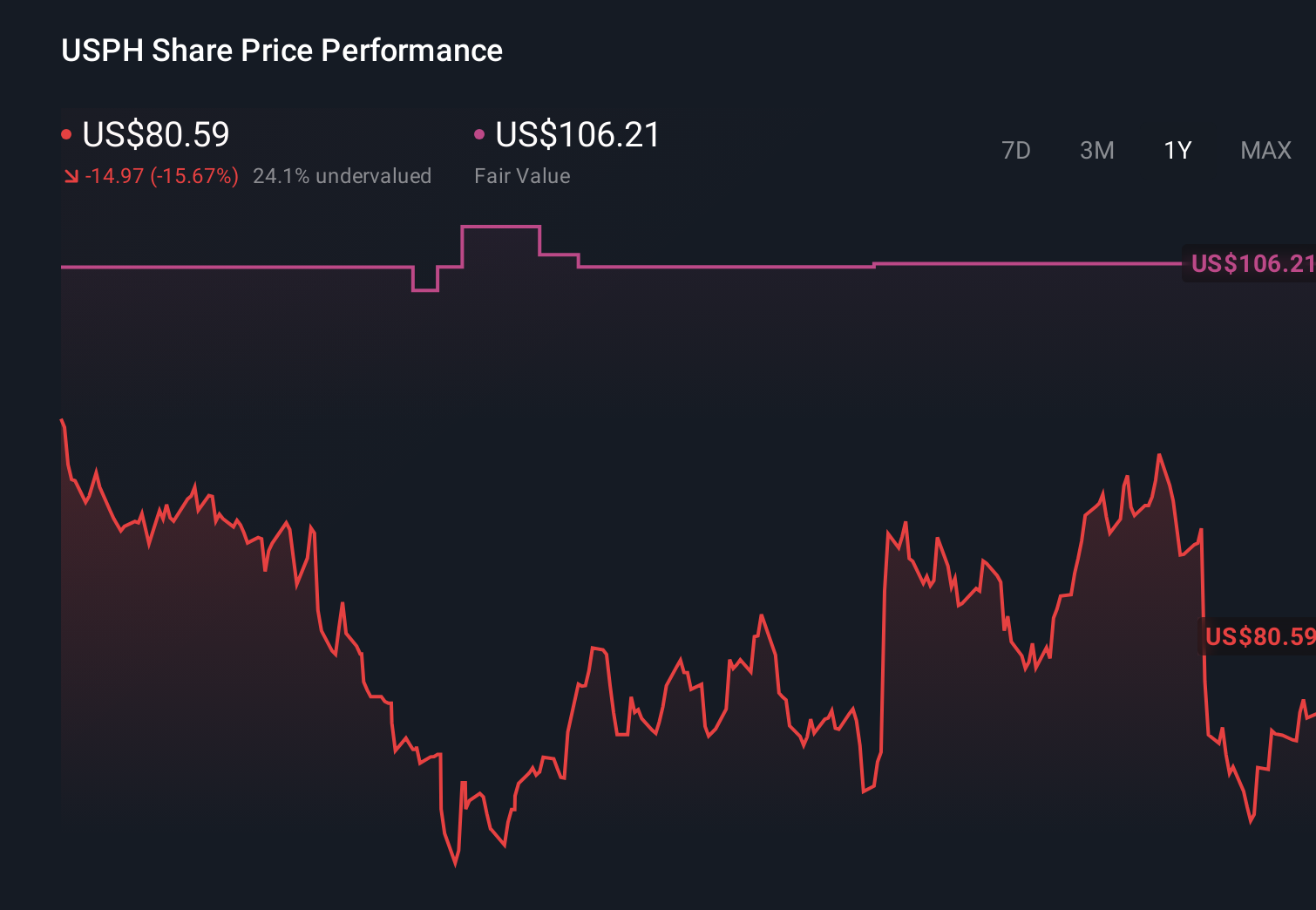
One member of the Simply Wall St Community currently pegs fair value at US$106.83 per share, highlighting how differently individual investors can view U.S. Physical Therapy. Against that backdrop, ongoing healthcare reimbursement pressures and the history of Medicare cuts may influence how you weigh upside from volume growth against potential margin strain over time.
Explore another fair value estimate on U.S. Physical Therapy - why the stock might be worth just $106.83!
Form Your Own Verdict
Disagree with existing narratives? Extraordinary investment returns rarely come from following the herd, so go with your instincts.
- A great starting point for your U.S. Physical Therapy research is our analysis highlighting 3 key rewards and 3 important warning signs that could impact your investment decision.
- Our free U.S. Physical Therapy research report provides a comprehensive fundamental analysis summarized in a single visual - the Snowflake - making it easy to evaluate U.S. Physical Therapy's overall financial health at a glance.
Ready For A Different Approach?
Our top stock finds are flying under the radar-for now. Get in early:
- We've uncovered the 15 dividend fortresses yielding 5%+ that don't just survive market storms, but thrive in them.
- Invest in the nuclear renaissance through our list of 87 elite nuclear energy infrastructure plays powering the global AI revolution.
- AI is about to change healthcare. These 33 stocks are working on everything from early diagnostics to drug discovery. The best part - they are all under $10b in market cap - there's still time to get in early.
This article by Simply Wall St is general in nature. We provide commentary based on historical data and analyst forecasts only using an unbiased methodology and our articles are not intended to be financial advice. It does not constitute a recommendation to buy or sell any stock, and does not take account of your objectives, or your financial situation. We aim to bring you long-term focused analysis driven by fundamental data. Note that our analysis may not factor in the latest price-sensitive company announcements or qualitative material. Simply Wall St has no position in any stocks mentioned.
Have feedback on this article? Concerned about the content? Get in touch with us directly. Alternatively, email editorial-team@simplywallst.com